Nvidia-led Open Secure AI Alliance, formed a week ago with over 120 member companies, has already launched a working group called SAFE to develop AI cybersecurity guidelines including confidential incident reporting and blame-free analysis protocols. Members are contributing open source tools such as Nvidia's Garak vulnerability scanner, Amazon's Strands Agents, and Okta's agent identity technology to create a shared security framework. The group aims to build an open source ecosystem for securing AI agents in enterprises, though notable absences include Anthropic, OpenAI, and Google despite their support for the original letter.
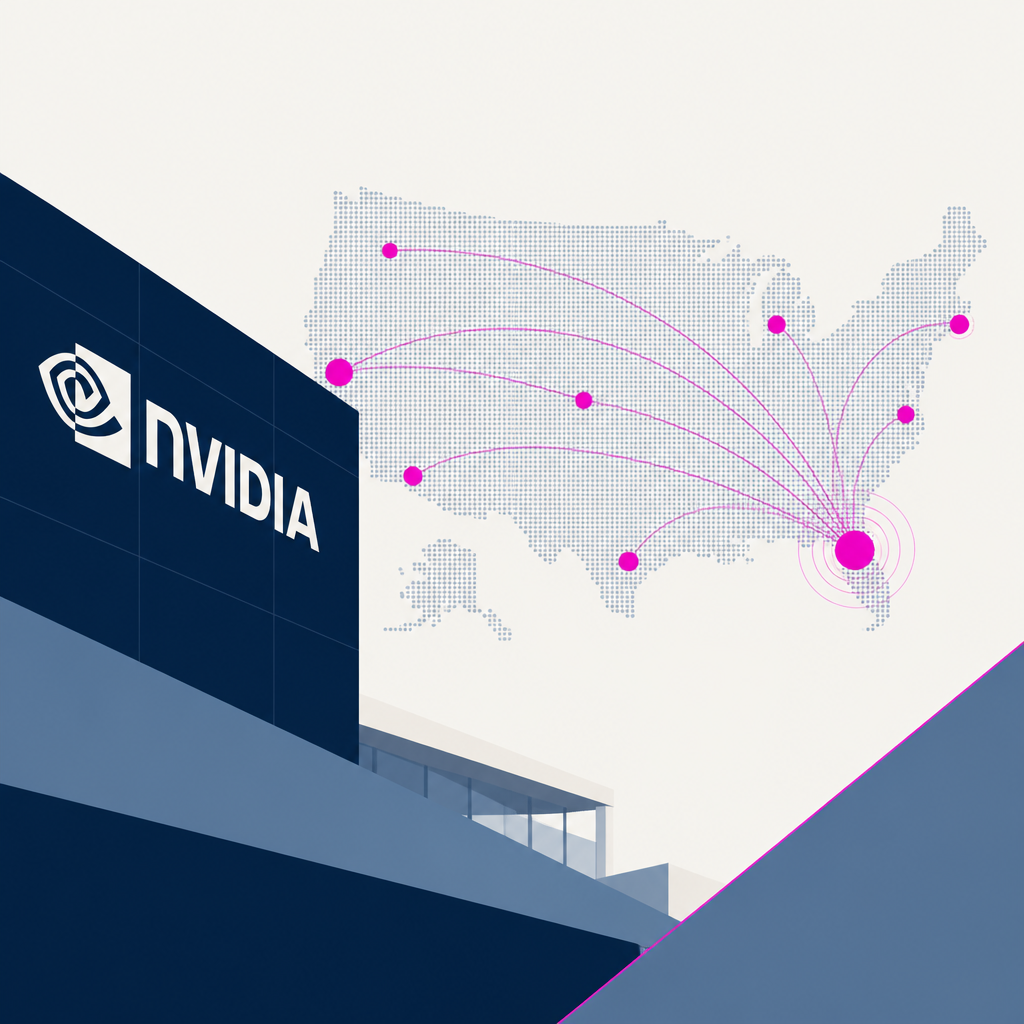
NVIDIA is participating in the NSF's State and Regional AI Infrastructure Hubs program, which launched today to expand AI computing access and education across US universities and regional consortia. The University of Florida model from 2020, which grew to over 300 AI-focused faculty and $511 million in research awards, will serve as a national template for the program. Regional hubs will enable institutions to share computing resources, develop workforce training pathways, and connect AI research infrastructure to local economic priorities and employer needs.
NVIDIA is unveiling storage infrastructure advancements designed to handle surging AI data demands, including the Vera CPU which delivers 3.21x higher throughput than x86 processors in compression and encryption pipelines. The company is open-sourcing cuFile APIs to enable GPUs to read and write directly to storage, and launching the Storage-Next initiative with over 40 vendors to align on GPU-driven storage standards. These changes shift storage from a passive repository to an active part of the data path, allowing AI systems to access data in microseconds rather than minutes and reducing the gap between AI computing capacity and available memory.
Nvidia open-sourced its cuFile API, which enables GPUs to read data directly from storage in milliseconds by bypassing the CPU and system memory. The API uses direct memory access (DMA) to move data from NVMe drives straight into GPU memory, with the company also launching Storage-Next, an industry initiative involving 40 storage and flash vendors to optimize GPU-driven storage. This direct access path prevents GPU starvation—where GPUs sit idle waiting for data—and allows AI inference and retrieval-augmented generation workloads to run faster by eliminating memory bottlenecks.
Nvidia released NOOA, a framework that represents AI agents as single Python classes, consolidating capabilities, state, and prompts into one unified structure to reduce fragmentation in agent development. On SWE-bench Verified, NOOA achieved 82.2% accuracy with GPT-4o using 29 LLM calls and roughly 1.1M tokens per task, compared to competitors requiring 66 calls and 2.2M tokens for 78.2% accuracy. The centralized approach makes agents easier to inspect and audit but concentrates security risks and may blur distinctions between deterministic and probabilistic code paths.
Every AI story that matters,
in your inbox by 8am.
TLDRocket reads all relevant sources, removes duplicate coverage, and summarises the
day in two minutes. Follow companies and topics for alerts, or get the
briefing in Slack. Free, no spam, unsubscribe anytime.
Reading TLDRocket needs no cookies, and the readership counts we rely on come from
our own cookieless analytics. Google Analytics is the exception: it sets cookies and
reports to Google, so it stays switched off until you allow it. You can change your
mind any time from “Cookie settings” in the footer.
Strictly necessary
Session security and form protection (tldrocket-session,
XSRF-TOKEN, 2 hours). The site cannot work without them,
so they need no consent.
Always on
Google Analytics 4 (_ga,
_ga_<id>, up to 2 years). Measures which
stories and sections readers use. Google acts as a third-party processor and may
store the data outside the EU. No advertising, no profiling, no data sold.