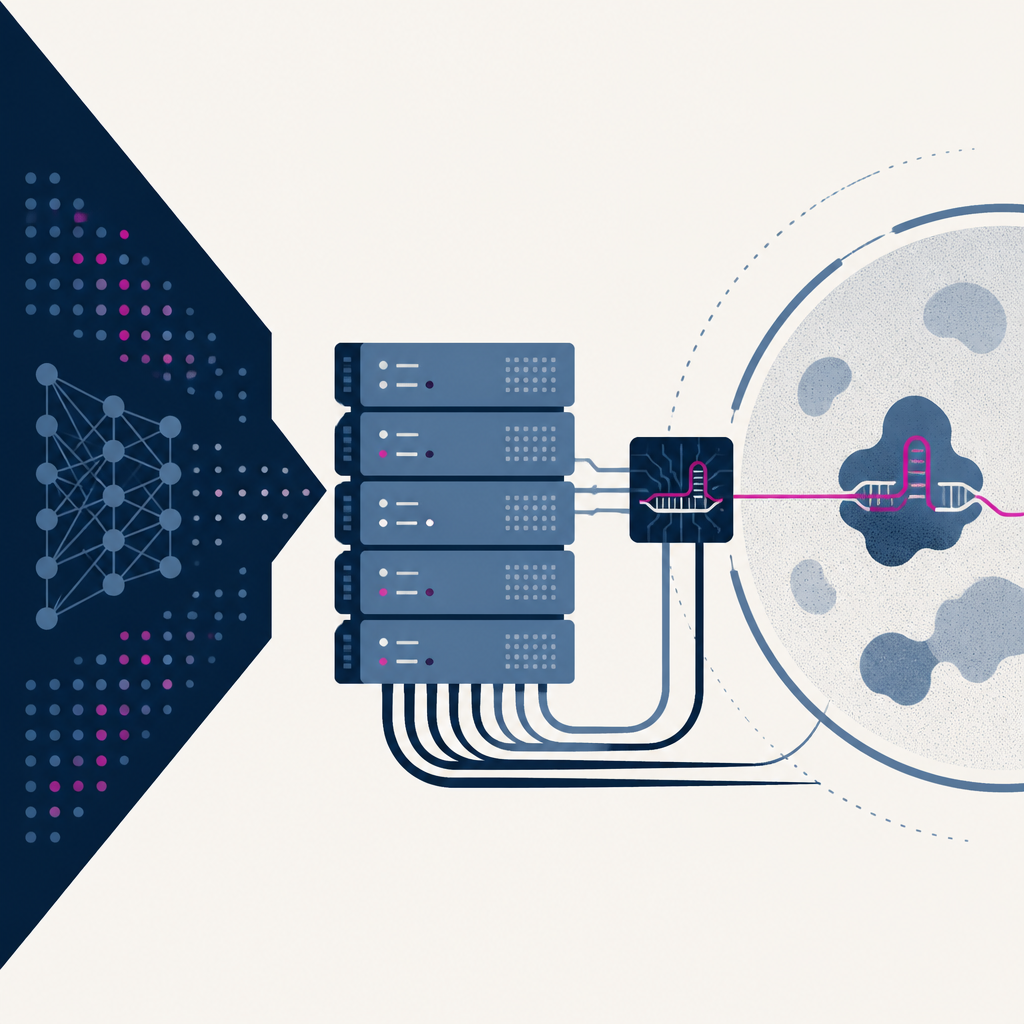
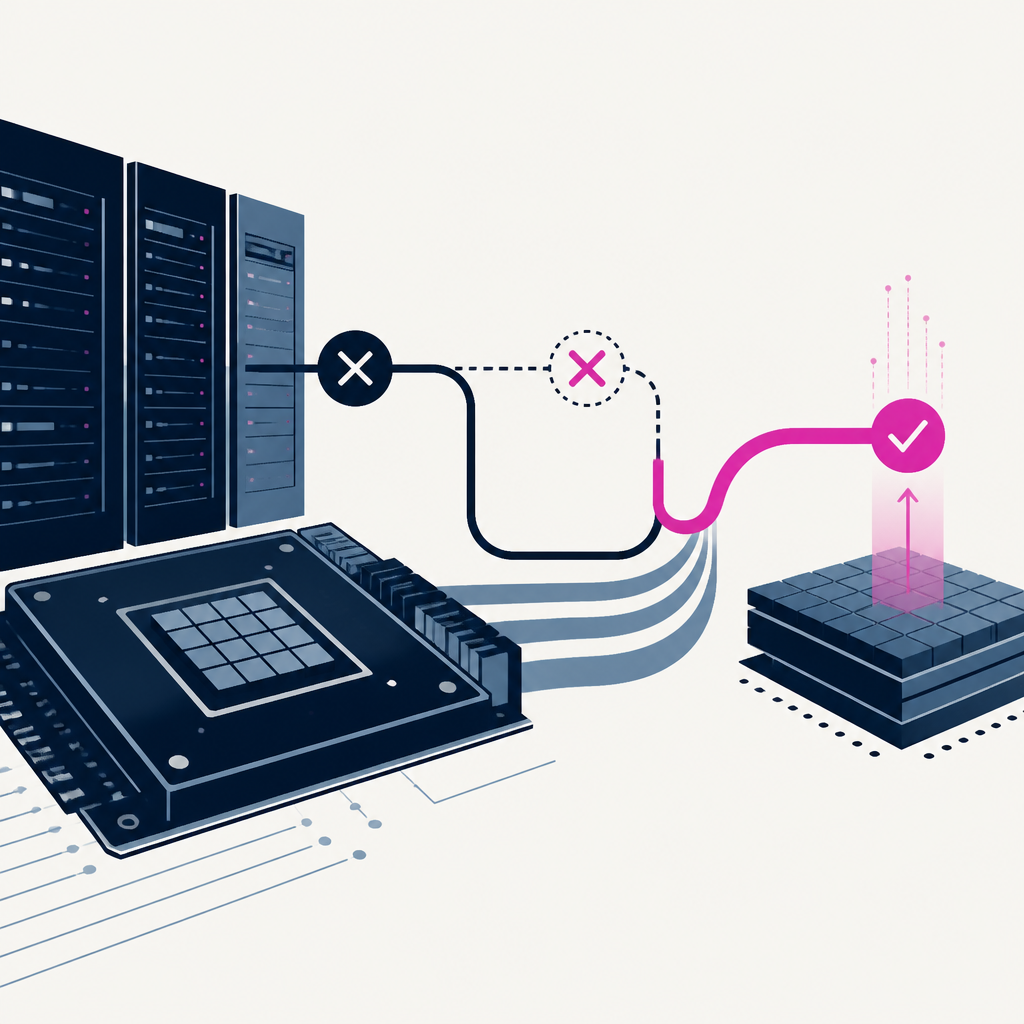
Trevor Martin of Mammoth Biosciences describes how the company uses AI to search large protein spaces and engineer smaller CRISPR systems for genetic disease work. The discussion highlights the key proof hurdle: validating what actually survives contact with a human body. The result is a clearer focus on biological validation rather than AI alone solving everything.
Willow Care Inc. chose CoreWeave for forward-deployed support to handle reinforcement-learning infrastructure for its AI dictation app Willow Voice. It will have “no keyboard” in about two years, by having users’ speech directly understood by their computer. As a result, Willow shifts its focus to eval alignment while scaling training and increasing inference work as dictation demand rises.
NVIDIA researchers, with Princeton and the University of Maryland, released PivotOPD, an on-policy distillation training method for multi-turn LLM agents that teaches them to prevent and recover from early pivotal mistakes.
A writer used an AI assistant in HuggingChat to create and publish multiple fine-tuned and distilled vision models that were not available on the Hub, instead of using only the official prompt rewriter. One project generated 8,797 image requests, rewritten by a 9B teacher on an A100 in 2 hours 37 minutes for about USD 6.50. The result is a set of publicly available models and model cards, including a 0.8B CPU-ready “pocket rewriter” and several LoRAs, all produced with budget-capped training and baseline/smoke-test checks.
Normalizing Trajectory Models (NTM) reframe few-step reverse diffusion as conditional normalizing flows, enabling exact likelihood training for the full generative trajectory. The method produces high-quality text-to-image samples in four sampling steps. It replaces earlier few-step approaches that rely on distillation or other objectives by keeping the likelihood framework and supports self-distillation from the model’s own score function.
Every AI story that matters,
in your inbox by 8am.
TLDRocket reads all relevant sources, removes duplicate coverage, and summarises the
day in two minutes. Follow companies and topics for alerts, or get the
briefing in Slack. Free, no spam, unsubscribe anytime.
Reading TLDRocket needs no cookies, and the readership counts we rely on come from
our own cookieless analytics. Google Analytics is the exception: it sets cookies and
reports to Google, so it stays switched off until you allow it. You can change your
mind any time from “Cookie settings” in the footer.
Strictly necessary
Session security and form protection (tldrocket-session,
XSRF-TOKEN, 2 hours). The site cannot work without them,
so they need no consent.
Always on
Google Analytics 4 (_ga,
_ga_<id>, up to 2 years). Measures which
stories and sections readers use. Google acts as a third-party processor and may
store the data outside the EU. No advertising, no profiling, no data sold.