Zvi (Don't Worry About the Vase)·1 week ago·
30
● 19 sources
OpenAI released a large batch of new math results, organized on GitHub and attributed to an internal frontier model, prompting widespread discussion about what the work means. The release comprised 722 manuscripts (719 after 3 withdraws) covering 372 families. Mathematicians are now expected to review and verify the results as the field absorbs an unusually large volume of purported breakthroughs.
ej was launched today as an open-source predictive AI built for decision questions with runtime-defined options. The release ships as a single 11.4 MB model file. It enables one-pass probability distributions for choice, yes/no, and ordered scores on CPU without token generation, along with training, evaluation, adaptation, and benchmark tools.
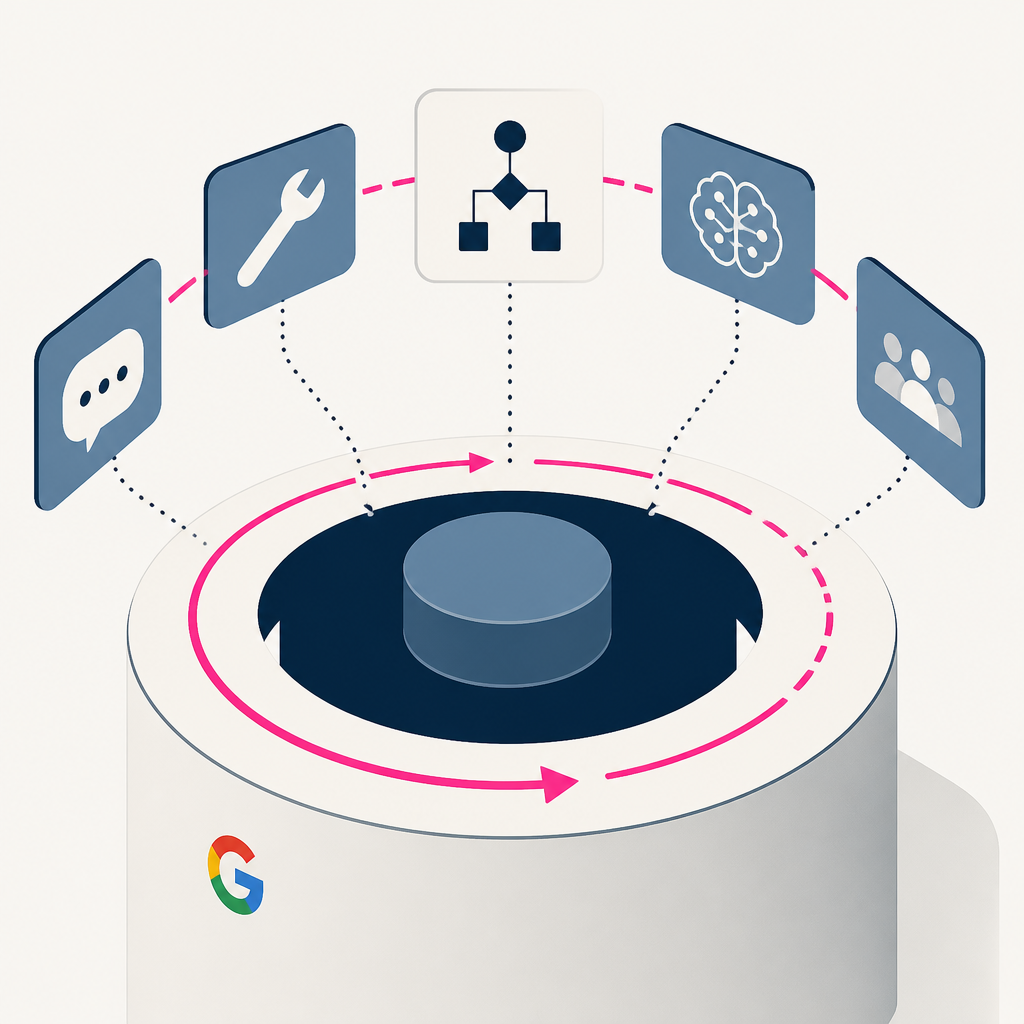
Google Research published a tutorial that implements RRSI (Regularized Recursive Self-Improvement), letting an LLM agent rewrite its own harness (prompts, tools, memory, control flow, sub-agents) while keeping a frozen underlying model, and driving the paper’s edit-selection logic directly with Python. The selection procedure uses calibrated noise bands, with the paper reporting a value of 0.020 for engineering evaluations. As a result, the guide turns the paper’s rules into runnable code, including how scores treat missing trials, and demonstrates how RRSI’s decisions can be audited against ground truth in a simulated setting rather than only by comparing top scores.
Every AI story that matters,
in your inbox by 8am.
TLDRocket reads all relevant sources, removes duplicate coverage, and summarises the
day in two minutes. Follow companies and topics for alerts, or get the
briefing in Slack. Free, no spam, unsubscribe anytime.
Reading TLDRocket needs no cookies, and the readership counts we rely on come from
our own cookieless analytics. Google Analytics is the exception: it sets cookies and
reports to Google, so it stays switched off until you allow it. You can change your
mind any time from “Cookie settings” in the footer.
Strictly necessary
Session security and form protection (tldrocket-session,
XSRF-TOKEN, 2 hours). The site cannot work without them,
so they need no consent.
Always on
Google Analytics 4 (_ga,
_ga_<id>, up to 2 years). Measures which
stories and sections readers use. Google acts as a third-party processor and may
store the data outside the EU. No advertising, no profiling, no data sold.