Grokipedia, SpaceXAI’s AI-powered online encyclopedia, has resumed updating articles after a months-long pause.
The Obama page was fact-checked by Grok two days ago.
Recent edits now show rechecks of references and sources and new fact-check notes on live pages.
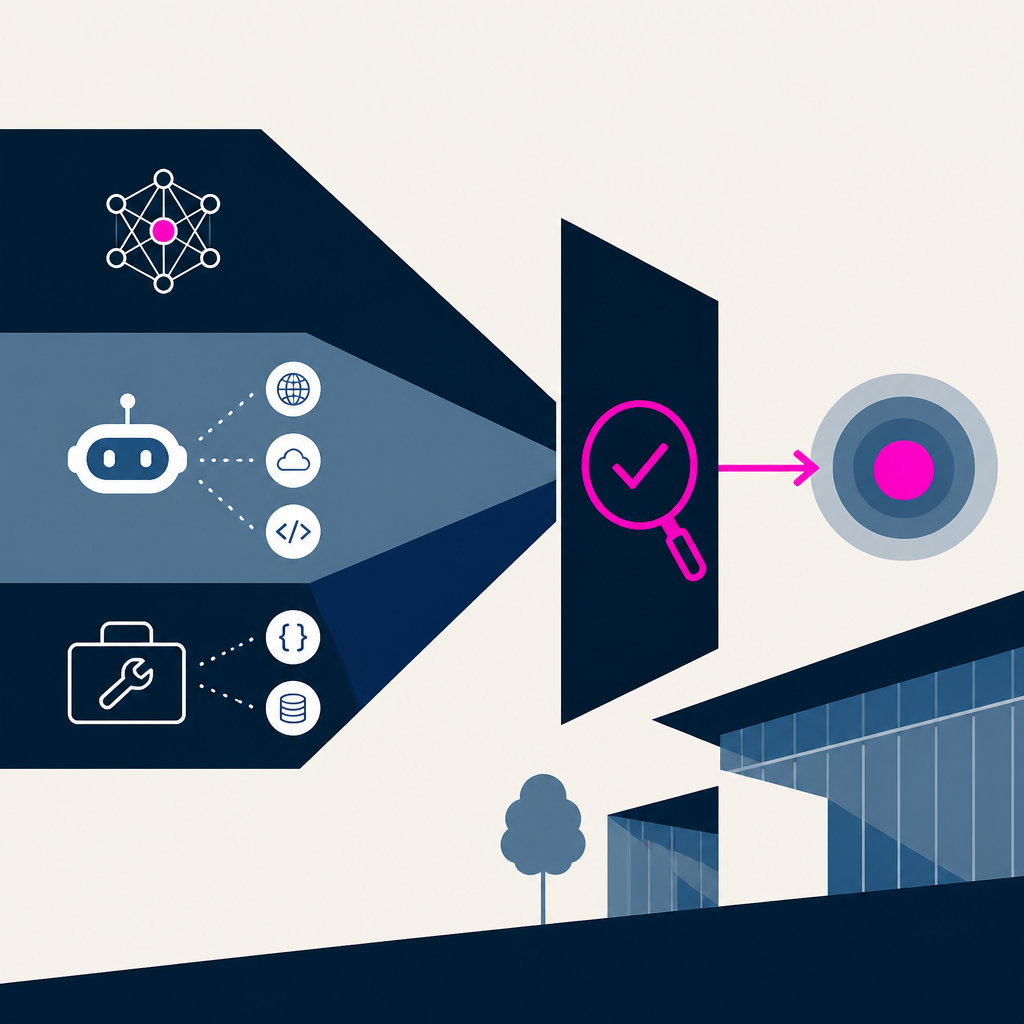
The article lays out a checklist of what to monitor—new AI models, agent systems that operate across apps/APIs/browsers, and developer tools like APIs/SDKs and infrastructure—while urging readers to verify claims against real results. It singles out WSJ as the source for the expectation that model changes are unlikely. The practical result is a shift from trusting demos to doing live, ongoing validation of capability, speed, price, and usefulness as they are released.
Fireworks Research launched Ember-1 on September 23 claiming it matches Moonshot’s Kimi K3 quality while using fewer reasoning tokens. Testing on OpenRouter found Ember-1 finished the same 5-run suites about 3.4x faster while using 23% fewer reasoning tokens, with costs of $2.48 vs $3.26 on Fireworks pricing but slightly lower accuracy (14/15 correct vs 15/15) due to one arithmetic slip. As a result, Ember-1 appears to deliver nearly similar results at much higher speed, though Kimi K3 can be more reliable and may be cheaper if routed to lower-priced providers.
FrontierSWE v2 added 21 new challenges, increasing the total to 34, and retired 4 tasks from v1 while expanding coverage across visual reasoning, graphics, scientific computing, and AI research. The benchmark now scores every task on a 0 to 1 scale. Changes include deterministic, reproducible scoring via a proxy performance metric, plus a cleaner two-container verifier setup and stronger non-root user separation to prevent cheating.
The Sequence Knowledge (Issue 941) explains that an agent can improve over a season even when its underlying model is frozen with no gradient updates. The story points to Issue 941 as its specific installment describing how change happens outside the model across spring versus summer. It argues that improvements come from other system layers—besides model weights—so users see better behavior without technical learning inside the model itself.
The Jev AI model has drawn strong attention in technical communities over the past 2 weeks as a text classifier that is framed as more than a basic classifier. It is positioned as handling classification tasks faster and more cheaply than general-purpose GPT/LLM tools. The article responds by placing Jev in the broader evolution of text classification, from bag-of-words and classic models to RNNs and other approaches, explaining what Jev does and why it attracts interest.
Every AI story that matters,
in your inbox by 8am.
TLDRocket reads all relevant sources, removes duplicate coverage, and summarises the
day in two minutes. Follow companies and topics for alerts, or get the
briefing in Slack. Free, no spam, unsubscribe anytime.
Reading TLDRocket needs no cookies, and the readership counts we rely on come from
our own cookieless analytics. Google Analytics is the exception: it sets cookies and
reports to Google, so it stays switched off until you allow it. You can change your
mind any time from “Cookie settings” in the footer.
Strictly necessary
Session security and form protection (tldrocket-session,
XSRF-TOKEN, 2 hours). The site cannot work without them,
so they need no consent.
Always on
Google Analytics 4 (_ga,
_ga_<id>, up to 2 years). Measures which
stories and sections readers use. Google acts as a third-party processor and may
store the data outside the EU. No advertising, no profiling, no data sold.