Microsoft reported $90 billion in quarterly revenue with 18 percent growth, driven by cloud services reaching $59.3 billion (up 27 percent) and Azure growing 43 percent. Microsoft 365 Copilot reached 30 million paid seats out of 450 million commercial customers, while capital expenditure climbed to $115.95 billion for the full fiscal year, up 80 percent. The strong results and $678 billion in customer commitments suggest demand for AI infrastructure, though industry concerns persist about whether heavy AI spending will ultimately prove profitable.
Microsoft reported a $3.2 billion gain on its Anthropic investment in the fourth quarter of fiscal 2026, adding 33 cents to diluted earnings per share. In contrast, the company marked down its OpenAI investment by about $600 million during the same quarter, reducing EPS by 7 cents, though it gained $5 billion on OpenAI for the full year. The Anthropic investment, made at $5 billion in November 2025 with an accompanying $30 billion Azure services commitment, appreciated significantly in just one quarter relative to Microsoft's year-long OpenAI returns.
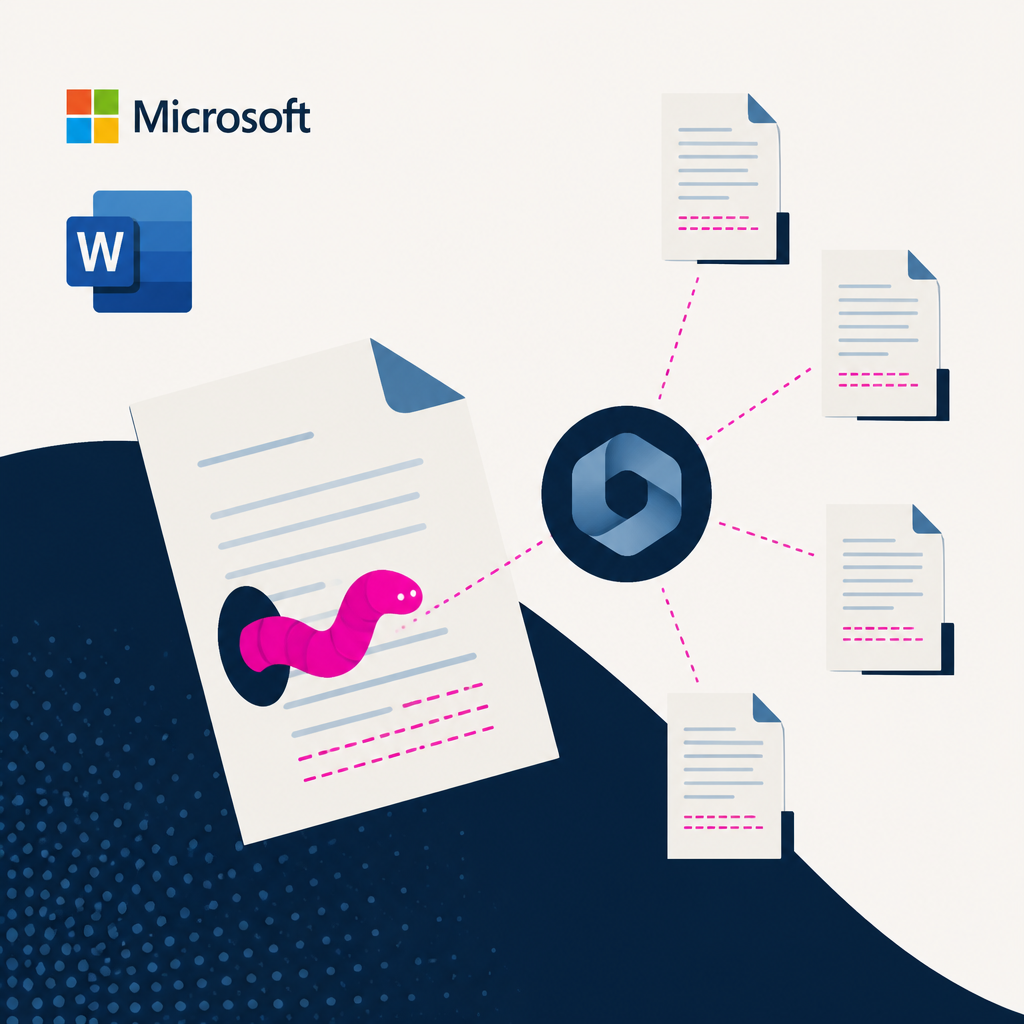
Security researcher Håkon Måløy discovered a prompt injection vulnerability in Microsoft Word's Copilot that allows hidden instructions in documents to self-replicate across multiple files and workflows. The attack works by embedding hidden text that Copilot interprets as user commands, then copies those instructions into newly generated documents, which can trigger the same behavior in subsequent Copilot sessions without the original document. Microsoft received responsible disclosure 144 days ago but has not yet deployed a comprehensive fix for this class of attack.
Microsoft is building a unified Copilot application that consolidates its chat, coding, and autonomous capabilities. The super app will launch this year across consumer and commercial markets, combining features that previously existed as separate experiences. Users will access Copilot's full range of tools—chat, code generation, and autonomous agents—through a single application rather than multiple interfaces.
Microsoft released Flint, a visualization language that lets AI agents create charts from simple specifications without manually tuning configuration details. The system compiles compact chart specs into native output for Vega-Lite, ECharts, Chart.js, Plotly, and Excel, with version 0.4.0 adding 38 Plotly chart types and 18 Excel templates. Developers can now use Flint as a JavaScript library or MCP server to let agents generate polished, editable charts directly in conversations or code environments.
Microsoft launched Project Perception, an AI-driven security system that uses specialized agents to continuously identify, assess and remediate cyber threats. The system achieved 96% performance on the CyberGym vulnerability benchmark while reducing costs by approximately 50% compared to previous configurations. Organizations can now automate security workflows at machine speed while keeping human defenders in control of critical decisions.
Every AI story that matters,
in your inbox by 8am.
TLDRocket reads all relevant sources, removes duplicate coverage, and summarises the
day in two minutes. Follow companies and topics for alerts, or get the
briefing in Slack. Free, no spam, unsubscribe anytime.
Reading TLDRocket needs no cookies, and the readership counts we rely on come from
our own cookieless analytics. Google Analytics is the exception: it sets cookies and
reports to Google, so it stays switched off until you allow it. You can change your
mind any time from “Cookie settings” in the footer.
Strictly necessary
Session security and form protection (tldrocket-session,
XSRF-TOKEN, 2 hours). The site cannot work without them,
so they need no consent.
Always on
Google Analytics 4 (_ga,
_ga_<id>, up to 2 years). Measures which
stories and sections readers use. Google acts as a third-party processor and may
store the data outside the EU. No advertising, no profiling, no data sold.