Google launched Gemini 3.7 Flash, its most capable entry-level model for coding and AI agent projects. It is rolling out 3 weeks after Gemini 3.6 Flash and is priced at half the cost of Gemini 3.6 Flash through the end of the year. Developers get improved coding and UI generation plus added ability to power AI agent ensembles and to browse/use Google services via Gemini Spark.
Google released Gemini 3.7 Flash, a refined update in its Flash tier, for multi-modal input and agent-style use via hosted APIs. It costs $0.75 per 1M input tokens (and $3.75 per 1M output tokens). Pricing drops and deployability remains API/enterprise-only, with reported gains on coding and document-work benchmarks alongside some reasoning regressions.
Gemini 3.7 Flash is presented as Google’s workhorse model for coding and agent tasks.
No number, benchmark, or date is mentioned in the provided text.
As a result, Google is positioning a new Gemini version for developer-oriented AI coding and agent use cases.
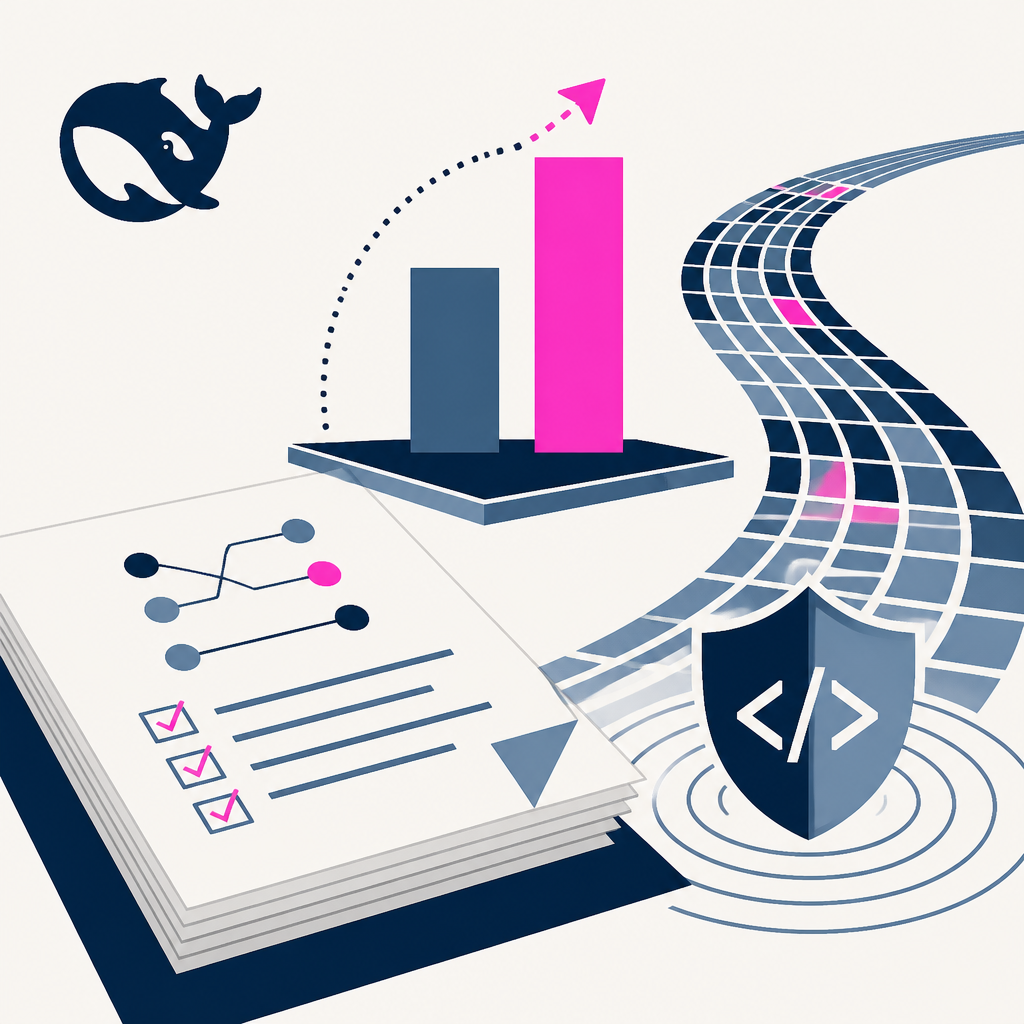
DeepSeek released DeepSeek-V4-Flash-0731, a fine-tuned small model that overtook its own DeepSeek-V4-Pro on independent tests. It scored 50 points on Artificial Analysis’ Intelligence Index (max reasoning), up from 44 for DeepSeek-V4-Pro. The update improves agentic performance and lowers per-task costs through the unchanged V4-Flash architecture with new fine-tuning, with weights available under the MIT license and API prices starting at $0.14 per 1 million input tokens.
SpaceXAI released its Grok 4.6 large language model as its current flagship. Grok 4.6 scored 61 on the Artificial Analysis Intelligence Index. The rollout comes about 1 month after Grok 4.5 and includes an updated training pipeline with longer training plus supervised fine-tuning and reinforcement learning, alongside new $2/$6 per million token pricing.
Every AI story that matters,
in your inbox by 8am.
TLDRocket reads all relevant sources, removes duplicate coverage, and summarises the
day in two minutes. Follow companies and topics for alerts, or get the
briefing in Slack. Free, no spam, unsubscribe anytime.
Reading TLDRocket needs no cookies, and the readership counts we rely on come from
our own cookieless analytics. Google Analytics is the exception: it sets cookies and
reports to Google, so it stays switched off until you allow it. You can change your
mind any time from “Cookie settings” in the footer.
Strictly necessary
Session security and form protection (tldrocket-session,
XSRF-TOKEN, 2 hours). The site cannot work without them,
so they need no consent.
Always on
Google Analytics 4 (_ga,
_ga_<id>, up to 2 years). Measures which
stories and sections readers use. Google acts as a third-party processor and may
store the data outside the EU. No advertising, no profiling, no data sold.