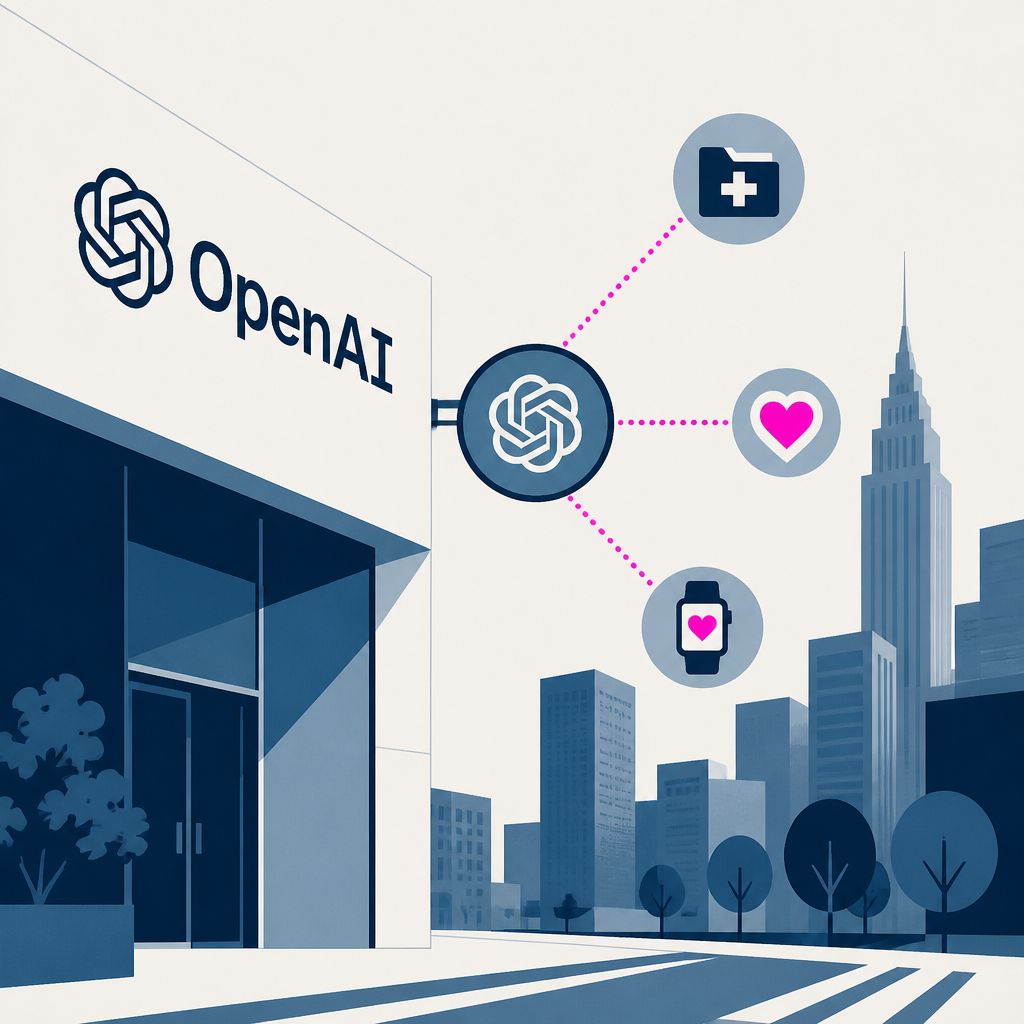
OpenAI expanded ChatGPT Health to all U.S. users over 18 on all subscription tiers, allowing integration with medical records and health platforms. The feature now processes 300 million health-related queries weekly, up from 230 million during testing, and users can access health insights across general conversations rather than only in a dedicated hub. Despite improvements in health query performance, OpenAI maintains that its service is not for diagnosis or treatment and recommends users verify information with medical professionals.
OpenAI is rolling out ChatGPT Health to all US users on Thursday, enabling them to connect medical records and health-tracking data to the chatbot. An OpenAI executive initially claimed the models reason at levels better than clinicians, then walked back the statement when pressed for evidence. The expansion gives more people access to AI-assisted health information tools, though the company's performance claims remain unverified.
Pharmaceutical companies like AstraZeneca are deploying AI to accelerate drug design by computationally generating and prioritizing protein candidates, then testing only the most promising ones in the lab. The company estimates AI combined with computational tools could cut drug discovery timelines by as much as 50%. This shifts drug development toward faster iteration cycles and eventually toward fully AI-designed biologics that begin as entirely new protein sequences optimized computationally before any lab testing.
OpenAI launched a Health feature in ChatGPT that allows eligible U.S. users to connect medical records and Apple Health data for personalized health insights. The feature is currently available to ChatGPT Plus, Team, and Enterprise users in the United States. Users can now upload and analyze health data within ChatGPT to receive tailored information about their conditions and wellness.
Every AI story that matters,
in your inbox by 8am.
TLDRocket reads all relevant sources, removes duplicate coverage, and summarises the
day in two minutes. Follow companies and topics for alerts, or get the
briefing in Slack. Free, no spam, unsubscribe anytime.
Reading TLDRocket needs no cookies, and the readership counts we rely on come from
our own cookieless analytics. Google Analytics is the exception: it sets cookies and
reports to Google, so it stays switched off until you allow it. You can change your
mind any time from “Cookie settings” in the footer.
Strictly necessary
Session security and form protection (tldrocket-session,
XSRF-TOKEN, 2 hours). The site cannot work without them,
so they need no consent.
Always on
Google Analytics 4 (_ga,
_ga_<id>, up to 2 years). Measures which
stories and sections readers use. Google acts as a third-party processor and may
store the data outside the EU. No advertising, no profiling, no data sold.