AMD reported second-quarter data center revenue of $6.7 billion, up 107% year-over-year, as the company transitions to full-stack AI infrastructure with its new Helios platform. The company posted total revenue of $11.54 billion and guided for third-quarter revenue of $13 billion, signaling continued acceleration in AI-related demand. AMD is shifting from selling individual chips to competing as a complete systems provider, positioning itself to capture larger hyperscale AI infrastructure contracts against Nvidia.
SpaceX has purchased $329 million worth of Tesla Megapack battery storage devices so far in 2026, with $295 million spent in the second quarter alone, according to the company's earnings report. The batteries are being deployed at xAI data centers that SpaceX acquired earlier this year, and before the merger xAI had already bought $430 million worth of Megapacks. Battery systems help AI data centers manage fluctuating power demands from GPU training and inference, smoothing peak loads to reduce costs and prevent generator overload.
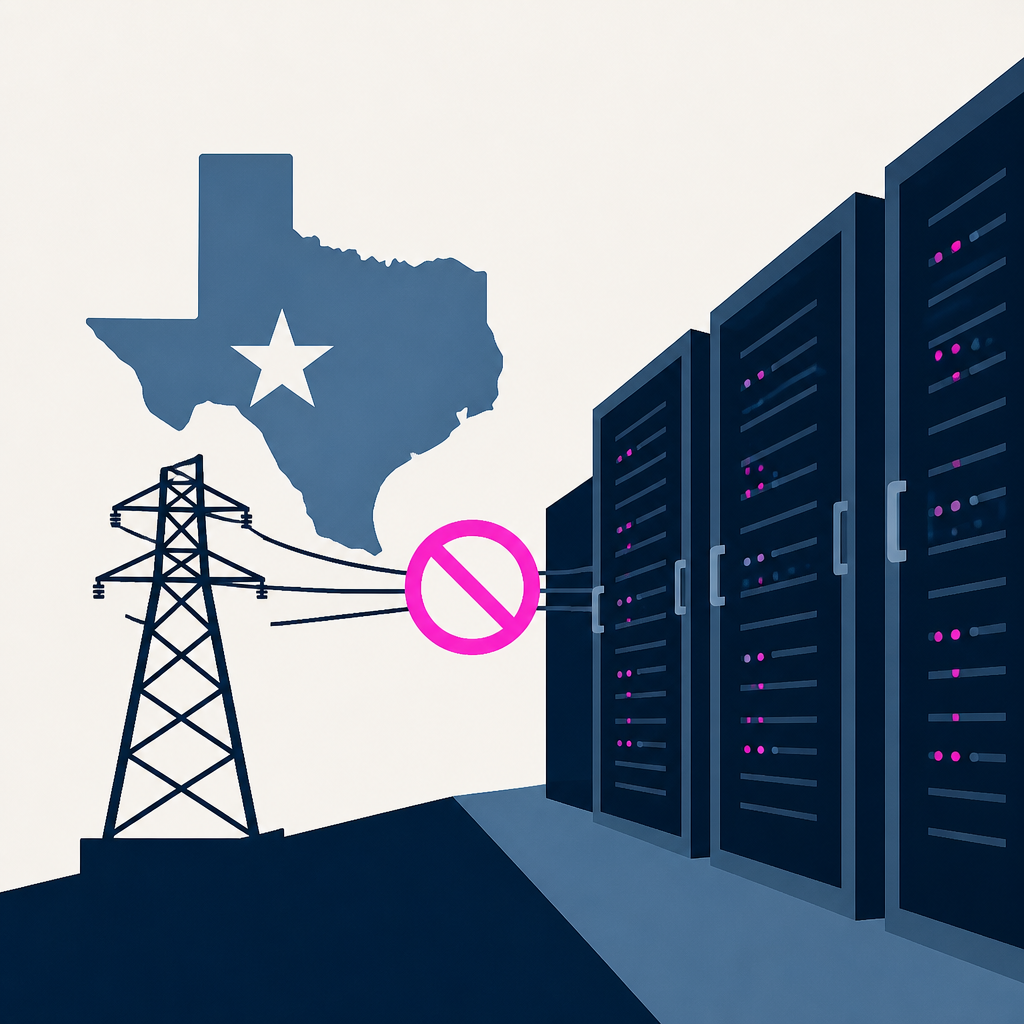
Texas Governor Greg Abbott declared a moratorium on new data center power grid connections, citing the need for comprehensive audits of projects' impact on the grid and communities. ERCOT, Texas's independent grid operator, must now verify all data centers in its interconnection process before approvals can proceed. The halt slows Texas's rapid expansion as a data center hub despite the state's previous aggressive recruitment of the industry through tax breaks and deregulation.
Cursor Research open-sourced Mixture-of-Kittens, a mixture-of-experts training kernel that fuses all MoE communication and computation into a single deterministic megakernel for large GPU clusters.The kernel achieves up to 2.37x higher throughput than existing baselines and requires NVIDIA Blackwell GPUs in GB300 NVL72 racks with Python 3.12+, PyTorch 2.10+, and CUDA 13.0+.Organizations with access to large-scale GPU infrastructure can now use MoK under Apache-2.0 to accelerate training of mixture-of-experts models like DeepSeek-V3-style architectures.
AMD's data center revenue reached $6.7 billion in its latest quarter, more than doubling year-over-year as demand for AI infrastructure surges, while gaming revenue fell 31 percent to $779 million due to price increases and component shortages affecting console and handheld sales. Data center now represents 58% of AMD's total revenue of $11.5 billion, up from $3.2 billion in the same quarter last year. AMD is pivoting its business toward enterprise AI customers while de-emphasizing consumer gaming hardware.
Texas Governor Greg Abbott announced that all new data center projects must undergo audits by state regulators, citing concerns about grid capacity and rising electricity prices. ERCOT's interconnection queue has grown to 474 gigawatts of pending projects—more than 90% data centers—more than doubling from 233 gigawatts in January, representing over five times the grid's peak demand. The audits could slow or halt Texas's role as a major data center hub if regulators determine projects pose risks to grid reliability or electricity costs.
Nvidia open-sourced its cuFile API, which enables GPUs to read data directly from storage in milliseconds by bypassing the CPU and system memory. The API uses direct memory access (DMA) to move data from NVMe drives straight into GPU memory, with the company also launching Storage-Next, an industry initiative involving 40 storage and flash vendors to optimize GPU-driven storage. This direct access path prevents GPU starvation—where GPUs sit idle waiting for data—and allows AI inference and retrieval-augmented generation workloads to run faster by eliminating memory bottlenecks.
Runware, an AI infrastructure company, announced the Sonic Inference Pod, a modular transportable data center unit designed for AI inference workloads. The company currently operates 10 pods deployed across the U.S., Europe, and Asia-Pacific, with 160 available sites, following a $50 million Series A funding round in December. The pod design enables faster deployment, distributed computing closer to users, and avoids water cooling, positioning Runware as an alternative to traditional hyperscale data center expansion.
Rafay Systems is positioning itself to provide the operating software layer for AI cloud providers, helping them turn expensive GPU infrastructure into secure, multitenant services. The company's key differentiator is rapid deployment capability—compressing delivery cycles from months to weeks or days—rather than just software alone. Providers that can operationalize infrastructure quickly and offer frictionless customer experiences will win against those relying solely on GPU ownership.
Every AI story that matters,
in your inbox by 8am.
TLDRocket reads all relevant sources, removes duplicate coverage, and summarises the
day in two minutes. Follow companies and topics for alerts, or get the
briefing in Slack. Free, no spam, unsubscribe anytime.
Reading TLDRocket needs no cookies, and the readership counts we rely on come from
our own cookieless analytics. Google Analytics is the exception: it sets cookies and
reports to Google, so it stays switched off until you allow it. You can change your
mind any time from “Cookie settings” in the footer.
Strictly necessary
Session security and form protection (tldrocket-session,
XSRF-TOKEN, 2 hours). The site cannot work without them,
so they need no consent.
Always on
Google Analytics 4 (_ga,
_ga_<id>, up to 2 years). Measures which
stories and sections readers use. Google acts as a third-party processor and may
store the data outside the EU. No advertising, no profiling, no data sold.