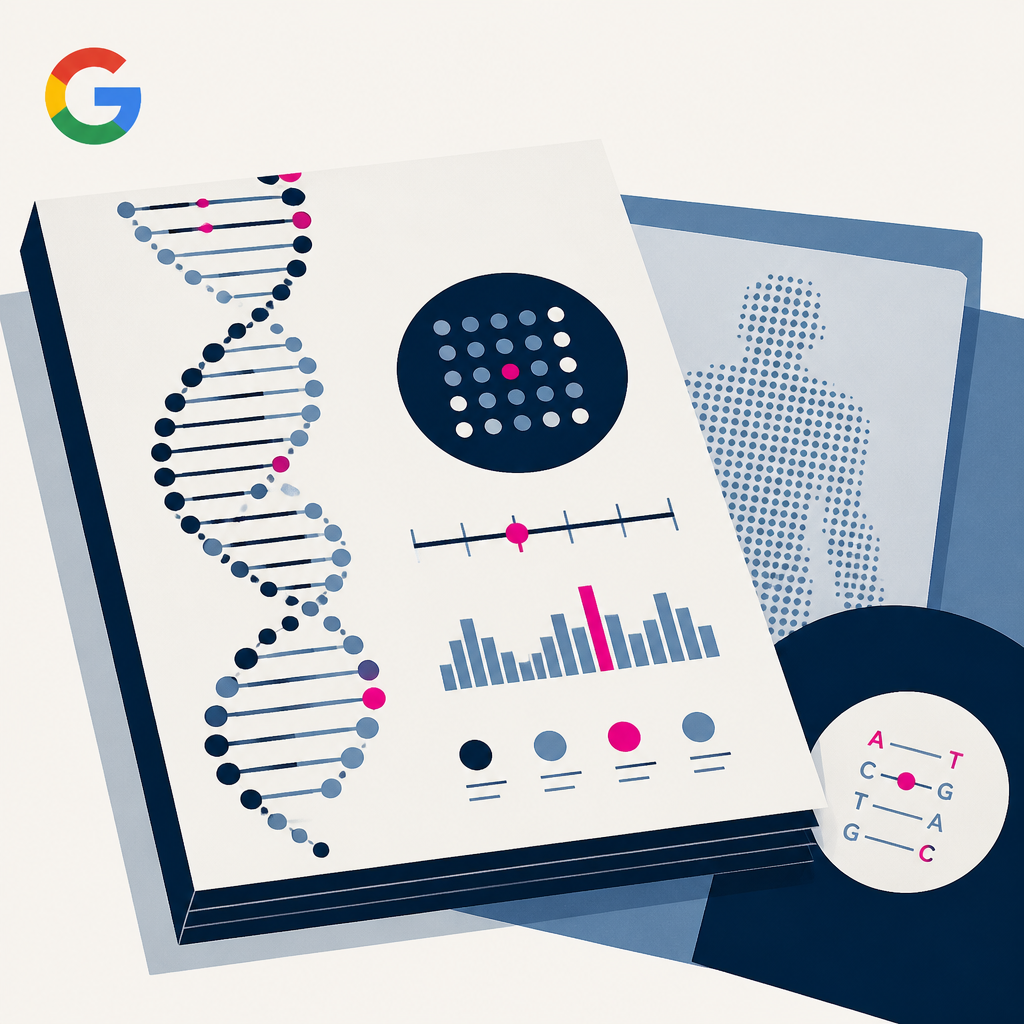
Google DeepMind released AlphaGenome Atlas, a web and API resource that provides precomputed predictions for the molecular effects of human single-nucleotide variants along with an AlphaGenome Variant Impact (AVI) score and attribution breakdowns. It covers roughly 9 billion possible single-letter DNA changes and is built from a 1-petabyte set of stored model outputs. Instead of rerunning the AlphaGenome model for each candidate variant, researchers can query the precomputed results (non-commercial now; commercial access is listed as coming soon).
AlphaGenome Atlas launches today as a Google DeepMind AI-powered map of how human DNA mutations may affect biology. It includes precomputed predictions for 9 billion possible single-letter DNA changes in a 1-petabyte dataset. Researchers can now explore and prioritize variants through a free web interface, with API access for deeper work.
AlphaGenome Atlas, from Google DeepMind, released precomputed AI predictions covering the effects of 9 billion single-nucleotide DNA variants across the human genome.
Google DeepMind announced and publicly released the AlphaGenome Atlas, a web repository of pre-computed AlphaGenome predictions for human DNA variants. The atlas includes predictions for 9 billion possible single-letter changes to a reference human genome. Researchers can now look up variant effects via the site—without running AlphaGenome code—and use a single-number impact score to prioritize experiments, though the predictions have limits like a 1 million base-pair input window.
Google DeepMind unveiled AlphaGenome Atlas, an AI tool aimed at helping researchers decode the human genome and biology. It includes a predictive map of every possible DNA letter change, with the human genome containing roughly 3 billion letter pairs. This is expected to accelerate scientific research and potentially enable new treatments for diseases.
Every AI story that matters,
in your inbox by 8am.
TLDRocket reads all relevant sources, removes duplicate coverage, and summarises the
day in two minutes. Follow companies and topics for alerts, or get the
briefing in Slack. Free, no spam, unsubscribe anytime.
Reading TLDRocket needs no cookies, and the readership counts we rely on come from
our own cookieless analytics. Google Analytics is the exception: it sets cookies and
reports to Google, so it stays switched off until you allow it. You can change your
mind any time from “Cookie settings” in the footer.
Strictly necessary
Session security and form protection (tldrocket-session,
XSRF-TOKEN, 2 hours). The site cannot work without them,
so they need no consent.
Always on
Google Analytics 4 (_ga,
_ga_<id>, up to 2 years). Measures which
stories and sections readers use. Google acts as a third-party processor and may
store the data outside the EU. No advertising, no profiling, no data sold.