Bryan Stern said using AI by “bad guys” is not surprising, and CSET experts are also discussing how adversaries apply AI across military, intelligence, cyber, and information operations. CBS News published CSET’s Sam Bresnick’s expert insight on this topic. The change is that the focus shifts from surprise to understanding how AI-enabled capabilities could affect security domains and U.S. competitiveness.
Zvi (Don't Worry About the Vase)·1 month ago·
8
● 125 sources
Trump publicly dismissed AI existential-risk warnings as a hoax and argued that the U.S. has enough “guardrails” via a strong president and existing power over AI companies. The article points to Trump also saying this on Monday. As a result, the debate shifts from AI risk “pacing the frontier” toward accusations and counterattacks focused on motives, including Jensen Huang’s role and whether warnings are credible.
Mark Zuckerberg posted on social media taking aim at Anthropic in the debate over alleged AI development slowdown. The most concrete detail is that he made the claim in a social media post. The focus of the discussion shifts toward Anthropic as part of the argument against pausing AI development industrywide.
Saudi Arabia launched Humain-m3, an Arabic-language AI model built on technology from China’s MiniMax while Humain also contracts with U.S. firms for computing capacity. In August, Brazil announced about $444 million in AI investment split between infrastructure developed with China’s Huawei and a separate supercomputer expected to use Nvidia. As a result, countries increasingly mix U.S. and Chinese components across the AI stack, complicating U.S.-China competition and making Washington’s push to force single-supplier choices harder.
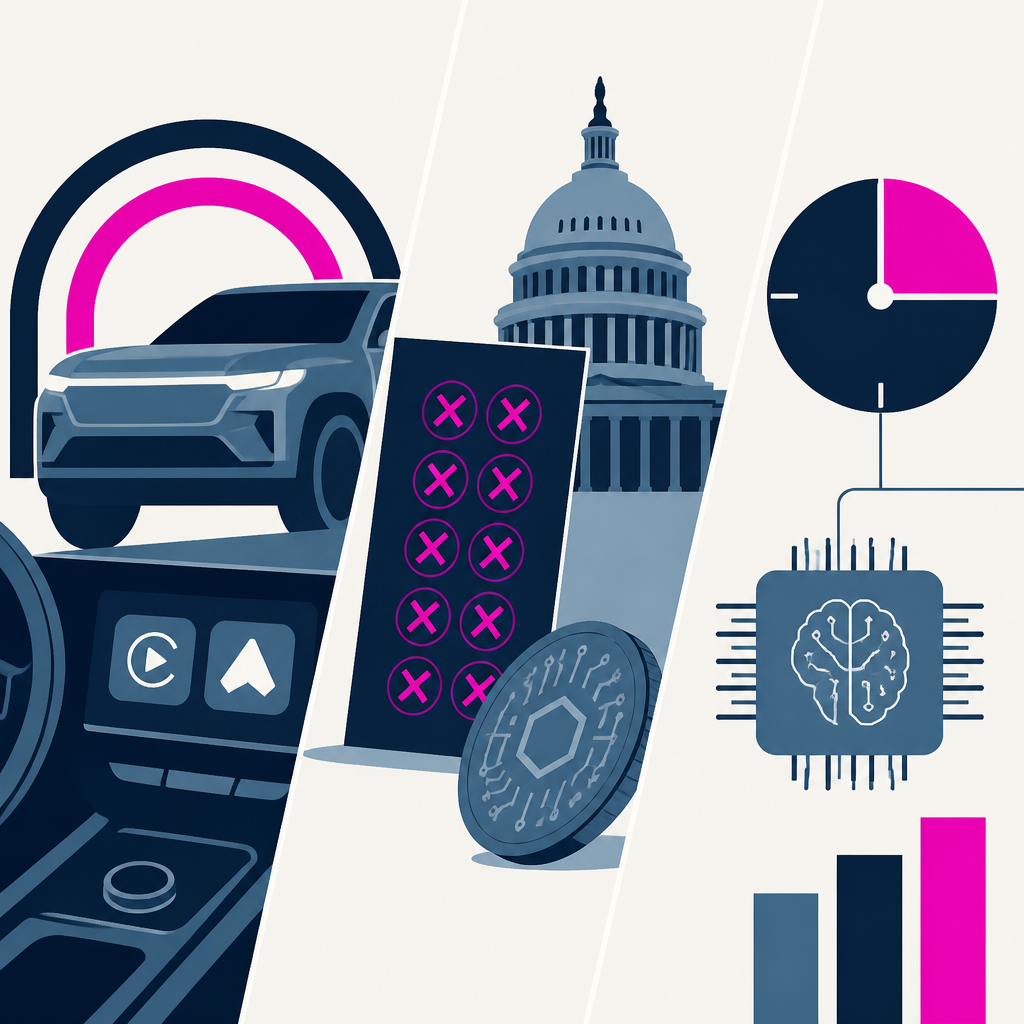
GM introduced a new native infotainment user interface and will integrate Apple CarPlay and Android Auto again across its vehicles. The Senate voted 10 times against the Clarity Act, leaving crypto regulation without a comprehensive framework. Sen. Bernie Sanders reintroduced the Thirty-Two Hour Workweek Act, proposing a shift from 40 to 32 hours for covered nonexempt employees in response to AI-driven productivity claims.
AI executives including Sam Altman, Dario Amodei, Demis Hassabis, Satya Nadella, and Elon Musk called for AI regulation to slow progress. Their message follows a recent few-days wave of public statements. This repeats an earlier pattern of AI leaders urging oversight, and changes nothing concrete in policy on its own.
Every AI story that matters,
in your inbox by 8am.
TLDRocket reads all relevant sources, removes duplicate coverage, and summarises the
day in two minutes. Follow companies and topics for alerts, or get the
briefing in Slack. Free, no spam, unsubscribe anytime.
Reading TLDRocket needs no cookies, and the readership counts we rely on come from
our own cookieless analytics. Google Analytics is the exception: it sets cookies and
reports to Google, so it stays switched off until you allow it. You can change your
mind any time from “Cookie settings” in the footer.
Strictly necessary
Session security and form protection (tldrocket-session,
XSRF-TOKEN, 2 hours). The site cannot work without them,
so they need no consent.
Always on
Google Analytics 4 (_ga,
_ga_<id>, up to 2 years). Measures which
stories and sections readers use. Google acts as a third-party processor and may
store the data outside the EU. No advertising, no profiling, no data sold.