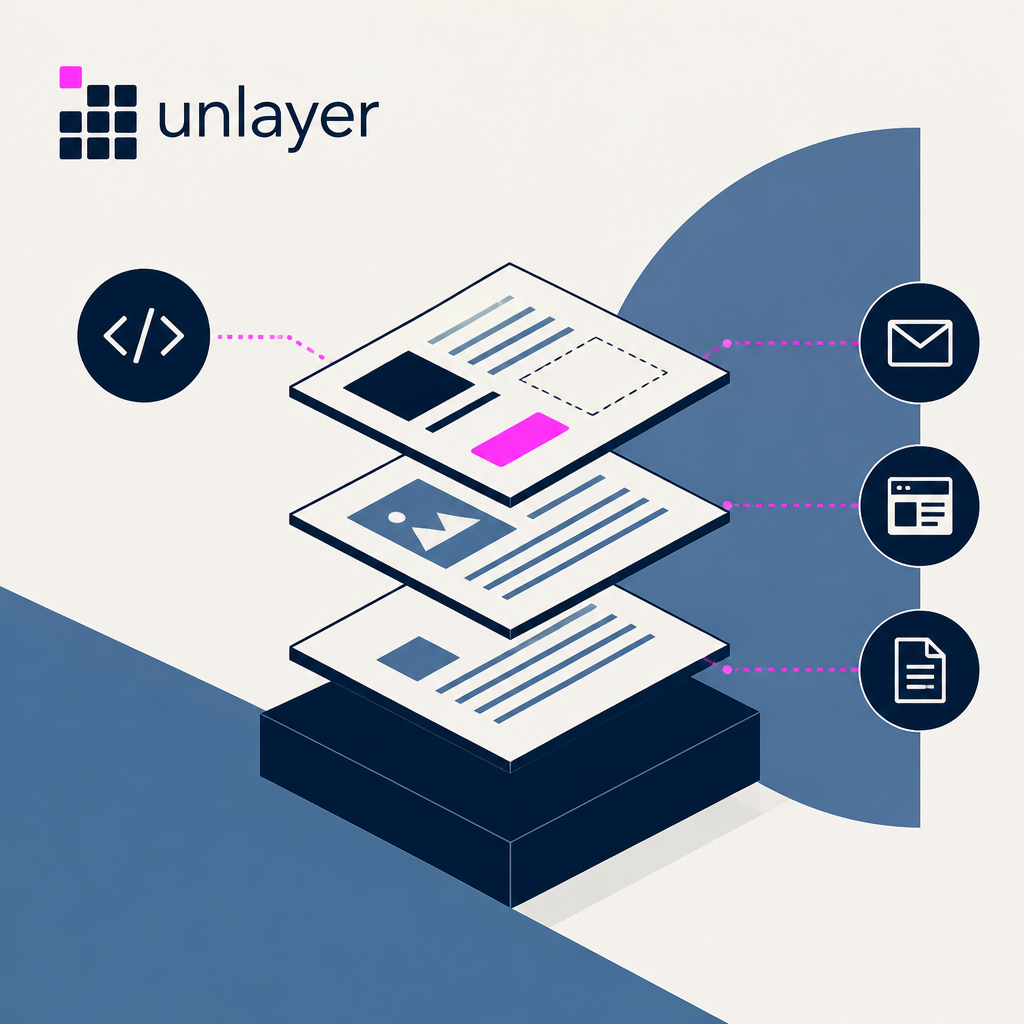
Unlayer, a Y Combinator W22 startup, launched a platform that lets developers embed email, web page, and document builders into their applications without building the entire editor and rendering stack themselves. The product offers three workflows: code-based creation using React components (Elements), visual drag-and-drop editing, and AI-assisted content generation, with a business model around selling hosted features and platform capabilities. The expansion from an email-only editor to a general content creation layer reflects growing demand across multiple document types and workflows in SaaS applications.
Ditto is an open-source tool that converts websites into clean, componentized Next.js or Vite code without using LLMs, instead employing a deterministic cloning process. The tool completes website conversions within 5 minutes and extracts design systems, tokens, fonts, interactions, and responsive breakpoints into reusable components. It offers three deployment options—self-hosted, hosted API, or integration with AI agents—enabling developers to generate production-ready codebases as starting points instead of building from blank templates.
CartAI offers an API that deploys autonomous agents to complete transactions across any merchant website, handling checkout, subscriptions, invoice payments, and order submissions through a single specialized primitive. The platform provides three deployment options: an API for developers, an MCP server for AI agents, and a hosted cart component, with PCI-compliant payment processing and bot-mitigation through standard trust infrastructure. This enables automation of existing transactional processes, embedding transactions into new applications, and adding transaction capabilities to surfaces that previously lacked them.
Niobium open-sourced its fully homomorphic encryption (FHE) developer toolkit on GitHub under Apache 2.0, including a domain-specific language, design methodology, and client tools for building encrypted computation applications. The toolkit includes a Niobium DSL compiler, an FHE Application Design Skill for Claude Code agents, example applications like similarity search and network monitoring, and a simulator that runs on standard CPUs. Developers can now experiment with FHE applications locally before deploying to Niobium's Fog hardware platform, removing barriers to building privacy-preserving server applications that compute on data without ever decrypting it.
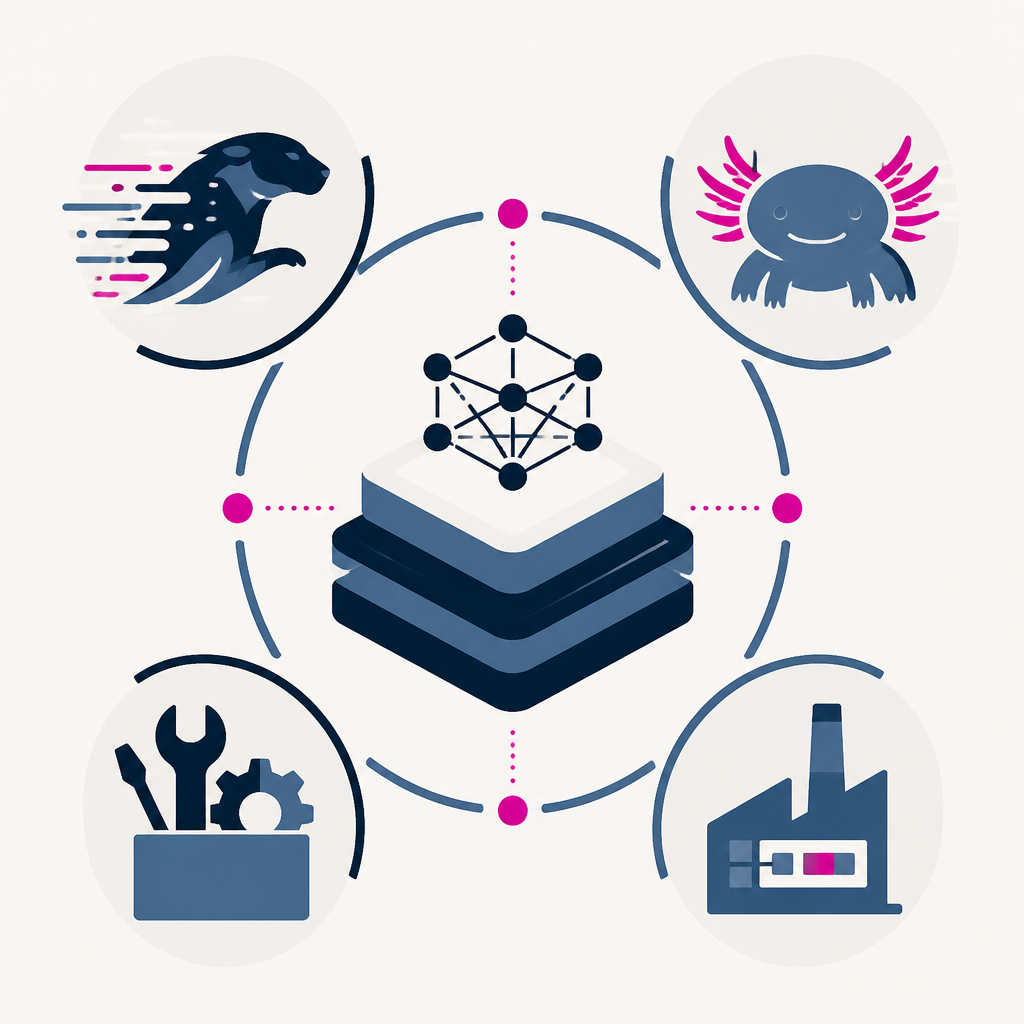
Four open source LLM fine-tuning frameworks—Unsloth, Axolotl, TRL, and LLaMA-Factory—dominate the landscape, each optimizing different aspects: Unsloth rewrites kernels with Triton for speed, Axolotl composes parallelism strategies, TRL provides the underlying trainer APIs, and LLaMA-Factory focuses on model coverage with a web UI. The comparison evaluates these frameworks on training throughput, peak VRAM usage, and multi-GPU scaling performance. Engineers can now choose based on whether they prioritize kernel-level optimization, parallelism composition, trainer flexibility, or breadth of model support.
Raycast CEO Thomas Paul Mann discussed Glaze, a new AI tool that lets users build custom Mac apps by describing them in plain English, arguing that hyper-personalized software built for individual needs will replace bloated commercial applications. Glaze launched July 1 and has over 3,000 open-source extensions available, with Mann predicting that within three years 30 to 50 percent of Mac software could be self-made. The shift enables users to avoid software compromises where companies add excessive features for growth, instead creating tailored tools that stay focused on specific personal workflows.
Every AI story that matters,
in your inbox by 8am.
TLDRocket reads all relevant sources, removes duplicate coverage, and summarises the
day in two minutes. Follow companies and topics for alerts, or get the
briefing in Slack. Free, no spam, unsubscribe anytime.
Reading TLDRocket needs no cookies, and the readership counts we rely on come from
our own cookieless analytics. Google Analytics is the exception: it sets cookies and
reports to Google, so it stays switched off until you allow it. You can change your
mind any time from “Cookie settings” in the footer.
Strictly necessary
Session security and form protection (tldrocket-session,
XSRF-TOKEN, 2 hours). The site cannot work without them,
so they need no consent.
Always on
Google Analytics 4 (_ga,
_ga_<id>, up to 2 years). Measures which
stories and sections readers use. Google acts as a third-party processor and may
store the data outside the EU. No advertising, no profiling, no data sold.