
Launch HN: Unlayer (YC W22) – Add email and document builders to your app
unlayer.com adeelraza
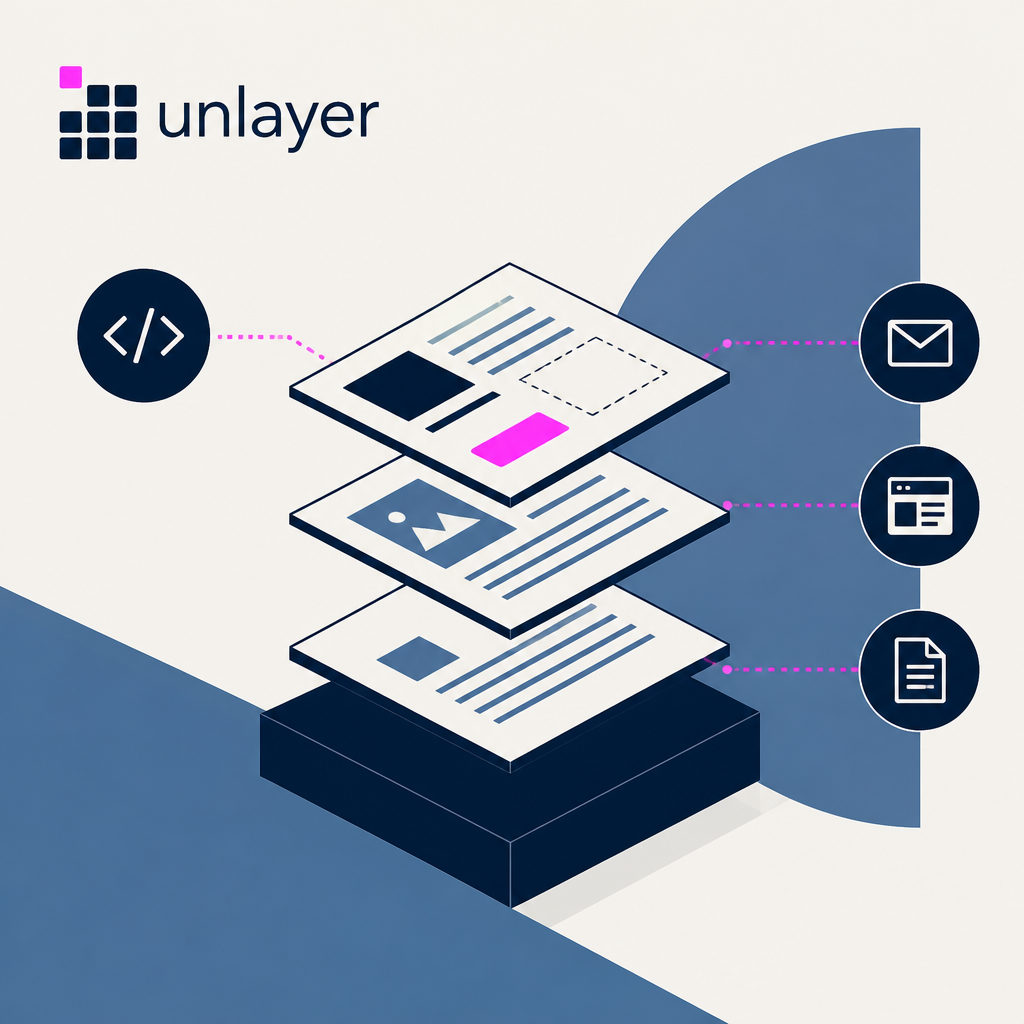
Unlayer just relaunched on HN as a full email, page, and document builder toolkit for apps, three years after its first YC launch.
Based on reporting by unlayer.com, adeelraza — read the original for the full story.
Summary, retelling and take written by AI under human oversight; images are AI-generated illustrations. How we work · Report an error
Adeel and Umair, the founders behind Unlayer, are back on Hacker News with a pitch that's grown considerably since their W22 batch. What started as a plug-in email editor has turned into something broader: a way for apps to generate emails, landing pages, invoices, contracts, and reports without every team reinventing the same rendering headaches from scratch.
The core insight hasn't changed much since 2022, just gotten bigger. Any product with users tends to eventually need a drag-and-drop editor, and that always sounds trivial until someone actually builds it. Then you're neck-deep in Outlook rendering bugs, merge tags, responsive breakpoints, image uploads, and versioning, none of which has anything to do with the actual product you set out to make. Unlayer's bet is that this pain generalizes past email into basically any structured document a business needs to produce.
The launch has three pieces. Unlayer Elements is an open-source React library (on GitHub) for building templates in code, letting developers compose reusable headers, footers, and invoice rows instead of hand-rolling HTML. The Visual Builder is the embeddable drag-and-drop editor, now with an AI assistant baked in, aimed at letting non-technical users edit what developers built. And the Document Builder extends the same block-and-variable model to PDFs, proposals, and reports, treating them as siblings of email templates rather than a separate problem needing separate tooling.
The more interesting wrinkle is the AI angle. When an agent is asked to draft an email or report, it typically spits out raw HTML or markdown that's a nightmare to maintain or hand off. Unlayer wants agents to instead output structured React components through Elements, so a human can review, refactor, and still drop the result into the visual editor later. Whether that becomes a real workflow or just a nice demo is the kind of thing 40 comments on a Show HN thread tend to sort out fast.
Money comes from the usual open-core playbook: Elements stays free and open source, while the hosted platform, with its exports, storage, collaboration, and production features, is what companies actually pay for. It's a well-worn model, but one that fits a tool meant to sit quietly inside other people's products rather than compete for attention on its own.
My take — AI-written commentary, not fact-checked reporting
Every SaaS company eventually builds a bad clone of a drag-and-drop editor, and every one of them regrets it about eighteen months in. Unlayer betting that AI agents will need structured output rather than HTML soup is the smart part of this launch, not the editor itself, and it's the piece worth watching as more products start letting agents generate customer-facing content unsupervised.
Read more about this at: unlayer.com
Related stories
 Launch HN: Vendo (YC S26) – Let users build features on top of your product
GitHub · 4 weeks ago ·
32
Launch HN: Vendo (YC S26) – Let users build features on top of your product
GitHub · 4 weeks ago ·
32
 Launch HN: Hyper (YC P26) – Company brain to power agentic development
Hacker News · 3 months ago ·
50
Launch HN: Hyper (YC P26) – Company brain to power agentic development
Hacker News · 3 months ago ·
50
 Launch HN: Prized (YC S26) – Let non-engineer staff build secure internal tools
prized.dev · 1 month ago ·
44
Launch HN: Prized (YC S26) – Let non-engineer staff build secure internal tools
prized.dev · 1 month ago ·
44