WebTerm launched a browser-based terminal sandbox so people can learn Linux, Git, and Vim commands without risking their local setup. It offers 12 courses with 129 lessons and is free to use in beta. As a result, learners can practice CLI and AI-related command workflows in an ephemeral, no-signup environment instead of using their own terminal.
TaskShell 2.0 is presented as a task management approach focused on being agent-first for more agentic productivity. The only concrete detail provided is the “2.0” version label. This indicates a new iteration of the concept, but the article text here does not include further specifics.
JetBrains released Junie Local, a free coding agent that runs entirely on a developer’s Mac instead of using cloud models. It downloads about 20 GB and requires macOS 26 with at least 64 GB unified memory and an Apple M5 (or newer). Setup is now handled inside Junie (including local model/Qwen3.6 selection and inference), so coding prompts, source, and diffs stay on the machine.
Replit CEO and co-founder Amjad Masad will speak at TechCrunch Disrupt 2026’s Disrupt Stage in San Francisco. The event runs October 13–15, and Replit’s valuation rose from $3 billion to $9 billion within six months earlier this year. The program adds Masad’s discussion on the future of programming and building sustainable companies in the AI era, with multiple other stages covering AI, security, and infrastructure.
Anthropic replaced its Workbench prompt-testing tool in the developer Console with Playground on August 18, removing saved prompts, version history, evals, and team sharing while making the new tool stateless. The cutoff to export old Workbench data is September 1. In a developer test, Anthropic’s Playground produced a working no-edits code export and clearer max-token failure messaging, while OpenAI’s export generated a transcript-based script that returned nothing new.
Simon Willison’s Weblog·1 month ago·
22
● 3 sources
The llm-anthropic plugin released version 0.27 to provide LLM access to Anthropic’s Claude models. The update was published on 24th August 2026 and mainly adds compatibility with Anthropic’s v1.0.0 Python library by switching from httpx to httpx2. This changes the integration path by aligning the plugin with the new SDK and requiring the related upgrade/migration steps for tests to pass.
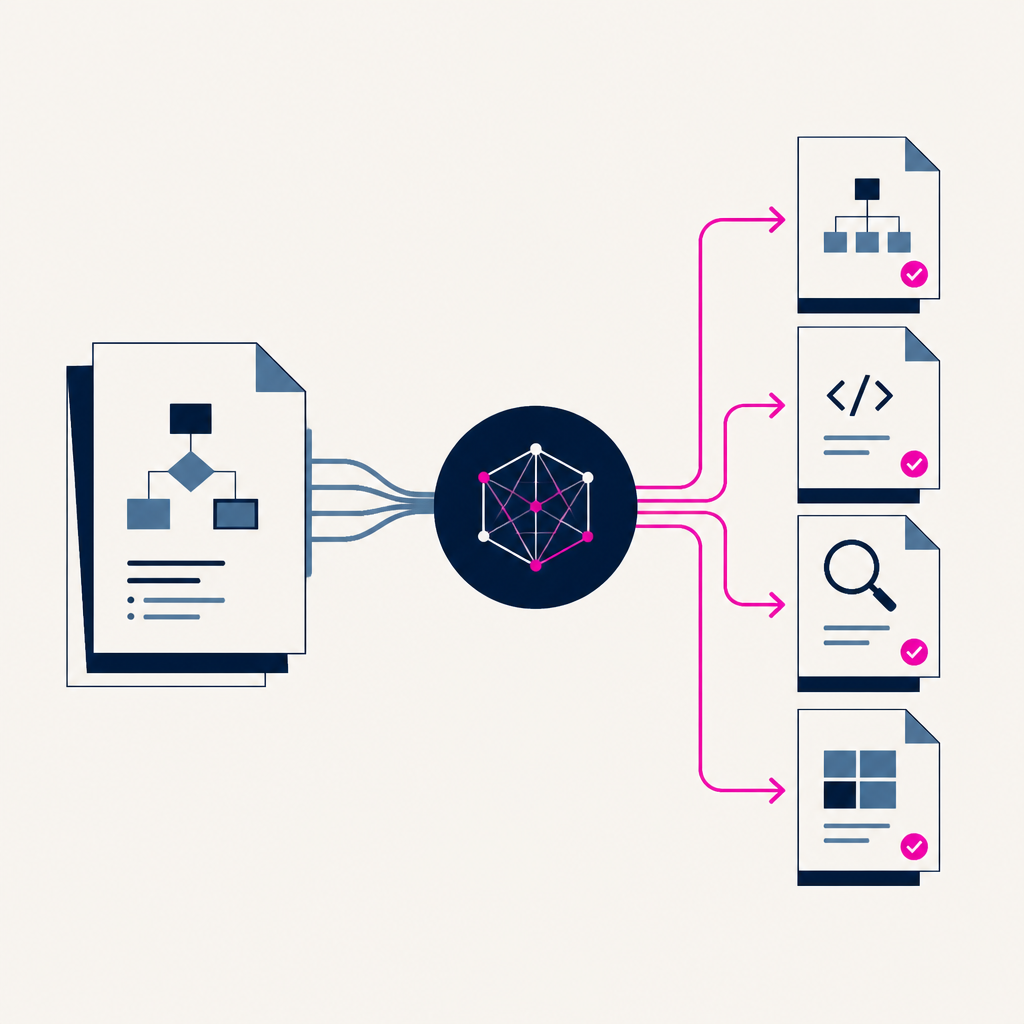
AWS introduced a centralized AWS Agent Registry catalog and the Agentic Resource Discovery (ARD) open specification to enable cross-environment discovery of AI agents and related resources. The ARD standard is licensed under Apache License 2.0 and is published at agenticresourcediscovery.org and on GitHub. AWS positions ARD as an interoperability layer so registries can federate using a shared format without bespoke connectors while keeping local publication and access controls.
CTRL Micro launched as a haptic control deck app that turns an iPhone or iPad into a tactile controller for a Mac and monitoring interface for AI agents.
It uses the Apple Taptic Engine and offers “4x faster” dictation.
The change is that you can track Codex, Claude, and Cursor with live Desktop View and dictate locally via Whisper, including through Remote Anywhere with end-to-end encryption.
Engineering leaders and researchers argue that the AI boom has left universities and workplaces unclear on what “adaptable” means, even as it accelerates tool and skills change for engineers. Employers expect 39 percent of workers’ core skills to change by 2030, and the reported “uncomfortable middle” includes increased code review variability as teams sort out new ways of working. The article says education, managers, and engineers should shift to explicit adaptability training and protected time for continuous learning, while focusing on problem-solving and communication over specific tool details.
Kiro added GPT‑5.6 to help developers plan, build, review, and test software. The update’s concrete detail is just that GPT‑5.6 is available in Kiro. This changes the workflow by routing those development tasks through GPT‑5.6 inside the Kiro product.
AI harnesses are being positioned as the software layer that turns language models into multi-step agents by providing tools, rules, state/memory, and an execution loop. One harness-effect study found Claude Opus 4.5 scored 45.9% on SWE-bench Pro inside a standardized scaffold and 55.4% with Claude Code. The result is that agent performance and cost increasingly depend on the harness (and its setup and security), creating a new competitive layer and locking in workflows and permissions beyond the base model.
Session-indexer provides semantic search over a user’s Claude Code session history.
The page does not list any numbers or dates.
It changes access to past Claude Code work by letting you search the session history by meaning instead of only by browsing records.
MCP-Builder.ai is presented as a way to connect your data with AI tools. No specific technical features, dates, or pricing are provided in the article text—it's essentially just a discussion link. As a result, there’s not enough information here to say what changes in capabilities, costs, or workflows.
Creem launched CREEM 2.0 as a platform aimed at helping AI product builders sell software and digital products with built-in payments, taxes, affiliates, payouts, and usage billing. The launch is scheduled for today. This adds an all-in-one way to handle those back-office functions so selling and growing can be set up faster.
Every AI story that matters,
in your inbox by 8am.
TLDRocket reads all relevant sources, removes duplicate coverage, and summarises the
day in two minutes. Follow companies and topics for alerts, or get the
briefing in Slack. Free, no spam, unsubscribe anytime.
Reading TLDRocket needs no cookies, and the readership counts we rely on come from
our own cookieless analytics. Google Analytics is the exception: it sets cookies and
reports to Google, so it stays switched off until you allow it. You can change your
mind any time from “Cookie settings” in the footer.
Strictly necessary
Session security and form protection (tldrocket-session,
XSRF-TOKEN, 2 hours). The site cannot work without them,
so they need no consent.
Always on
Google Analytics 4 (_ga,
_ga_<id>, up to 2 years). Measures which
stories and sections readers use. Google acts as a third-party processor and may
store the data outside the EU. No advertising, no profiling, no data sold.