OpenAI deployed backend improvements to GPT-5.6 Sol after users reported usage limits depleting faster than expected during agentic tasks that spent time waiting for tool execution. The company made inference improvements that extend typical Sol sessions by 18% and reset usage limits for affected ChatGPT Work and Codex users. The issue exposed a mismatch between subscription limits designed for chat interactions and the token consumption patterns of AI coding agents that perform extended workflows with tool calls and waiting periods.
Anthropic released Claude Opus 5 at half the price of Claude Fable 5 ($5/$25 per million tokens versus $10/$50), claiming comparable performance despite stating Fable 5 remains more capable overall. The author tested both models on three reasoning-heavy tasks—bug diagnosis, financial analysis, and conflicting claims evaluation—spending $6.67 on Opus 5 and $11.76 on Fable 5 for similar token output. Opus 5 excels at catching individual details and facts (26 of 27 errors found) while Fable 5 performs better at higher-level reasoning and synthesis, making model choice dependent on whether the task requires detail accuracy or conceptual understanding.
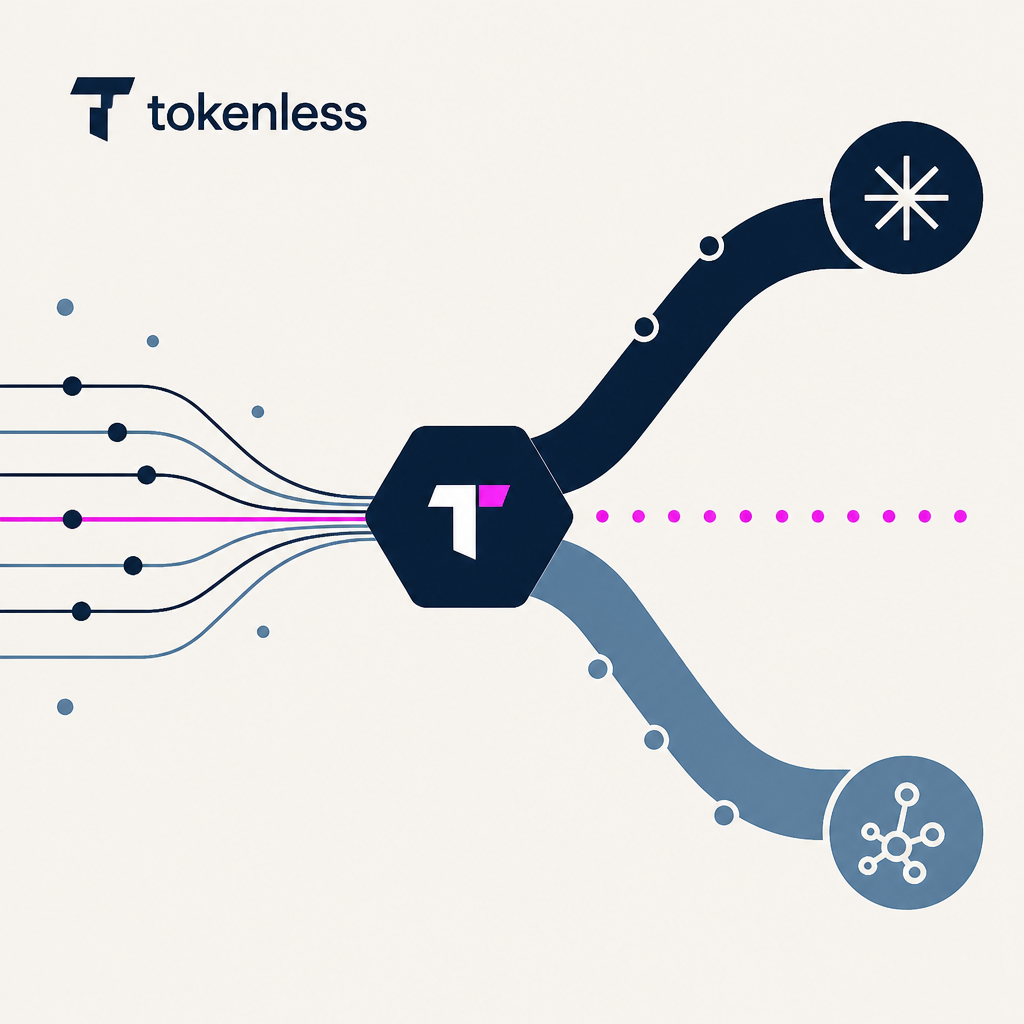
Tokenless, a YC S26 startup, launches an API gateway that dynamically routes requests between different AI models to reduce costs. The system matches Claude 3.5 Sonnet performance at half the cost by routing complex queries to expensive frontier models and simple queries to cheaper open-source models. This approach allows companies to lower their AI infrastructure spending while maintaining quality outputs on demanding tasks.
OpenAI detailed how its GPT-5.6 model family balances capability and cost, with the flagship Sol model outperforming Anthropic's Claude Fable 5 on a coding benchmark while using 54% fewer output tokens. The efficiency gains come from four layers of optimization: autonomous kernel rewrites that reduced serving costs by 20%, speculative decoding that improved token generation by over 15%, incremental tokenization via WebSockets that speeds up tool-heavy workflows by up to 40%, and an append-only agentic harness that reduces context bloat. These compounding improvements position efficiency alongside raw intelligence as a key axis of competition between frontier AI labs.
Nimble launched Web Search Agents, a specialized web research product that learns domain-specific tasks and reduces token consumption for AI agents compared to generic search tools. Benchmark tests showed a 21-point increase in answer quality and 51% fewer tokens spent per query, with customer Rox reporting a 20-fold reduction in token costs. Enterprises can now integrate domain-tuned search into production agents rather than relying on generic results that waste computation on irrelevant pages.
Modus, a startup exiting stealth with $10 million in seed funding, has built a "context warehouse" that continuously maps how a business operates across its systems and delivers only relevant information to AI agents when needed. The platform crawls sources like GitHub, Jira, and Snowflake using a Context Miner, then assembles real-time briefs via a Context Composer to reduce token waste on irrelevant tasks. By pre-processing context in the background rather than at query time, Modus helps enterprises reduce costs by ensuring expensive frontier models receive only the precise information required to complete their assigned tasks.
A developer working with Claude Code on multi-agent tasks discovered that the main cost wasn't running four parallel subagents, but rather the orchestrator agent polling for status updates and dumping full transcript data back into its context, which polluted its working memory for subsequent decisions. The largest avoidable expense came from two transcript-dump operations that brought tens of thousands of tokens of raw JSONL and intermediate reasoning into the main thread unnecessarily. The developer concluded that subagents are most valuable not for raw parallelism, but for isolating noisy reasoning from the orchestrator's context, and encoded this insight into standing rules about cognitive locality—keeping tasks with shared mental models together, avoiding unnecessary polling, and preventing repository-wide operations across concurrent agents.
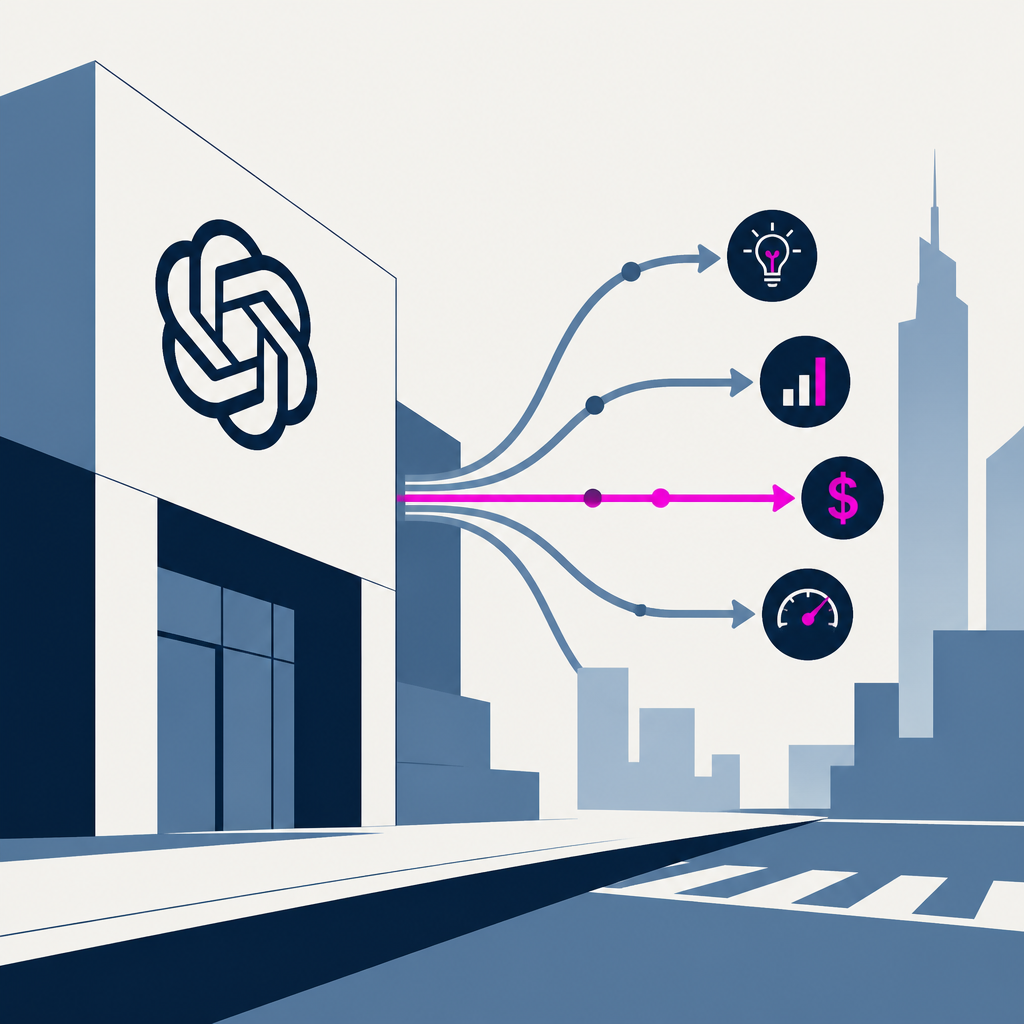
OpenAI released GPT-5.6, which improves efficiency across AI models, inference, and agentic workflows by delivering more useful intelligence per dollar. The model achieves better performance-to-cost ratios compared to prior versions across multiple operational dimensions. This efficiency gain makes advanced AI capabilities more accessible and economical for organizations running large-scale deployments.
Every AI story that matters,
in your inbox by 8am.
TLDRocket reads all relevant sources, removes duplicate coverage, and summarises the
day in two minutes. Follow companies and topics for alerts, or get the
briefing in Slack. Free, no spam, unsubscribe anytime.
Reading TLDRocket needs no cookies, and the readership counts we rely on come from
our own cookieless analytics. Google Analytics is the exception: it sets cookies and
reports to Google, so it stays switched off until you allow it. You can change your
mind any time from “Cookie settings” in the footer.
Strictly necessary
Session security and form protection (tldrocket-session,
XSRF-TOKEN, 2 hours). The site cannot work without them,
so they need no consent.
Always on
Google Analytics 4 (_ga,
_ga_<id>, up to 2 years). Measures which
stories and sections readers use. Google acts as a third-party processor and may
store the data outside the EU. No advertising, no profiling, no data sold.