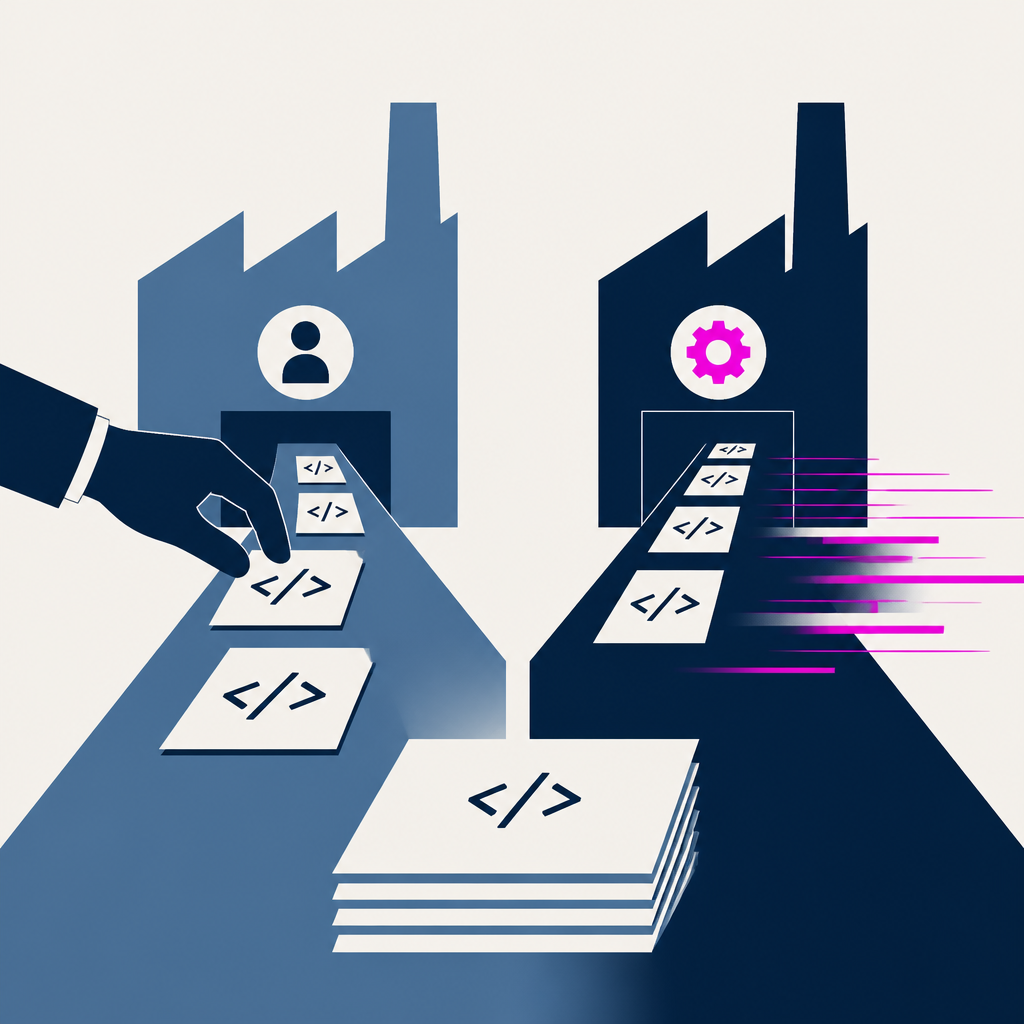
Software factories are automated systems that generate code at scale, with human-led versions emphasizing developer judgment and AI-only versions prioritizing speed but potentially sacrificing comprehension. The key difference involves the degree of human oversight and decision-making authority within these systems. Organizations must carefully choose which quality checks to implement and how much autonomy to grant to AI agents in code generation workflows.
Ditto is an open-source tool that converts websites into clean, componentized Next.js or Vite code without using LLMs, instead employing a deterministic cloning process. The tool completes website conversions within 5 minutes and extracts design systems, tokens, fonts, interactions, and responsive breakpoints into reusable components. It offers three deployment options—self-hosted, hosted API, or integration with AI agents—enabling developers to generate production-ready codebases as starting points instead of building from blank templates.
Every AI story that matters,
in your inbox by 8am.
TLDRocket reads all relevant sources, removes duplicate coverage, and summarises the
day in two minutes. Follow companies and topics for alerts, or get the
briefing in Slack. Free, no spam, unsubscribe anytime.
Reading TLDRocket needs no cookies, and the readership counts we rely on come from
our own cookieless analytics. Google Analytics is the exception: it sets cookies and
reports to Google, so it stays switched off until you allow it. You can change your
mind any time from “Cookie settings” in the footer.
Strictly necessary
Session security and form protection (tldrocket-session,
XSRF-TOKEN, 2 hours). The site cannot work without them,
so they need no consent.
Always on
Google Analytics 4 (_ga,
_ga_<id>, up to 2 years). Measures which
stories and sections readers use. Google acts as a third-party processor and may
store the data outside the EU. No advertising, no profiling, no data sold.