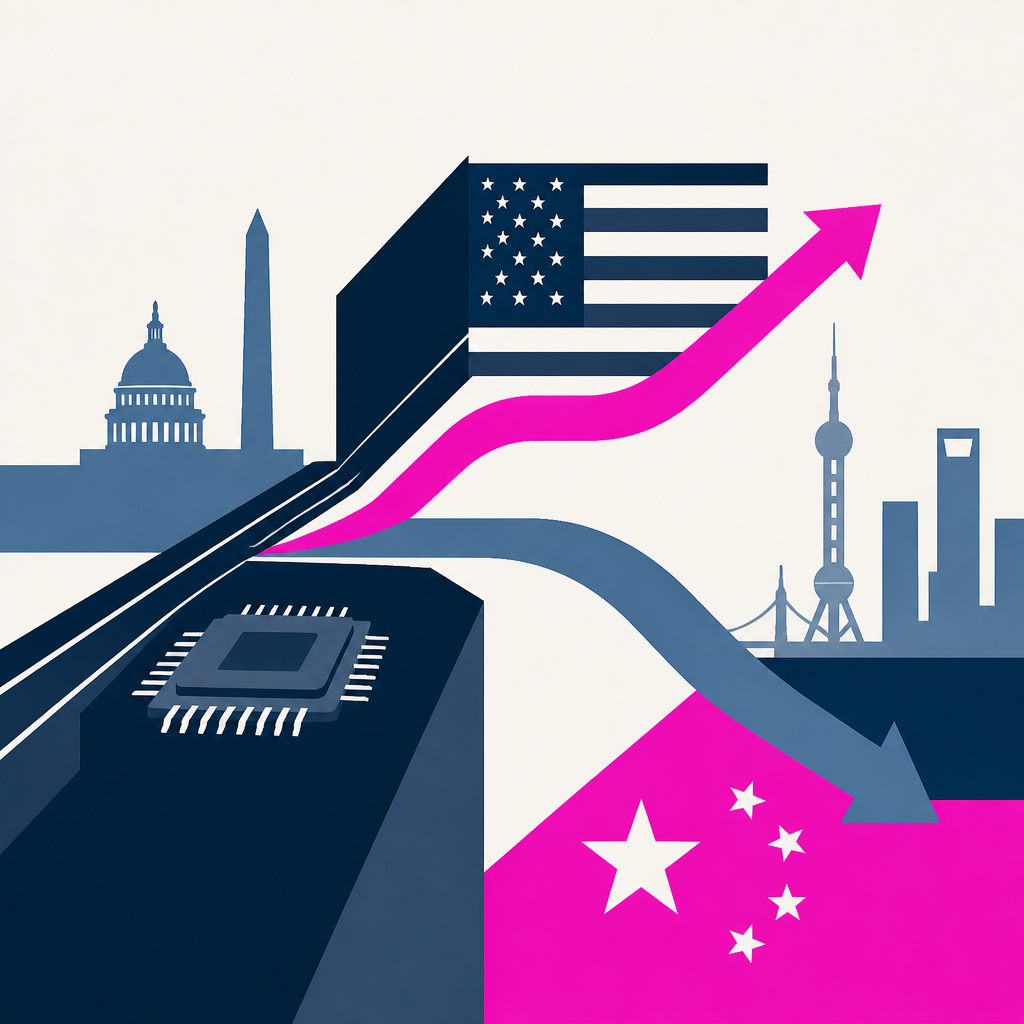
Sam Bresnick argued that the Trump administration’s push to promote AI while boosting semiconductor exports and managing national security constraints could undermine U.S. competitiveness with China. He highlights the contradiction between seeking massive sales volumes and trying to outpace China in AI as a key problem. The op-ed frames U.S. AI and export policy as more likely to tilt outcomes in China’s favor than to achieve both goals at once.
CSET’s Helen Toner discusses efforts to automate AI research and whether AI systems could speed up their own development. The article highlights the difficulty of measuring how rapidly researchers are being accelerated, but it provides no specific benchmark or date. As a result, it emphasizes a policy and measurement gap—researchers and policymakers may struggle to keep pace with the speed of progress.
The EU AI Act regulates AI systems used for therapy or emotional support through both system-level and model-level obligations, including potential bans for systems that exploit vulnerable users' vulnerabilities to cause harm. AI systems marketed for mental health purposes may be classified as high-risk medical devices requiring third-party conformity assessments, risk management systems, and technical documentation, with enforcement beginning August 2, 2026. Providers must ensure transparency by disclosing AI interaction to users, with heightened care for vulnerable groups like children and elderly people who may not realize they're communicating with an AI rather than a human professional.
Every AI story that matters,
in your inbox by 8am.
TLDRocket reads all relevant sources, removes duplicate coverage, and summarises the
day in two minutes. Follow companies and topics for alerts, or get the
briefing in Slack. Free, no spam, unsubscribe anytime.
Reading TLDRocket needs no cookies, and the readership counts we rely on come from
our own cookieless analytics. Google Analytics is the exception: it sets cookies and
reports to Google, so it stays switched off until you allow it. You can change your
mind any time from “Cookie settings” in the footer.
Strictly necessary
Session security and form protection (tldrocket-session,
XSRF-TOKEN, 2 hours). The site cannot work without them,
so they need no consent.
Always on
Google Analytics 4 (_ga,
_ga_<id>, up to 2 years). Measures which
stories and sections readers use. Google acts as a third-party processor and may
store the data outside the EU. No advertising, no profiling, no data sold.