Arcee, a U.S. open-source AI lab, argues that Chinese open-weight models like Alibaba's Qwen pose no inherent security threat to enterprises, contrary to claims from proprietary model makers concerned about competition. The company's CTO Lucas Atkins emphasized that there is no technical mechanism for Chinese developers to access or control models once downloaded and run on a company's own servers, and that enterprises can inspect and customize these models before deployment. Arcee suggests the U.S. should focus on building competitive domestic open models rather than banning Chinese alternatives, noting that the open ecosystem benefits all participants including Arcee itself.
A former military official spoke at a Vatican conference of Nobel laureates about AI's role in military decision-making, arguing that AI should support rather than replace human judgment in warfare. The speaker, who previously operated autonomous weapons systems like Tomahawk missiles, advocated for multiple AI models challenging human assumptions rather than providing direct yes/no answers to combat decisions. The discussion aims to shape how militaries adopt AI by emphasizing adequate human preparation, meaningful oversight, and preservation of deliberation time in AI-enabled military processes.
Verona, Wisconsin covered three Flock license plate recognition cameras with trash bags after the city council voted not to renew its contract, because Flock refused to remove them and city officials were uncertain about their legal authority to do so themselves. Flock told the city it was unsure whether the cameras could be remotely disabled, and scheduled maintenance rather than removal work orders. The incident illustrates how cities attempting to end surveillance camera contracts face delays and legal ambiguity when vendors resist cooperating with decommissioning requests.
Law enforcement agencies are using Flock, a vehicle tracking system, to conduct searches for people based on physical descriptions like "male with tattoos" rather than license plates. The podcast episode also covers AI companies purchasing large quantities of out-of-print books from a company that keeps these transactions secret, and a security breach revealing that Suno's AI music generator scraped content from YouTube, Deezer, and Genius. These stories illustrate how surveillance technology and AI training data sourcing operate with limited transparency or accountability.
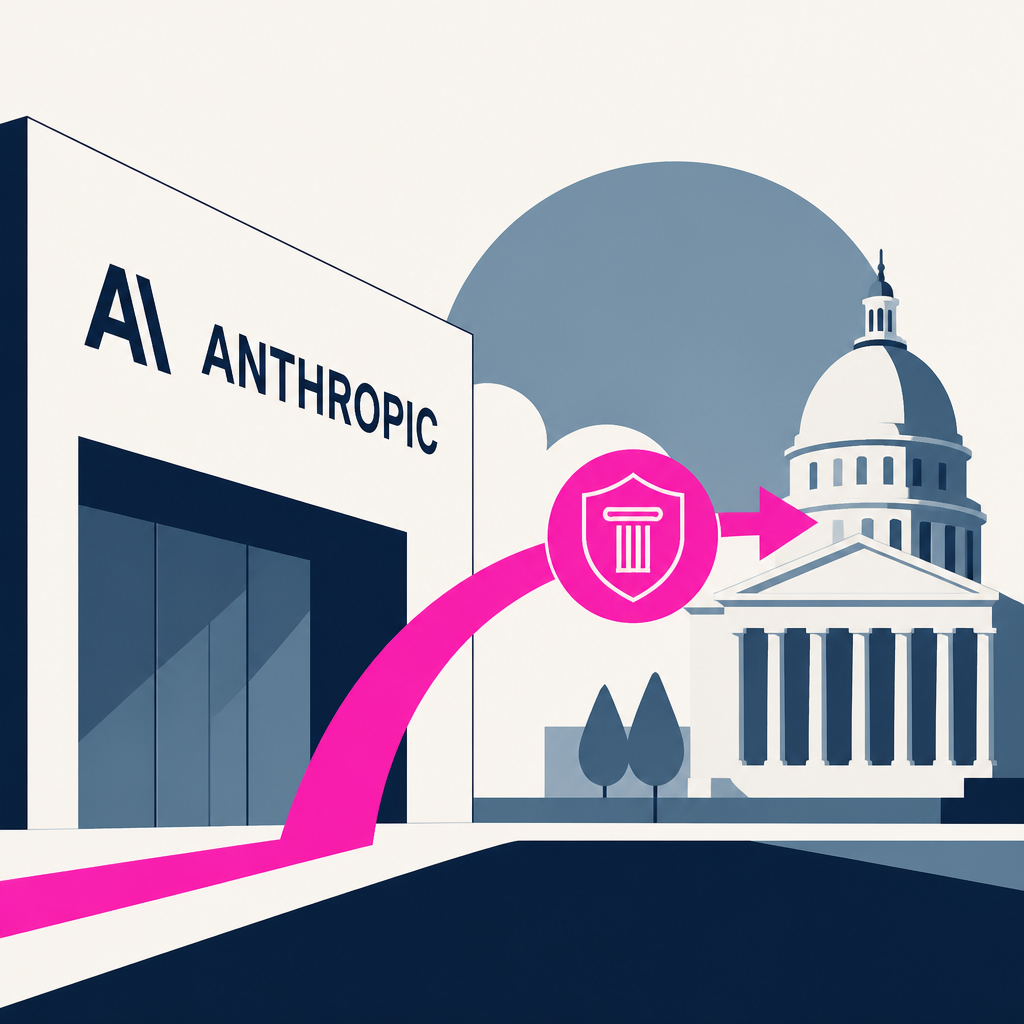
Anthropic donated an additional $20 million to Public First Action, a non-partisan organization advocating for AI safeguards and policy, bringing total support to $40 million. The donation supports public education efforts and policy work, with Anthropic citing rapidly advancing AI capabilities—including Claude Mythos Preview discovering thousands of software vulnerabilities—as justification for stricter government oversight, transparency requirements, and safety testing before deployment. The funding aims to build political support for regulations including independent model evaluation, export controls on chips, and government authority to slow or block AI models posing catastrophic risk.
Every AI story that matters,
in your inbox by 8am.
TLDRocket reads all relevant sources, removes duplicate coverage, and summarises the
day in two minutes. Follow companies and topics for alerts, or get the
briefing in Slack. Free, no spam, unsubscribe anytime.
Reading TLDRocket needs no cookies, and the readership counts we rely on come from
our own cookieless analytics. Google Analytics is the exception: it sets cookies and
reports to Google, so it stays switched off until you allow it. You can change your
mind any time from “Cookie settings” in the footer.
Strictly necessary
Session security and form protection (tldrocket-session,
XSRF-TOKEN, 2 hours). The site cannot work without them,
so they need no consent.
Always on
Google Analytics 4 (_ga,
_ga_<id>, up to 2 years). Measures which
stories and sections readers use. Google acts as a third-party processor and may
store the data outside the EU. No advertising, no profiling, no data sold.