
Donating another $20 million to Public First Action
Anthropic ● Covered by 2 sources
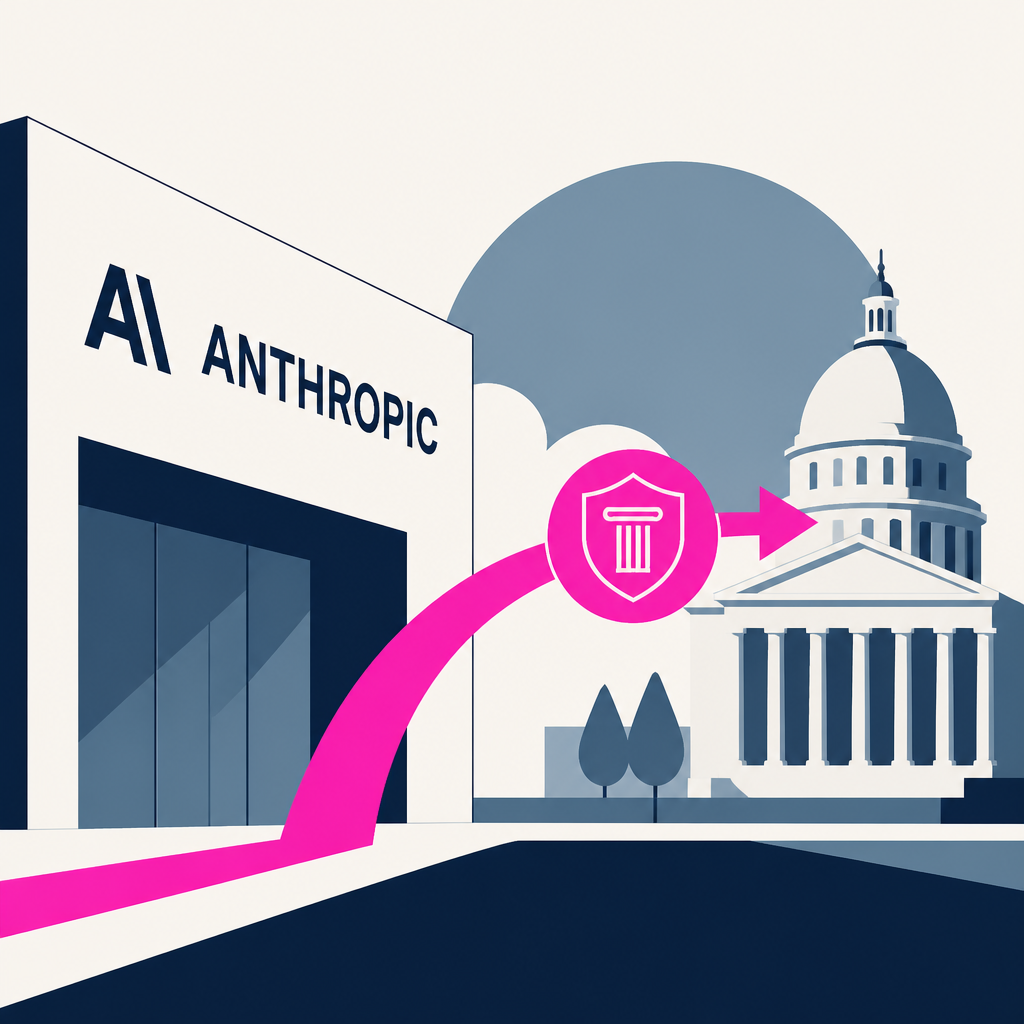
Anthropic just gave Public First Action another $20 million, doubling its total support to $40 million. The money's meant to push AI safety rules with lawmakers, not to back any candidates.
Based on reporting by Anthropic — read the original for the full story.
Summary, retelling and take written by AI under human oversight; images are AI-generated illustrations. How we work · Report an error
Anthropic is putting more money behind its push for AI safety rules in Washington. The company announced a fresh $20 million donation to Public First Action, a nonpartisan group that educates the public on AI and works across party lines on safeguards. That brings Anthropic's total giving to the group to $40 million, following an initial donation back in February 2026. Both gifts, the company says, are earmarked strictly for public education and policy work, not for swaying any election.
The timing traces back to something Anthropic saw firsthand. Its Claude Mythos Preview model reportedly uncovered thousands of high-severity software vulnerabilities this year, including flaws in every major operating system and browser. Rather than release it broadly, Anthropic funneled access through something called Project Glasswing, handing it to a limited set of cyber defenders so they could patch holes before bad actors found them. The company frames this as proof of what's at stake: a model that capable, in the wrong hands, could threaten hospitals, the energy grid, and other systems the country depends on.
Anthropic isn't shy about the upside either. It points to faster drug discovery, treatments for diseases that have resisted cures, and the kind of economic growth that could lift a lot of people at once. But the company's argument is that none of that gets realized safely unless governments build the capacity to manage the risks now, while there's still time to get ahead of the curve.
On policy specifics, Anthropic says transparency laws already passed in several states are a good start but not enough given how fast frontier models are advancing. It's pushing something bigger: its own Advanced AI Framework, which it calls the strongest policy proposal from any lab or policymaker so far. The framework would let governments verify safety claims, enforce compliance through civil penalties, and block deployment of models that pose catastrophic risk. It also wants mandatory testing, public disclosure of findings, independent evaluation, and tighter security programs at frontier labs.
There's a geopolitical layer too. Anthropic ties this back to its own report, 2028: Two Scenarios for Global AI Leadership, arguing that America's advantage over authoritarian rivals is real but not guaranteed. That's why the company also backs tighter export controls on advanced chips and manufacturing equipment, plus measures to stop illicit model access and distillation attacks that could hand democracies' best AI tools to the wrong governments.
My take — AI-written commentary, not fact-checked reporting
A company that builds the technology it wants regulated bankrolling the political education campaign around that technology is not exactly a neutral arrangement, whatever the nonpartisan framing. That doesn't make the underlying concern fake — the vulnerability findings described here are genuinely unsettling — but people should notice that the loudest voice calling for guardrails right now is also the one selling the engine those guardrails are meant to contain.
Read more about this at: Anthropic