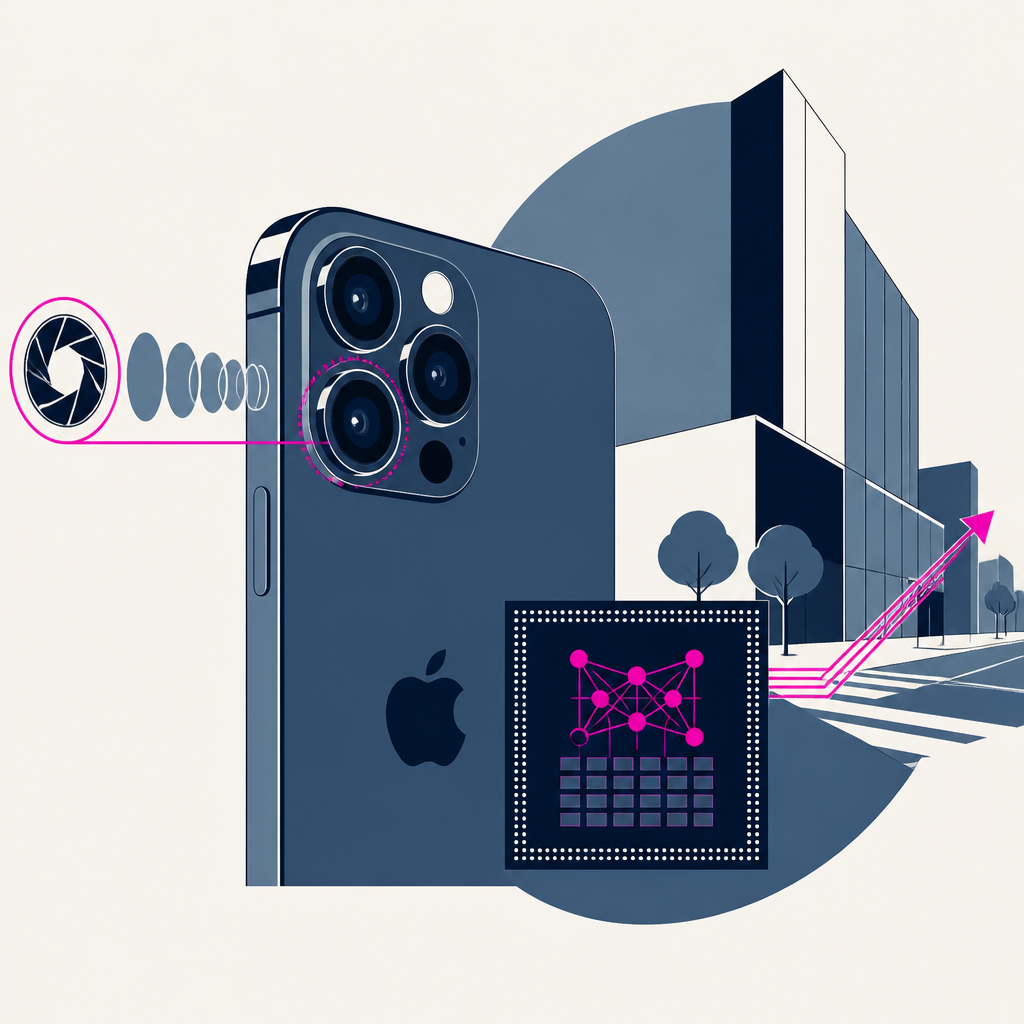
Apple released the iPhone 18 Pro with updated camera controls and a new A20 Pro chip. The A20 Pro is Apple’s first 2 nm iPhone chip. As a result, users get a variable aperture camera and improved AI/ML processing via a larger Neural Engine design, alongside faster CPU and GPU performance.
Desert Ant Labs launched a free SDK for building small AI models that can run on a phone or in a browser without internet. It offers free usage up to 100k monthly active devices. As a result, developers can plug in task-specific speech, text, and vision models in a few lines of code with no per-use cost.
Dyson’s CameraJet AI-powered toothbrush is failing for some early buyers because water is getting into the battery compartment. The reported price is $499.99 and one user said their unit broke within 30 seconds. The result is that multiple units show similar wet-battery failures, and customers are reporting faulty batches.
Researchers compared pretraining recipes and data corpora from 2019 to 2025 and found more of the compute-efficiency gains came from data than from model changes. Data improvements contributed 3.24x more compute efficiency gains than model improvements (12.0x for data vs 3.7x for models) at a 1e19 FLOPs budget. The study concludes data and model improvements are mostly independent additively (88% of OLMES score variance explained), so progress is increasingly driven by better data engineering rather than interacting with specific model tweaks.
Cohere released a serving engine for its North Mini Code model built around a decode megakernel running BF16 on a single H100. On batch size 1 it reached 292 tok/s, or 62% of the H100’s bandwidth ceiling (SoL), and was about 1.58× faster than vLLM end-to-end. The serving stack changes from many small decode kernels with synchronization gaps to a single persistent kernel that uses task-level scheduling and synchronization to raise decode throughput without measurable accuracy loss.
The tech industry is facing a CPU supply shortage that is tightening infrastructure bottlenecks for software teams, including agentic workloads. Server orders are quoting about 6 months and prices are up roughly 10–20% since March. Teams now need to forecast and capacity-plan CPU usage earlier, optimize how capacity is isolated and utilized, and improve cluster bring-up and software efficiency.
Every AI story that matters,
in your inbox by 8am.
TLDRocket reads all relevant sources, removes duplicate coverage, and summarises the
day in two minutes. Follow companies and topics for alerts, or get the
briefing in Slack. Free, no spam, unsubscribe anytime.
Reading TLDRocket needs no cookies, and the readership counts we rely on come from
our own cookieless analytics. Google Analytics is the exception: it sets cookies and
reports to Google, so it stays switched off until you allow it. You can change your
mind any time from “Cookie settings” in the footer.
Strictly necessary
Session security and form protection (tldrocket-session,
XSRF-TOKEN, 2 hours). The site cannot work without them,
so they need no consent.
Always on
Google Analytics 4 (_ga,
_ga_<id>, up to 2 years). Measures which
stories and sections readers use. Google acts as a third-party processor and may
store the data outside the EU. No advertising, no profiling, no data sold.