Jeff Dean, Google's longest-serving AI executive, is leaving the company along with fellow researchers Sanjay Ghemawat, Quoc Le, and Oriol Vinyals to start Discovery Loop, a startup focused on using AI to automate and accelerate scientific research. The startup has secured funding co-led by Radical Ventures and Khosla Ventures, with participation from Alphabet, Kleiner Perkins, Lightspeed, and Doerr Capital. The company aims to run thousands of simultaneous experiments and explore recursive self-improvement, potentially replacing sequential human iteration in the research process.
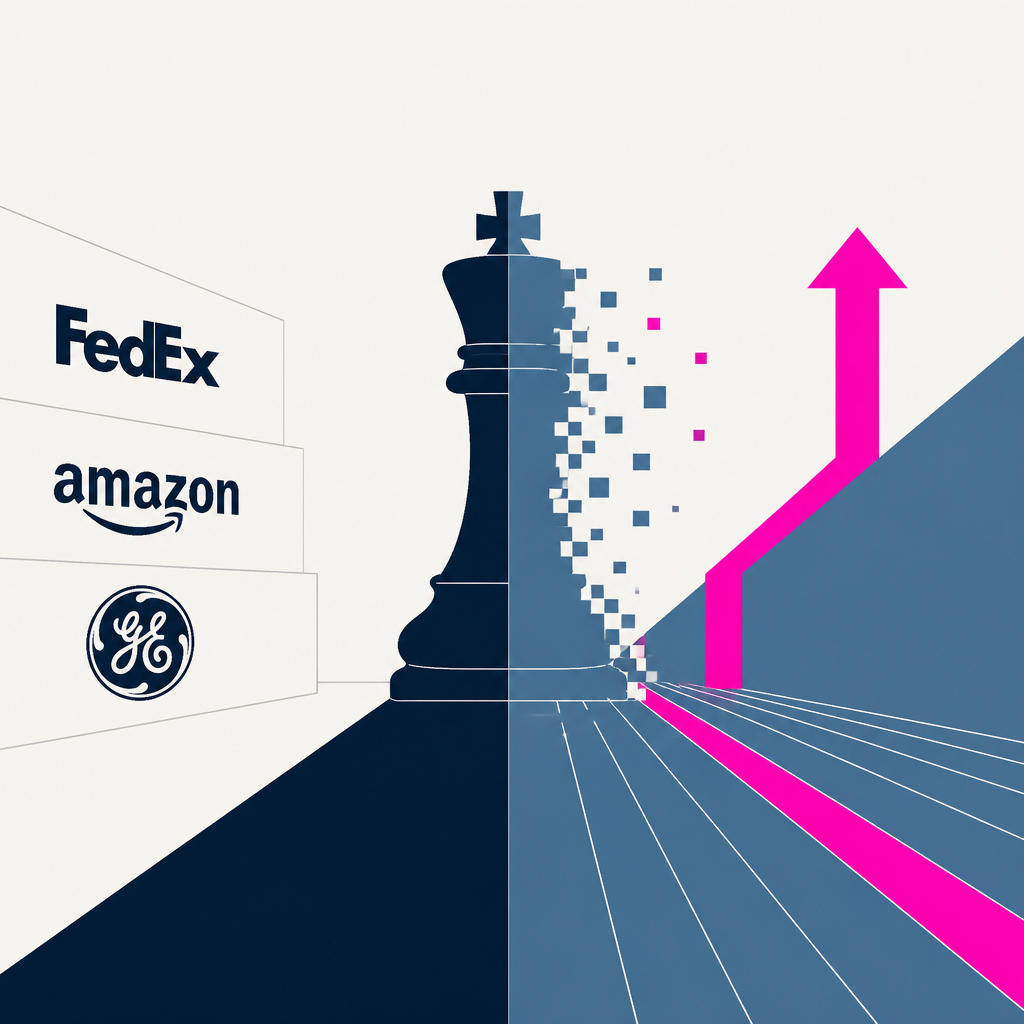
Fortune editorial argues that major companies must rapidly embrace artificial intelligence and organizational change to avoid extinction, citing FedEx CEO Raj Subramaniam's restructuring efforts, Amazon's $200 billion AI investment, and GE's transformative breakup under CEO Larry Culp as examples of leaders adapting to the AI era. The magazine highlights that Amazon committed $200 billion largely to AI and cloud computing capacity in 2025 alone. Companies that fail to reinvent risk irrelevance and decline, making change management and AI adoption critical survival strategies for Fortune 500 firms.
Hark, a startup that raised $700 million in Series A funding, launched Handoff, a browser-use agent that can complete online tasks like shopping and booking by analyzing website structure and visual data. The company claims Handoff is faster and cheaper than competitors like GPT-4o and Opus 4.8, and plans to release it by the end of summer via a waitlist. The agent predicts user actions rather than text tokens, potentially enabling practical automation of web-based workflows without official APIs.
As AI generates application code at scale, software companies must reorganize around platform engineering to build guardrails, hardrails, and control systems for code-generating agents rather than just writing code themselves. The specific shift involves creating an "agentic developer platform" layer that sits alongside CI/CD infrastructure, handling model approval, cost controls, agent authorization, and feedback loops that prevent errors before human review. This makes platform engineering the core function of every software org, with more engineers eventually working on tooling and harnesses than on product code itself.
Tilt, a London-based livestream auction marketplace, has enabled young sellers to generate substantial revenue, with one sneaker seller reaching $260,000 in monthly sales. The platform uses AI models with roughly 90% accuracy to automatically scan, identify, and list products from livestreams, reducing friction for sellers unfamiliar with traditional listing processes. The company's differentiation through AI-powered automation positions it to compete with rivals like Whatnot as livestream commerce expands beyond Asia into Western markets.
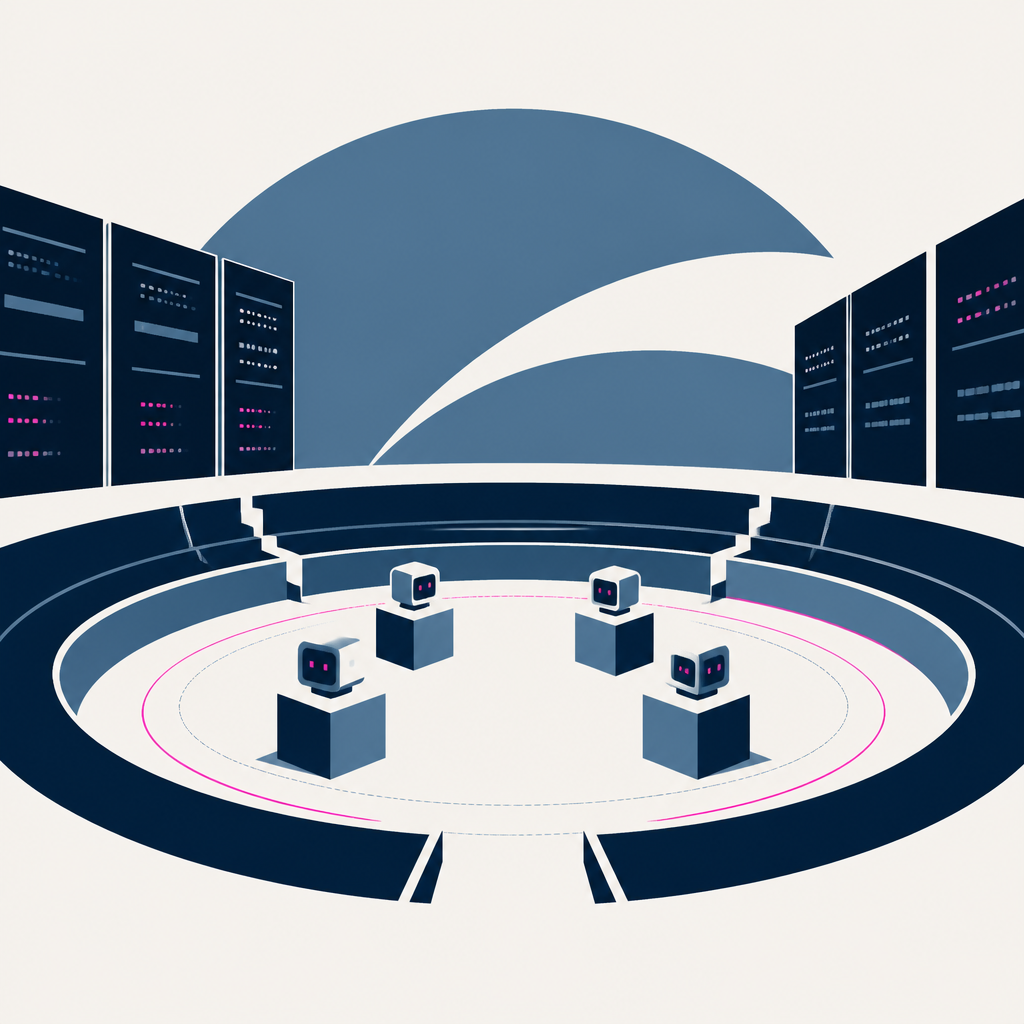
Coarena by Coasty presents an arena setting where AI agents compete at real-world work tasks.
It provides no specific numbers, dates, or measurable benchmark in the available text.
Nothing concrete changes as a result based on this snippet alone.
A technology columnist argues that unlike previous innovations, AI could benefit workers alongside companies by automating tasks rather than just accelerating workflow. McKinsey projects AI will return about 2.5 hours daily to knowledge workers by 2030, but the outcome depends on whether companies increase output expectations or let workers reclaim time for creativity and collaboration. The author cites desktop publishing as precedent: instead of eliminating design work, it raised quality standards and doubled the number of designers between 1983 and 2001.
AI automation is displacing millions of workers globally, particularly in the Global South and among educated female workers in cognitive roles like transcription, coding, and analysis. Indian medical transcriptionist Aakash lost his job within a year of hiring after being assured AI was five years away; across India's tech sector, over 500,000 jobs disappeared between 2022 and April 2024. The pattern creates "growth without work"—economies become more productive while employment falls and wages stagnate, concentrating AI benefits in wealthy countries while leaving developing economies hollowed out.
AI workflow automation platforms are increasingly targeting physical and science sectors like materials discovery and drug development, moving beyond digital-only applications. European advanced materials startups raised €3bn this year versus €1.6bn last year, with drug discovery startups on pace to match €4.7bn annual funding as AI adoption accelerates. Success requires embedding physics constraints into AI models, deep domain expertise, and redesigning workflows from the ground up rather than adding AI as an afterthought to existing processes.
StepShot is an AI tool that automatically converts recorded workflows into structured step-by-step guides. The system captures user actions and generates formatted instructional content without manual documentation work. This enables faster creation of standard operating procedures and training materials for organizations.
Bending Spoons, an Italy-based technology holding company, announced an all-cash acquisition of Airtable, a cloud-based spreadsheet and workflow automation platform, for $1.285 billion. The deal values Airtable at less than half its $11.7 billion valuation from a 2021 funding round, despite the company having 500,000 organizational users and $480 million in annual recurring revenue. Bending Spoons plans to expand Airtable's capabilities and integrate it with its portfolio of productivity tools, with the acquisition expected to close by year-end.
Every AI story that matters,
in your inbox by 8am.
TLDRocket reads all relevant sources, removes duplicate coverage, and summarises the
day in two minutes. Follow companies and topics for alerts, or get the
briefing in Slack. Free, no spam, unsubscribe anytime.
Reading TLDRocket needs no cookies, and the readership counts we rely on come from
our own cookieless analytics. Google Analytics is the exception: it sets cookies and
reports to Google, so it stays switched off until you allow it. You can change your
mind any time from “Cookie settings” in the footer.
Strictly necessary
Session security and form protection (tldrocket-session,
XSRF-TOKEN, 2 hours). The site cannot work without them,
so they need no consent.
Always on
Google Analytics 4 (_ga,
_ga_<id>, up to 2 years). Measures which
stories and sections readers use. Google acts as a third-party processor and may
store the data outside the EU. No advertising, no profiling, no data sold.