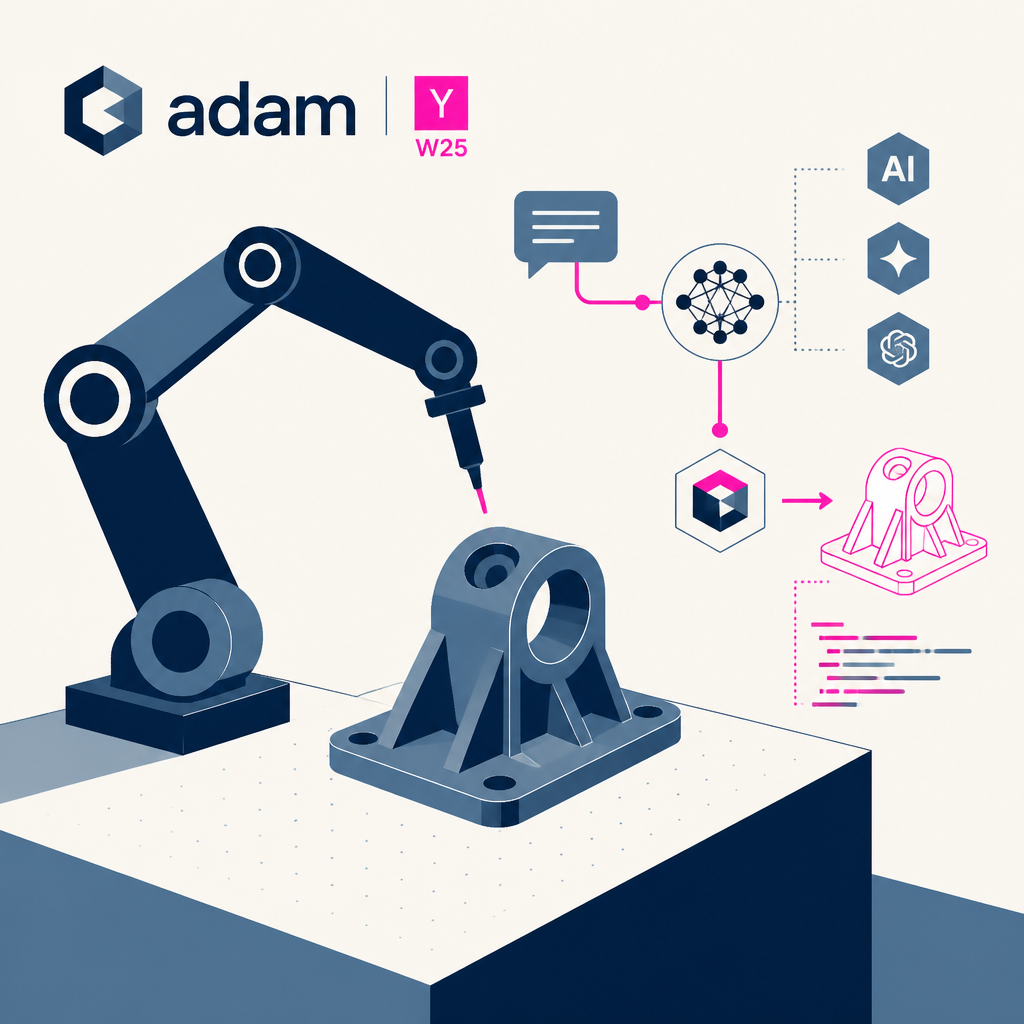
Adam, a Y Combinator W25 startup, launched CADAM, an open-source AI platform that generates 3D CAD models from natural language prompts and converts them to parametric OpenSCAD code. The system supports multiple AI models (Claude, Gemini, GPT) with in-browser WebAssembly compilation and exports to .STL, .SCAD, and other formats. Users can now generate mechanical designs through text descriptions and adjust dimensions with interactive sliders without requiring new LLM calls.
Snap unveiled Specs, its first augmented reality glasses for consumers, priced at $2,195 with a $200 refundable deposit, as CEO Evan Spiegel argues people are ready to move beyond smartphones to shared digital experiences through see-through lenses. The device is expected to ship later in 2026 in the U.S., U.K., and France, and features nearly four hours of battery life with integration for AI agent-like experiences using Claude, Codex, and other coding tools. The launch positions Snap to compete with Meta's Ray-Ban Meta glasses and Google's upcoming AI glasses, though analysts note the premium price and weak consumer confidence present significant market challenges.
OpenAI and Molecule.one deployed an AI system based on GPT-5.4 to optimize a difficult chemical reaction used in drug manufacturing. The AI chemist improved yield or efficiency metrics for a key medicinal chemistry reaction, though specific performance gains are not quantified in the available details. This demonstrates potential for AI systems to accelerate chemical synthesis optimization without constant human supervision.
Every AI story that matters,
in your inbox by 8am.
TLDRocket reads all relevant sources, removes duplicate coverage, and summarises the
day in two minutes. Follow companies and topics for alerts, or get the
briefing in Slack. Free, no spam, unsubscribe anytime.
Reading TLDRocket needs no cookies, and the readership counts we rely on come from
our own cookieless analytics. Google Analytics is the exception: it sets cookies and
reports to Google, so it stays switched off until you allow it. You can change your
mind any time from “Cookie settings” in the footer.
Strictly necessary
Session security and form protection (tldrocket-session,
XSRF-TOKEN, 2 hours). The site cannot work without them,
so they need no consent.
Always on
Google Analytics 4 (_ga,
_ga_<id>, up to 2 years). Measures which
stories and sections readers use. Google acts as a third-party processor and may
store the data outside the EU. No advertising, no profiling, no data sold.