Salesforce launched its Salesforce Enterprise AI Harness to combine multiple AI and integration components into one enterprise-wide system for completing business tasks. Salesforce said the unified experience will start rolling out in early fiscal year 2028. The rollout shifts developers from managing separate “harnesses” toward using a shared AI control plane and composable architecture that applies context, governance, and security across agents and models.
Amazon Quick desktop application is now generally available on macOS and Windows for enterprise use. It launched generally available on desktop “today.” The update adds a consolidated mobile activity feed on iOS and Android that merges email, calendar, CRM, and messaging so agents handle routine items in the background.
Accordio AI announced its 3rd launch, offering a free MCP connector that lets Claude use tools for time tracking, signing contracts, sending invoices, and getting paid. The page highlights “12 Months Free” via Customer.io. As a result, users can connect Claude and other agents to Accordio’s workflow features at no cost for the connector and with a separate 12-month promotion.
The Agent Evaluation Metric (AEM) was introduced to evaluate multi-turn agents at the level of individual turns, since one early error can corrupt later turns that holistic scoring misses.
Jackalope is launching a shared workspace that brings Codex, Claude Code, Grok, and OpenCode together. It goes live today and is described as already having 36 followers. The change is that tasks can run in parallel with shared project context, model/tool selection, and usage/quota tracking across agents and multiple accounts, via an open-source, cross-platform setup.
Typewise AG launched Nova, a system for building, running, and continuously improving customer-service AI agents that operates behind the scenes instead of being a customer-facing chatbot. Nova is claimed to handle 70% of incoming inquiries across email, chat, and WhatsApp and fully resolve 75% to 85% of them at HealGreen. As a result, customer-service teams can expand agent deployments faster with less ongoing operational work, while actions stay logged and sensitive cases can be routed to humans with conversation context attached.
Robutler raised $400,000 from ZAS Ventures to build a public software platform where apps are free and makers can remix and earn revenue shares. The funding came from ZAS Ventures’ Fund I and Fund II, its first institutional investment in Robutler. Robutler will expand its agent-discovery and trust-and-payments infrastructure, including its Web of Agents and related protocols for agent identity and messaging.
ABrush launched as team collaboration software focused on generative media and AI characters to help artists apply advanced AI workflows in their existing production environment. It launched today. The product claims it reduces repetitive production work and costs by speeding iteration, aiming to keep artists in control of the final results.
AI tooling and security scanners are producing far more vulnerability findings than security teams can realistically triage, making it hard to tell what a real compromise would cost. One described outcome is reducing thousands of alerts down to 10 to 20 prioritized tickets by using business-aware prioritization instead of raw severity scores. Teams increasingly depend on external triage partners and framework-based reachability, consequence, and exploit signals to decide what to fix first and manage backlog risk explicitly.
Meta described an organizational AI agent that stores a compliance-domain “second brain” by separating structured, auditable knowledge from executable expert reasoning and updating it from human feedback without retraining. It says restructuring from a single instruction file to recipe-driven stages cut tokens consumed per turn by around 80%. As a result, experts can review checkpointed reasoning, and the system can compile validated updates into a growing institutional memory that remains editable and auditable.
Arena (co-founder and CEO Anastasios Angelopoulos) explains how Chatbot Arena evolved from a Berkeley side project into an evaluation platform that ranks models by how useful they are in real user workflows.
chat-recall launches to turn separate records from AI coding assistants into one searchable history that can be queried in one place. It launched today and is shown with 32 followers. Passwords are extracted before data leaves your computer, and the assistant searches locally to reduce repeat questions and to detect still-working leaked keys from old chats.
ChatHop lets users move an AI conversation to another assistant mid-thought with context included. It offers 20 free uses every month. The listing also promotes a Free option for copying the chat as plain text or Markdown.
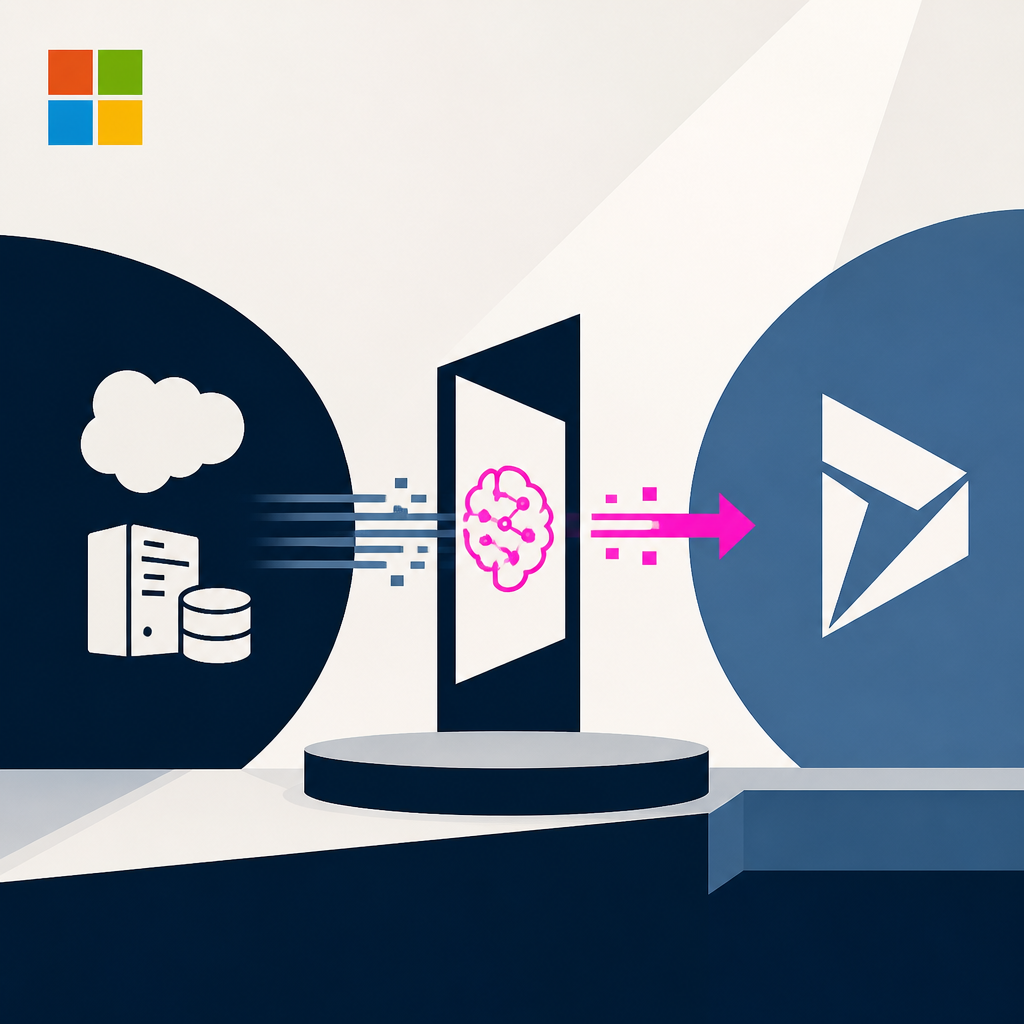
Microsoft released Dynamics 365 Activate to convert Salesforce CRM implementations into its Dynamics 365 offering using AI for migration planning. The tool is available as a public preview and Microsoft says it will add additional CRM and ERP migration scenarios starting later this year. This shifts migration work toward AI-assisted profiling of data, processes, customizations, and dependencies to reduce manual effort and migration risk.
Every AI story that matters,
in your inbox by 8am.
TLDRocket reads all relevant sources, removes duplicate coverage, and summarises the
day in two minutes. Follow companies and topics for alerts, or get the
briefing in Slack. Free, no spam, unsubscribe anytime.
Reading TLDRocket needs no cookies, and the readership counts we rely on come from
our own cookieless analytics. Google Analytics is the exception: it sets cookies and
reports to Google, so it stays switched off until you allow it. You can change your
mind any time from “Cookie settings” in the footer.
Strictly necessary
Session security and form protection (tldrocket-session,
XSRF-TOKEN, 2 hours). The site cannot work without them,
so they need no consent.
Always on
Google Analytics 4 (_ga,
_ga_<id>, up to 2 years). Measures which
stories and sections readers use. Google acts as a third-party processor and may
store the data outside the EU. No advertising, no profiling, no data sold.