Powermove is an iterative video editor that rewrites its panels, effects, and workflows based on agent requests. It’s launching with 24 followers on Product Hunt. Users can steer the agent when changes are wrong, and undo any change.
Amazon Bedrock AgentCore Identity added a managed Consent portal that handles end-user session binding for AI agents’ OAuth access to services like GitHub and Slack instead of requiring customers to host their own callback and binding infrastructure.
Rolequiry connects a user’s career priorities to a job posting and prepares interview questions by checking public sources and separating evidence from personal criteria. The launch page shows “1 follower.” The result is a workflow that turns unresolved posting details into questions, with no fit score and an optional resume.
Flam announced a $40 million Series B funding round to build AI infrastructure for interactive videos, streamed 3D experiences, and real-time visual agents. The round is led by QED Investors and includes participation from Claypond Capital and other investors. The company says it will use the money to fund ongoing R&D, expand its product suite, and grow sales to accelerate creation of these interactive “flams.”
Ninth Wave built Compass, an AI onboarding assistant that uses Amazon Bedrock AgentCore to normalize bank APIs to FDX standards and automate open-finance integration tasks within a secure, multi-tenant portal. Compass went live for beta clients on March 1, 2026. As a result, bank and fintech partners can validate APIs, map fields, and generate FDX readiness results faster with governed, tenant-scoped AI responses and deterministic readiness scoring for auditability.
AWS’s Machine Learning Blog describes a replenishment automation workflow that links Databricks forecasting with Amazon Quick order execution via connectors and an order API loop. The implementation defines a demand surge as next-7-day average demand at least 1.5 times the prior-14-day average, filtered to SKUs with prior-14-day average at least 1. As a result, Databricks (using MMF/Chronos-2) forecasts and an agent detects surges, while Amazon Quick automatically chooses a supplier and places routine purchase orders or escalates when no supplier can cover the surge.
IBM is hosting an interactive webinar on Responsible AI for higher education, covering AI types, student guidance, and a hands-on Responsible AI activity using IBM’s software development life cycle agent, IBM Bob.
Discovery Loop, founded by ex-Google researchers led by Jeff Dean, sought a $50B valuation after earlier targeting $10B. The startup’s valuation demand jumped from about $10B to about $50B within weeks. Investors’ willingness to pay higher multiples for researcher-led AI startups increased, though the article says whether the $50B deal closes is still uncertain.
Chift raised a €10.5M Series A round led by BlackFin Capital Partners to connect over 120 European financial systems through a single API. The financing round brings Chift’s total funding to about €12.8M after its €2.3M seed in 2024, and the company now serves 50,000+ SME clients with revenue up more than 10x since 2024. Chift will use the money to expand across major European markets and to build AI-driven integrations that configure automatically rather than requiring manual setup.
Aeon closed its seed extension and acquired Aware Health’s core blood diagnostics assets to expand its preventive health platform. The acquisition adds a regulated diagnostics stack with live lab integrations and a network of more than 45 blood-draw locations. Aeon will use the combined technology, team, and longitudinal biomarker dataset to integrate Aware Health into its AI-driven whole-body check-ups, update records quarterly, and accelerate its European roadmap.
Shall We Talk launched voice dictation for iPhone and Mac that converts speech into text inside other apps and can turn meeting audio into speaker-labeled transcripts and structured summaries. The update advanced from build 200 to 243 using GPT-6 Astra. Cleanup now removes filler words and misheard text while keeping the original wording, tone, and Chinese-English code-switching.
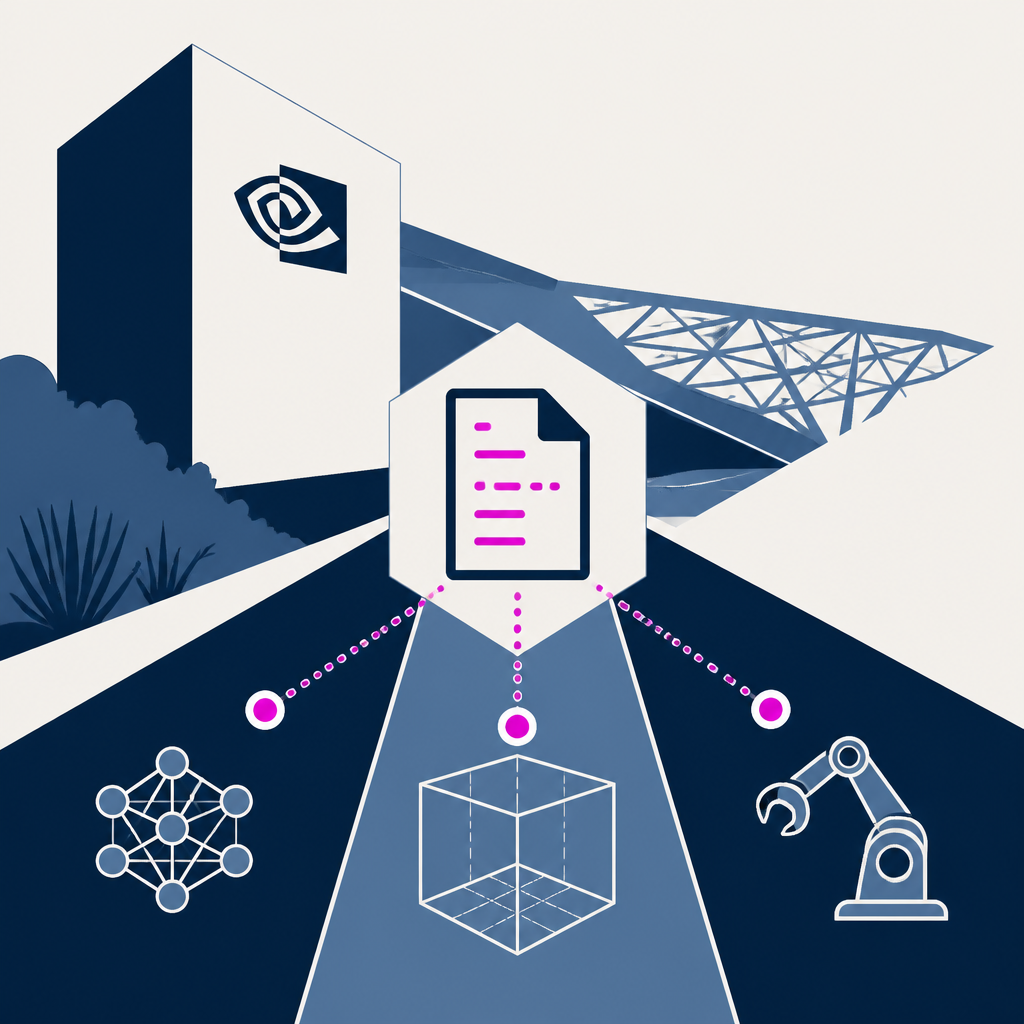
NVIDIA open-sourced OSMO as a Kubernetes-native workflow orchestrator that runs physical AI training, simulation, and robot testing from one YAML across multiple GPU and edge tiers. OSMO release 6.3.1 tightened default authorization by adjusting the default osmo-user role, and the dataset CLI was scheduled to be removed in 6.4. Teams now describe full pipelines at a platform level (not cluster names) and gain built-in scheduling, interactive remote development, and RBAC/OAuth/TLS integration while migrating away from the standalone dataset CLI.
Tandem Health raised a $100m Series B round led by the EU-backed Scaleup Europe Fund. The new investment comes a year after its $50m Series A in 2025 and brings total disclosed funding to $160m. The company will use the money to expand in Europe and grow its LLM-based AI co-pilot into an AI-native clinic operating system with additional workflow and agent capabilities.
Resolutiion raised $10.4 million to build an AI system that detects enterprise contract disputes early and helps coordinate parties before claims are filed. The company says 1 in 5 contracts end in disputes and that disputes can cost up to £90 million per £1 billion of contract value. This funding expands its development of Octavia/OctaviaCore and pushes it to target the post-signature conflict-management segment in defense and energy.
Unfetch.com launched today to connect Google Ads, Google Analytics, and Search Console with AI clients for marketing reporting and monitoring. It works via a hosted MCP or a one-click agent plugin install, and it targets tools like ChatGPT and Claude. As a result, marketers can feed AI assistants live evidence from those platforms for answers about reporting, optimizations, alerts, and monitoring.
Every AI story that matters,
in your inbox by 8am.
TLDRocket reads all relevant sources, removes duplicate coverage, and summarises the
day in two minutes. Follow companies and topics for alerts, or get the
briefing in Slack. Free, no spam, unsubscribe anytime.
Reading TLDRocket needs no cookies, and the readership counts we rely on come from
our own cookieless analytics. Google Analytics is the exception: it sets cookies and
reports to Google, so it stays switched off until you allow it. You can change your
mind any time from “Cookie settings” in the footer.
Strictly necessary
Session security and form protection (tldrocket-session,
XSRF-TOKEN, 2 hours). The site cannot work without them,
so they need no consent.
Always on
Google Analytics 4 (_ga,
_ga_<id>, up to 2 years). Measures which
stories and sections readers use. Google acts as a third-party processor and may
store the data outside the EU. No advertising, no profiling, no data sold.