Uber has launched the UK’s first robotaxis in London, letting customers hail self-driving minicabs through its app with a human safety driver ready to take over. The initial service includes 15 autonomous vehicles licensed to operate in the city. Uber will phase the robotaxis in over several years, and regulators’ plans for fully driverless hire by end-2026 now look increasingly unlikely.
Omi is presented as an AI-powered wearable that captures conversations in real time and converts them into searchable summaries and action items via companion apps. The page lists Omi at 1.3K followers. This shifts note-taking from manual capture to automatic recording plus follow-up tasks, reminders, and advice, with open-source, local operation and user control over what gets recorded, paused, or deleted.
Storage companies are building products and integrations to make enterprise unstructured data usable for AI workflows, including governance, orchestration, and faster access for inference. More than 80% of enterprise data is unstructured, according to estimates cited in the article. As a result, organizations are shifting toward preparing data for AI training and audits and designing infrastructure (including key-value cache tiers and unified namespaces) to move and serve that data at scale.
Stripe acquired Privy, Bridge, Ourum, Metronome, and OpenRouter after making an aborted attempt to buy PayPal. The OpenRouter deal closed this month for around $7.5 billion. As a result, Stripe is expanding into stablecoins, account verification/bank transfers, usage-based billing, and AI distribution while the PayPal acquisition falls through after Stripe’s offer was judged too low as PayPal shares rose.
Wonderful, the Netherlands-based AI startup selling AI services for business productivity, raised about $550 million at a $5 billion valuation in a Series C round led by Insight Partners with new participation from Salesforce. The round values the company at $5B, following another funding round six months earlier at about $150M and a $2B valuation. Wonderful says it will use the money to improve its product and hire hundreds of engineers as it expands its enterprise capabilities across more workflows and markets.
Reliance Jio expanded its JioPC cloud PC subscription beyond its own broadband customers to any internet user in India so existing computers can run AI-ready workloads without hardware upgrades. The standalone plans start at ₹1,000 for two months, with a ₹4,000 12-month option for 8GB RAM and 500GB storage. The move shifts PC usage from owning local hardware toward paying for streamed computing capacity and tests whether users accept recurring internet-dependent service instead of buying new PCs.
The article argues that organizations that prioritize AI access but not AI fluency see uneven adoption and declining performance in some teams. A Harvard Business School study found workers using AI completed tasks 25% faster but performance declined when they didn’t understand where the tools applied. It recommends shifting to an operating model with a central “hub” and AI engineers embedded in departments to provide guidance, re-engineer workflows, and build ongoing fluency.
Jabil pursued enterprise integration to reduce disconnected site tools, data silos, and manual workarounds across its global manufacturing network. The effort targets more than 100 sites across 30-plus countries using SAP’s Integration Suite as a foundation. With a standardized, end-to-end data backbone in place, Jabil expects better real-time supply-chain visibility and a stronger platform for predictive insights, exception handling, and AI-driven planning.
The article argues that generative AI and automation reduce the formative work junior engineers do, leading to expertise “atrophy” and worse performance when systems fail. It cites a Harvard working paper of about 65 million workers showing junior employment fell about 9% within six quarters after generative AI adoption. It proposes adding deliberate human “manual gates” into AI workflows—slower, chosen checkpoints like debugging with the AI assistant off—to preserve skills and ensure competent operators on the bad day.
Catch, an AI agent startup, secured $5 million in seed funding with Entrée Capital and Pitango as co-lead investors. $5 million was raised on September 2, 2026. The new funding enables Catch to expand its end-to-end executive administration assistance product.
Conveo raised a $50 million Series A to expand its AI video interview platform for consumer research.
The round totals $55.8 million in funding.
Its StoryLines product now enables ongoing research into brands’ core questions using an AI interviewer that adapts follow-ups, aimed at faster, continuously updated consumer insights.
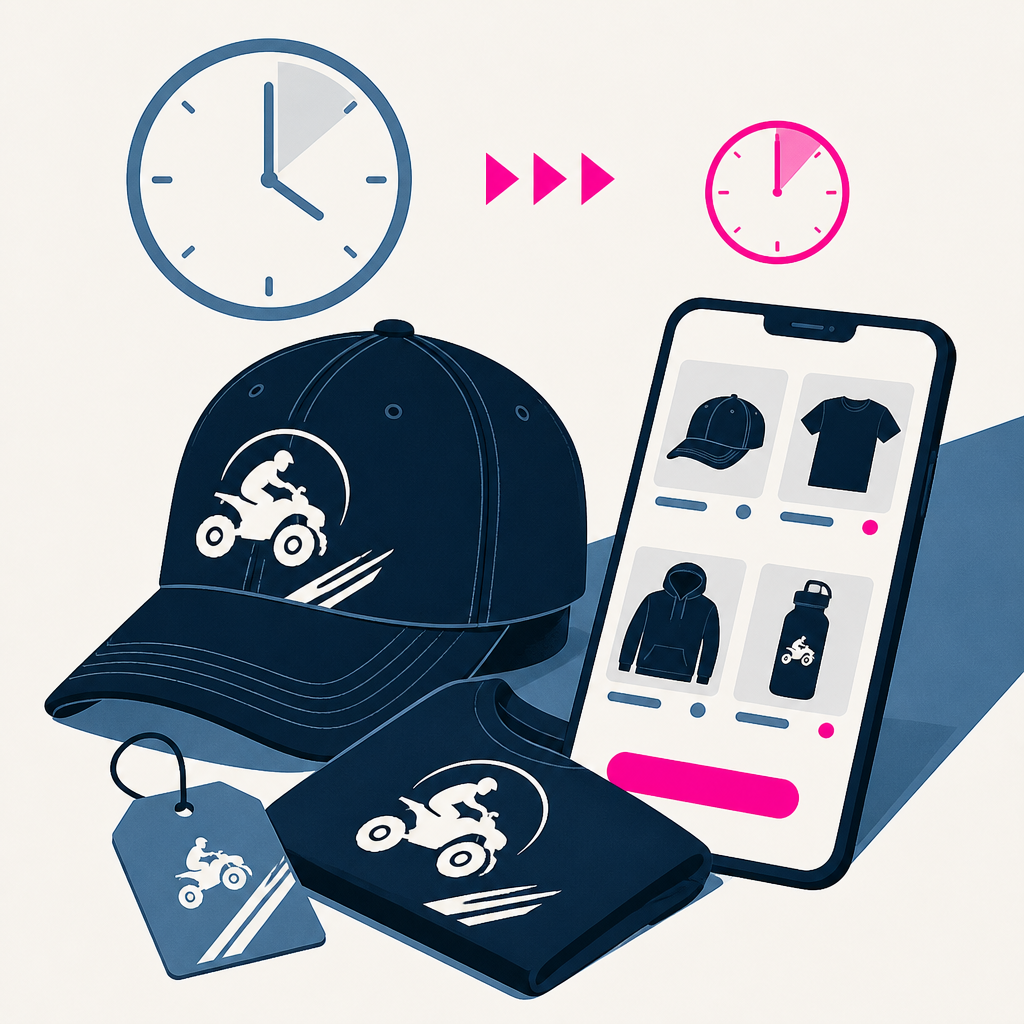
ATV Big Air Tour used ChatGPT Work to speed up marketing and merchandising workflows. It turned merchandise photos into an inventory website in 15 minutes. The process shortened a task that previously took 3 days to about 3 hours.
Pharosyn raised a $3 million seed round led by Moonfire Ventures to develop AI systems for pharmaceutical commercial teams.
Its report-writing time dropped from four hours to 15 minutes, a 94% improvement.
The funding will support hiring to expand its team beyond its current 11 members as it grows its commercial and competitive intelligence product with AI hallucination mitigation.
Google is partnering with MrBeast on a multi-year set of videos that uses Gemini, Google Health, and Fitbit Air. The first video releases on September 5 and has him use Gemini for wilderness survival advice while teams attempt the jungle, desert, and Arctic. The change is that upcoming MrBeast episodes will incorporate Google AI and related health and fitness products for planning and in-the-moment survival decisions.
New York City will ban younger students from using AI in classrooms under a new Department of Education policy announced by Mayor Zohran Mamdani. The one-year moratorium starts in the 2026–2027 school year and covers about 600,000 public school students from 2-K through eighth grade. Teachers will not be allowed to use AI tools to grade work, and students will be barred from classroom AI use until high school.
The article argues that Waymo cars and other tools are already shifting work from humans to machines, extending the same pattern that mechanized physical labor during the Industrial Revolution.
Every AI story that matters,
in your inbox by 8am.
TLDRocket reads all relevant sources, removes duplicate coverage, and summarises the
day in two minutes. Follow companies and topics for alerts, or get the
briefing in Slack. Free, no spam, unsubscribe anytime.
Reading TLDRocket needs no cookies, and the readership counts we rely on come from
our own cookieless analytics. Google Analytics is the exception: it sets cookies and
reports to Google, so it stays switched off until you allow it. You can change your
mind any time from “Cookie settings” in the footer.
Strictly necessary
Session security and form protection (tldrocket-session,
XSRF-TOKEN, 2 hours). The site cannot work without them,
so they need no consent.
Always on
Google Analytics 4 (_ga,
_ga_<id>, up to 2 years). Measures which
stories and sections readers use. Google acts as a third-party processor and may
store the data outside the EU. No advertising, no profiling, no data sold.