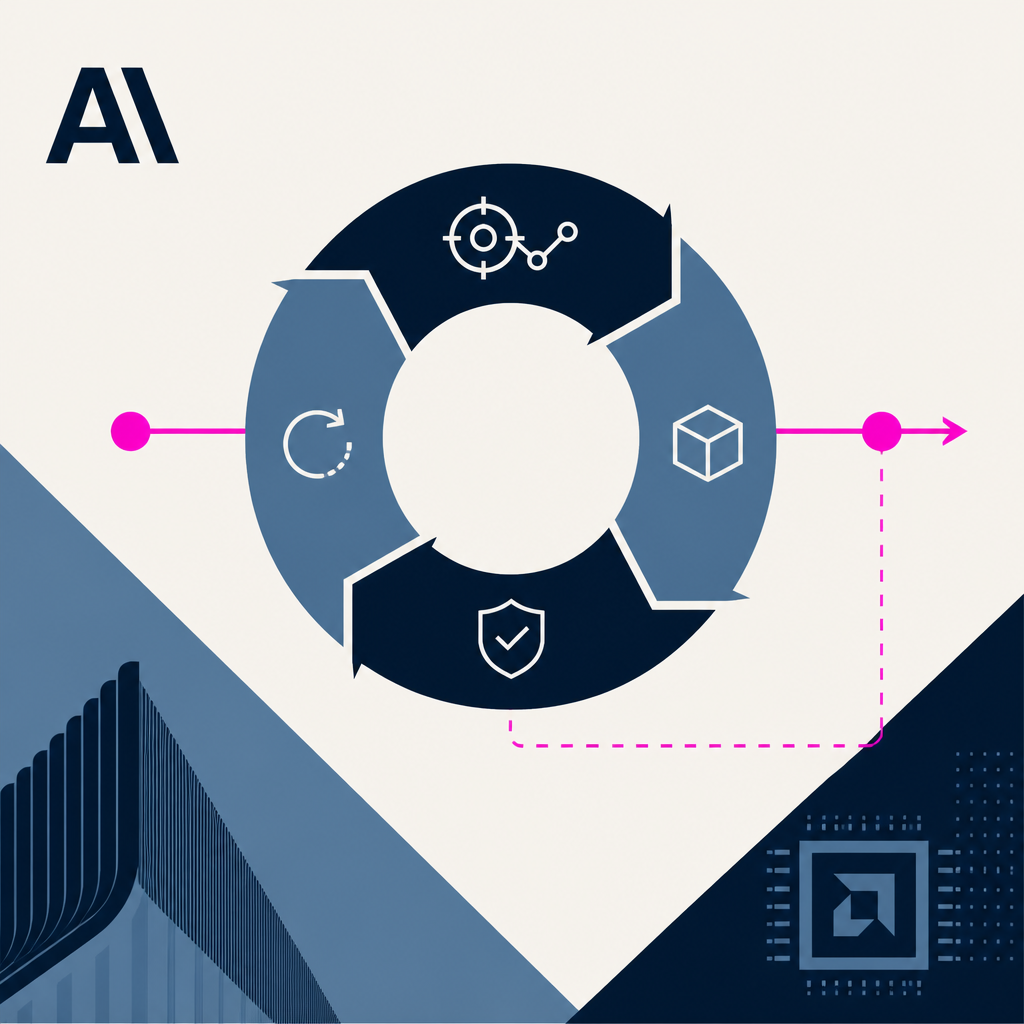
Anthropic's Boris Cherny discusses loop engineering, a methodology that shifts from traditional coding to managing AI agents through graph-based workflows that cycle through planning, action, verification, and retry or escalation steps. The approach structures agent behavior around loops rather than linear code execution. This changes how developers design AI systems from writing sequential instructions to orchestrating iterative agent decision cycles.
Energy is an AI assistant platform that automates multi-step workflows across browsers and business tools by accepting plain-language task descriptions. Users can connect apps like Gmail, Google Drive, Slack, and Outlook, then have Energy handle end-to-end work completion with full audit trails and no training on user data. The product targets founders and operators who want to reduce time spent on coordination and task execution across disconnected tools.
The article discusses agentic workflows designed to deliver the same outcome every time. It provides no specific numbers, dates, or measured results. As a result, there’s no concrete change described beyond the general idea of consistency.
Naïve Inc. closed a $28.5 million Series A to build autonomous AI agents that can provision and run many parts of a business through its API. The funding was led by Nexus Venture Partners and brought in participation from Y Combinator, with sales increasing more than tenfold over the prior six months to a low double-digit-million annual revenue run-rate. The new capital is set to support further cost-efficiency improvements for agent operations, including a model router, memory reuse, and a serverless JavaScript runtime.
Replit CEO Amjad Masad says the coding education mission he spent 15 years building is now obsolete, as AI agents can write software without human code reading. Replit claims its engineers tripled code shipped per person in six months using internal agents, and the company raised $400 million at a $9 billion valuation in March on track for $1 billion annual revenue by year-end. Masad predicts fewer traditional apps within three years as agents transact with each other on users' behalf, fundamentally reshaping how software gets built and deployed.
Every AI story that matters,
in your inbox by 8am.
TLDRocket reads all relevant sources, removes duplicate coverage, and summarises the
day in two minutes. Follow companies and topics for alerts, or get the
briefing in Slack. Free, no spam, unsubscribe anytime.
Reading TLDRocket needs no cookies, and the readership counts we rely on come from
our own cookieless analytics. Google Analytics is the exception: it sets cookies and
reports to Google, so it stays switched off until you allow it. You can change your
mind any time from “Cookie settings” in the footer.
Strictly necessary
Session security and form protection (tldrocket-session,
XSRF-TOKEN, 2 hours). The site cannot work without them,
so they need no consent.
Always on
Google Analytics 4 (_ga,
_ga_<id>, up to 2 years). Measures which
stories and sections readers use. Google acts as a third-party processor and may
store the data outside the EU. No advertising, no profiling, no data sold.