monday.com runs production AI agents on Amazon Bedrock at scale, with nine in ten engineers using AI coding tools monthly and per-engineer PR throughput up by more than 50%. The system uses three levels of AI integration (assistant, skills/sub-agents, and multi-agent), with agents like Atlas and Morphex operating as team members through unified inboxes (Slack, monday, GitHub) backed by seven AWS services. Key retrofits include eval layers before model upgrades, file-based memory instead of vector stores, remote sandboxes for testing, automated Guardrails for code standards, and shared monday boards for accountability, resulting in Morphex PRs merging autonomously at a 95% rate.
Poolside AI released Laguna S 2.1, a 118-billion-parameter mixture-of-experts model designed for long-horizon coding tasks and agent work. The model achieved 70.2% on Terminal-Bench 2.1 and 40.4% on DeepSWE v1.1, performing competitively against much larger models while requiring only 8 billion activated parameters per token and training in under nine weeks. The compact model enables complex agentic coding work to run on local machines, with the company publishing full evaluation trajectories to enable transparency about model behavior.
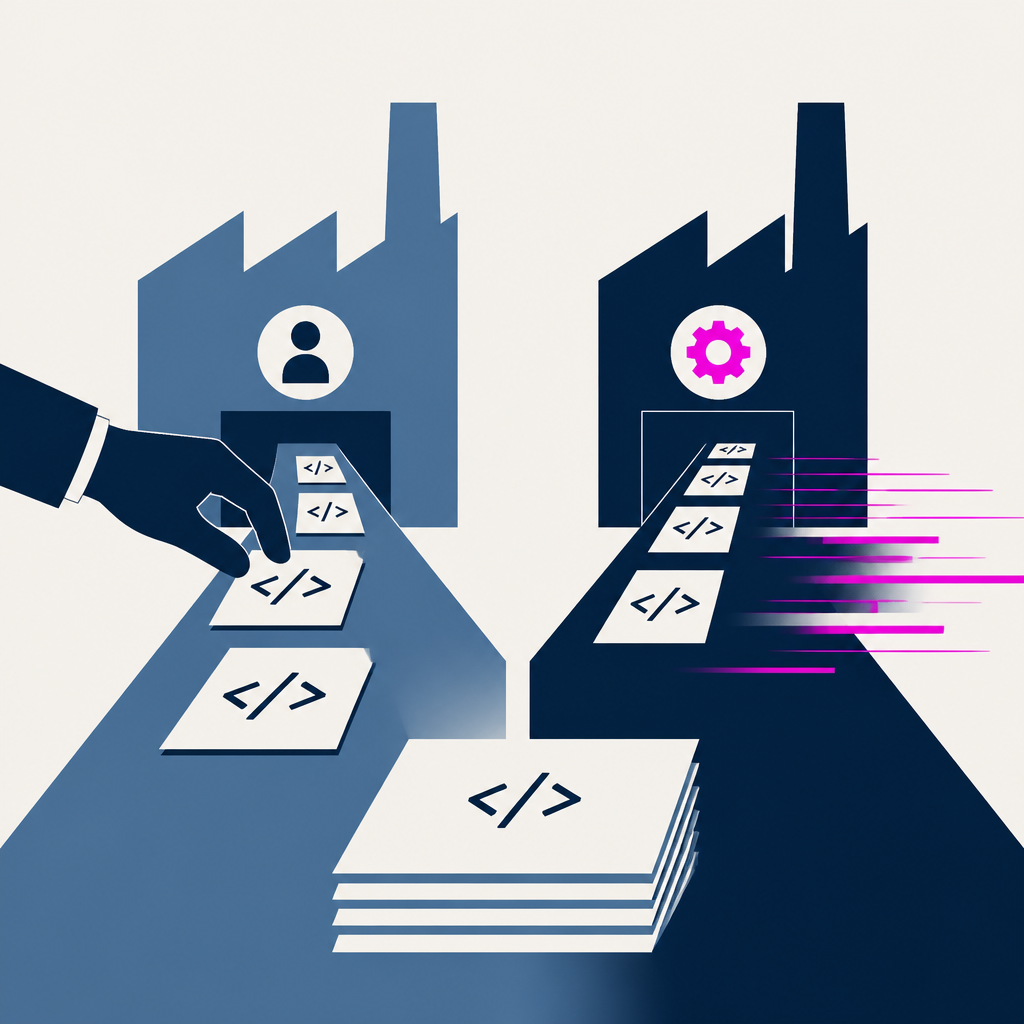
Software factories are automated systems that generate code at scale, with human-led versions emphasizing developer judgment and AI-only versions prioritizing speed but potentially sacrificing comprehension. The key difference involves the degree of human oversight and decision-making authority within these systems. Organizations must carefully choose which quality checks to implement and how much autonomy to grant to AI agents in code generation workflows.
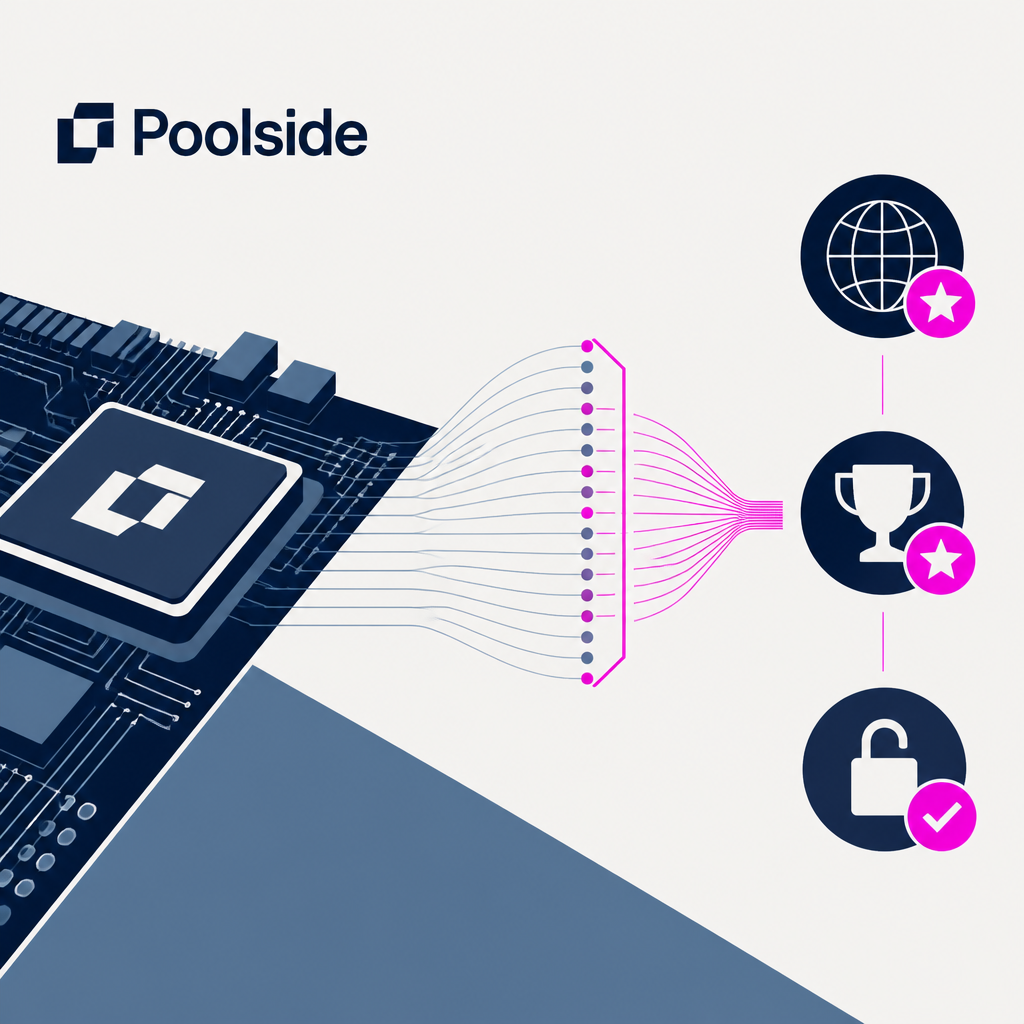
Poolside released Laguna S 2.1, a 118B-parameter open-weight coding model that uses sparse mixture-of-experts to activate only 8B parameters per token while maintaining full model size in memory. The model scores 78.5% on SWE-Bench Multilingual, leading all published open models, and 70.2% on Terminal-Bench 2.1 with thinking enabled, outperforming much larger systems like DeepSeek-V4-Pro-Max and NVIDIA Nemotron 3 Ultra. At 4-bit quantization the model fits on a single NVIDIA DGX Spark with 128 GB memory, making it deployable on single-GPU hardware while competing with models several times its parameter size.
Every AI story that matters,
in your inbox by 8am.
TLDRocket reads all relevant sources, removes duplicate coverage, and summarises the
day in two minutes. Follow companies and topics for alerts, or get the
briefing in Slack. Free, no spam, unsubscribe anytime.
Reading TLDRocket needs no cookies, and the readership counts we rely on come from
our own cookieless analytics. Google Analytics is the exception: it sets cookies and
reports to Google, so it stays switched off until you allow it. You can change your
mind any time from “Cookie settings” in the footer.
Strictly necessary
Session security and form protection (tldrocket-session,
XSRF-TOKEN, 2 hours). The site cannot work without them,
so they need no consent.
Always on
Google Analytics 4 (_ga,
_ga_<id>, up to 2 years). Measures which
stories and sections readers use. Google acts as a third-party processor and may
store the data outside the EU. No advertising, no profiling, no data sold.