Amazon Quick is an AI assistant that helps sales representatives automate administrative tasks like CRM updates, prospect research, and email drafting to increase time spent selling. The tool integrates with CRM systems like Salesforce and HubSpot, uses natural language prompts to rank leads by buying intent, generates personalized outreach emails, and automatically logs call transcripts and activity summaries to Salesforce. Sales teams using Quick can reduce time spent on non-selling activities and cover more territory by consolidating work across multiple tools into a single AI-powered interface.
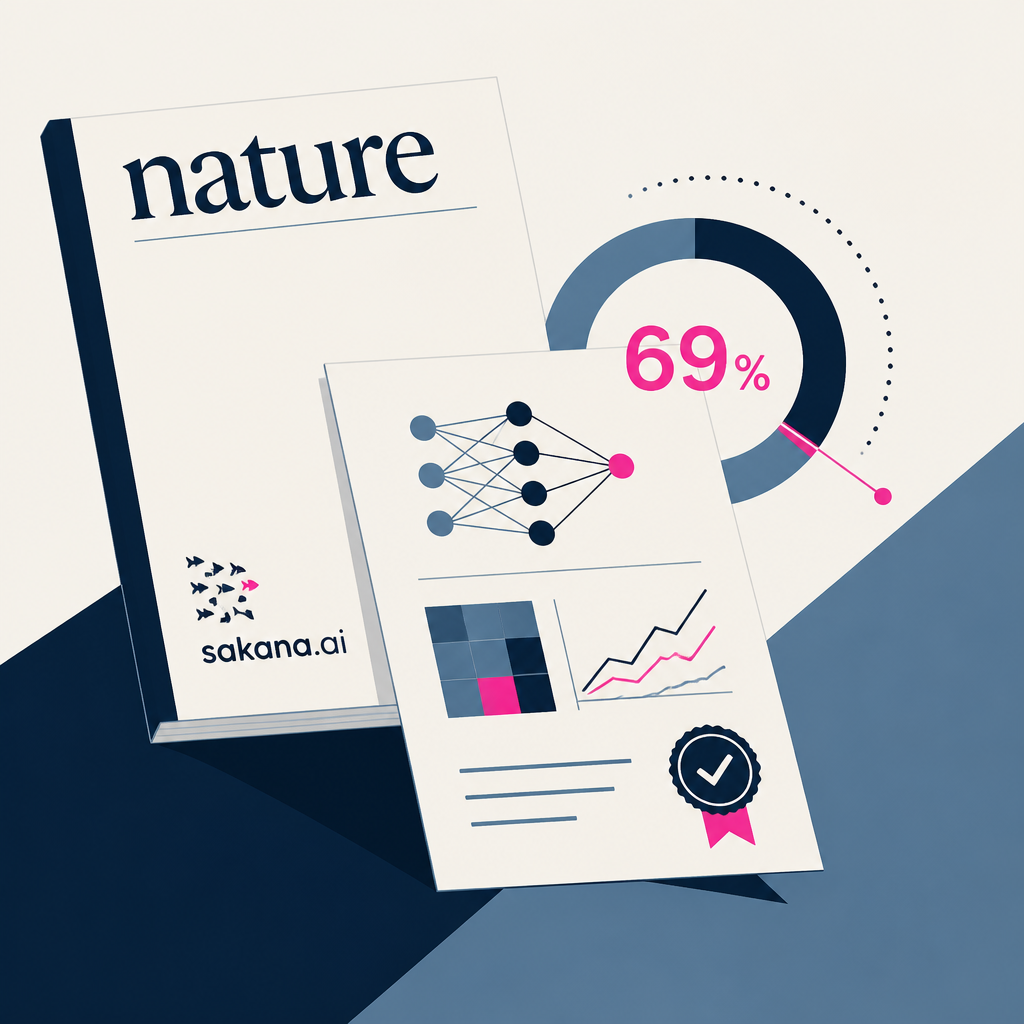
Sakana AI published a Nature paper describing The AI Scientist-v2, an agent that autonomously executes machine learning research by generating ideas, conducting experiments, and writing papers. A paper generated by the system achieved a 69% balanced accuracy score from an Automated Reviewer that matched human peer-review performance on actual conference submissions. The results demonstrate a scaling law where improved foundation models produce higher-quality generated papers, suggesting the system's capabilities will improve substantially as underlying models advance.
NVIDIA introduced the Vera Rubin platform designed to optimize post-training workloads for agentic AI models that continuously adapt and learn from production environments. The Nemotron 3 Ultra model achieved 71.7% on SWE-bench by fixing real software bugs, with Vera Rubin reducing GPU requirements by 75% compared to the previous Blackwell generation for the same training tasks. This shift makes continuous post-training economically viable, allowing AI systems to maintain and improve intelligence throughout their operational lifetime rather than as a one-time process.
Arm and Google announced infrastructure options for running agentic AI workloads, leveraging Google's custom Axion processors alongside accelerators to optimize cost and security. Google's Kubernetes Engine Agent Sandbox running on Axion N4A instances delivers up to 30% better price performance than competing hyperscale cloud providers for orchestrating untrusted AI-generated code. Organizations can now route heavy computational tasks to specialized accelerators while using Axion CPUs for orchestration and management, reducing overall infrastructure costs and enabling safer autonomous agent deployment.
The article argues that human judgment in identifying problems, evaluating machine solutions, and extending beyond what machines accomplish will remain valuable as AI agents become more prevalent. It emphasizes that taste and judgment are inherently difficult to systematize and scale, unlike machine capabilities. Organizations should deliberately cultivate these human skills as a lasting competitive advantage in an AI-augmented world.
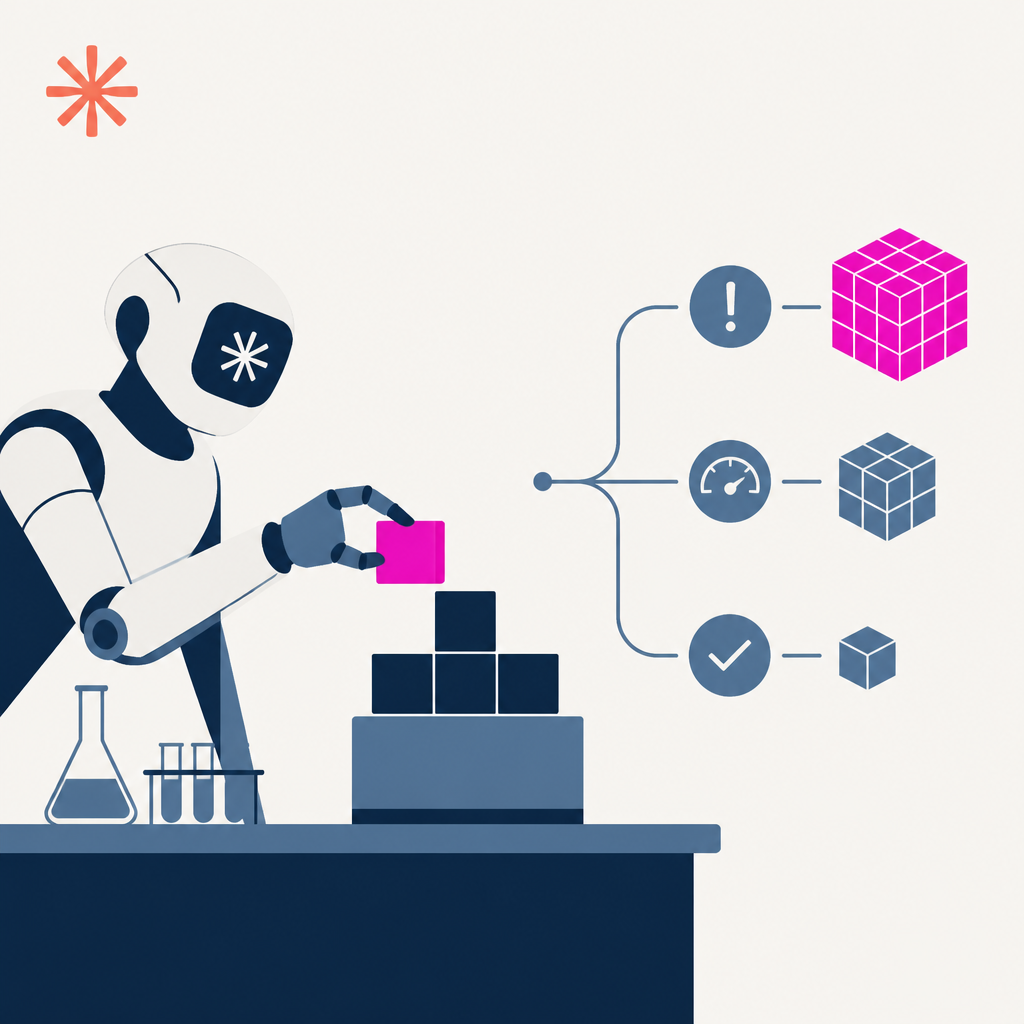
ClaudeDevs introduced effort routing concepts to direct agents toward tasks based on risk levels, controlling computational intensity across different task types. The system allows Claude to allocate varying amounts of processing power depending on task complexity. This enables more efficient resource distribution by matching agent effort to task requirements rather than using uniform processing for all requests.
The page promotes an “AI agents that act” and “automation that delivers” concept from CanyonTechs without giving any other details. It provides no dates, prices, or metrics at all. As a result, there’s nothing concrete to verify or any specific change to report beyond a high-level discussion link.
Every AI story that matters,
in your inbox by 8am.
TLDRocket reads all relevant sources, removes duplicate coverage, and summarises the
day in two minutes. Follow companies and topics for alerts, or get the
briefing in Slack. Free, no spam, unsubscribe anytime.
Reading TLDRocket needs no cookies, and the readership counts we rely on come from
our own cookieless analytics. Google Analytics is the exception: it sets cookies and
reports to Google, so it stays switched off until you allow it. You can change your
mind any time from “Cookie settings” in the footer.
Strictly necessary
Session security and form protection (tldrocket-session,
XSRF-TOKEN, 2 hours). The site cannot work without them,
so they need no consent.
Always on
Google Analytics 4 (_ga,
_ga_<id>, up to 2 years). Measures which
stories and sections readers use. Google acts as a third-party processor and may
store the data outside the EU. No advertising, no profiling, no data sold.