TLDRocket
Sign in

Agent Orchestration

159 summarised stories about Agent Orchestration, each linking back to the original source. Browse all topics →

+ Follow this topic

Friday, 17 July 2026

Build an Agentic Event Venue Operator with MongoDB Atlas, Voyage, and LangGraph

MarkTechPost 3 months ago 23

A tutorial demonstrates building an agentic event-venue operator using MongoDB Atlas for persistent memory, Voyage for multimodal embeddings, and LangGraph for agent orchestration, with a fictional tennis tournament scenario where an agent retrieves visitor history and operational context to make real-time decisions during weather disruptions. The demo includes a four-tab UI, FastAPI backend, vector and hybrid search endpoints, vision RAG for document retrieval, and optional Langfuse tracing, with all operational records, semantic memory, embeddings, and agent actions stored in a single MongoDB Atlas layer rather than scattered across separate systems. The implementation is presented as a reference demo for builders rather than a production platform, with deployment options for local development and Vercel hosting.
Trinity: An Evolved LLM Coordinator

Sakana AI 33

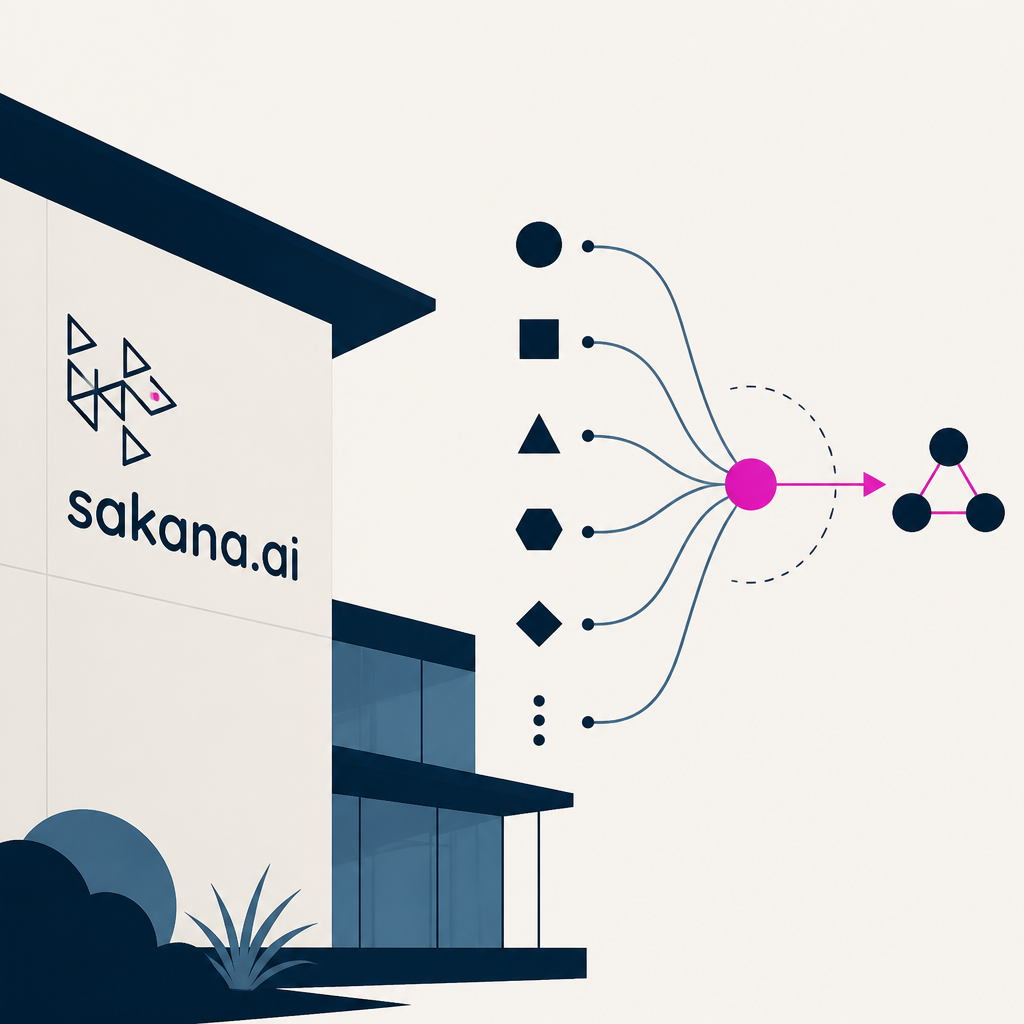
Sakana AI developed TRINITY, a coordinator system that orchestrates multiple specialized AI models at test-time without modifying their weights, using an evolutionary algorithm to optimize a 20K-parameter routing mechanism. The system achieved an 86.2% pass@1 score on LiveCodeBench and generalized zero-shot to four unseen tasks while outperforming individual models including GPT-5 and Claude-4-Sonnet. This approach replaces the industry focus on scaling single monolithic models with collaborative multi-model systems that combine complementary strengths through dynamic task assignment.

Learning to Orchestrate Agents in Natural Language with the Conductor

Sakana AI 17

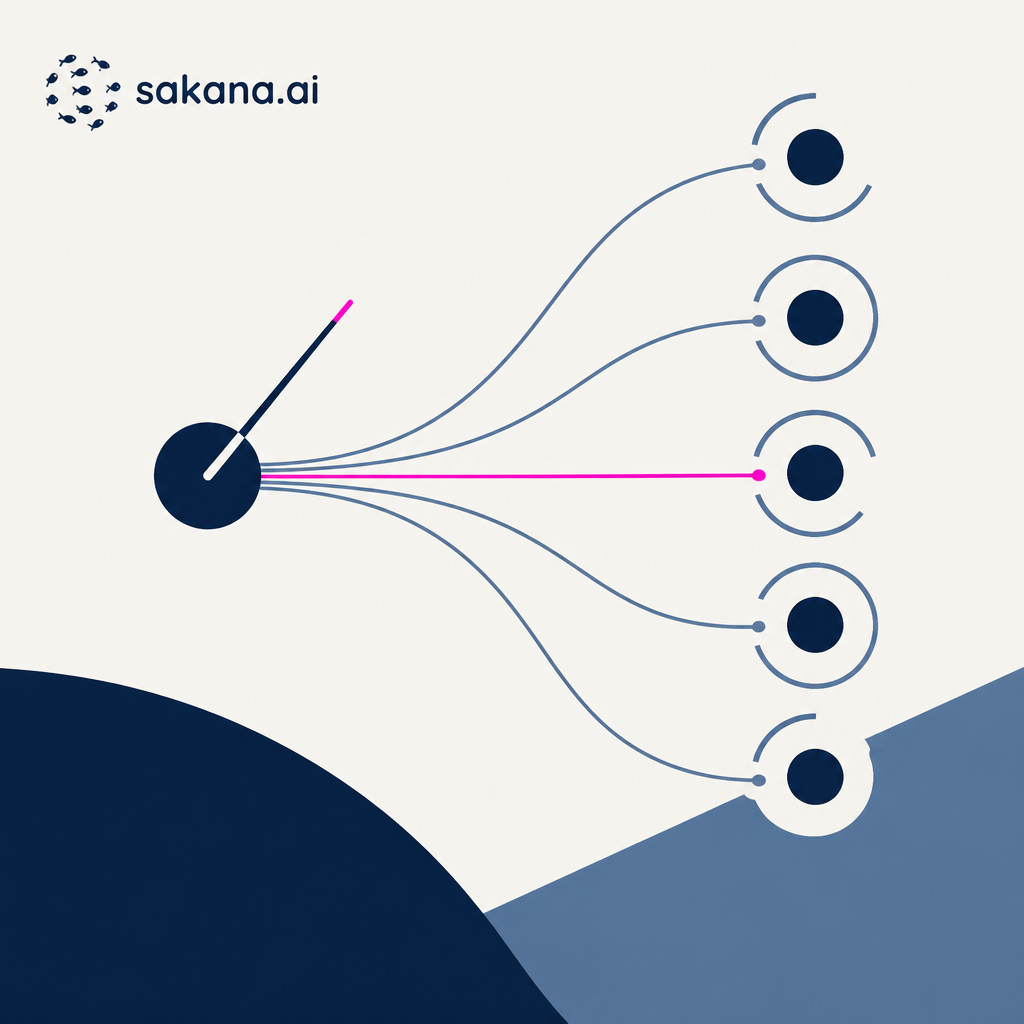
Sakana AI trained a 7-billion-parameter Conductor model using reinforcement learning to manage and coordinate a team of other AI models by writing natural language instructions tailored to each task. The Conductor achieved 83.9% on LiveCodeBench and 87.5% on GPQA-Diamond, surpassing individual models in its pool while dynamically adapting its approach—using single queries for simple questions and constructing multi-step workflows for complex problems. This approach enables AI systems to leverage collective intelligence by learning to delegate tasks across diverse models rather than relying on fixed human-designed workflows.

The daily briefing

Every AI story that matters, in your inbox by 8am.

TLDRocket reads all relevant sources, removes duplicate coverage, and summarises the day in two minutes. Follow companies and topics for alerts, or get the briefing in Slack. Free, no spam, unsubscribe anytime.