Trinity: An Evolved LLM Coordinator
Sakana AI
Sakana AI built a tiny coordinator that bosses around GPT-5, Gemini 2.5-Pro and Claude-4-Sonnet instead of training one giant model. It beats all of them individually and even hit a new best score on LiveCodeBench.
Based on reporting by Sakana AI — read the original for the full story.
Summary, retelling and take written by AI under human oversight; images are AI-generated illustrations. How we work · Report an error
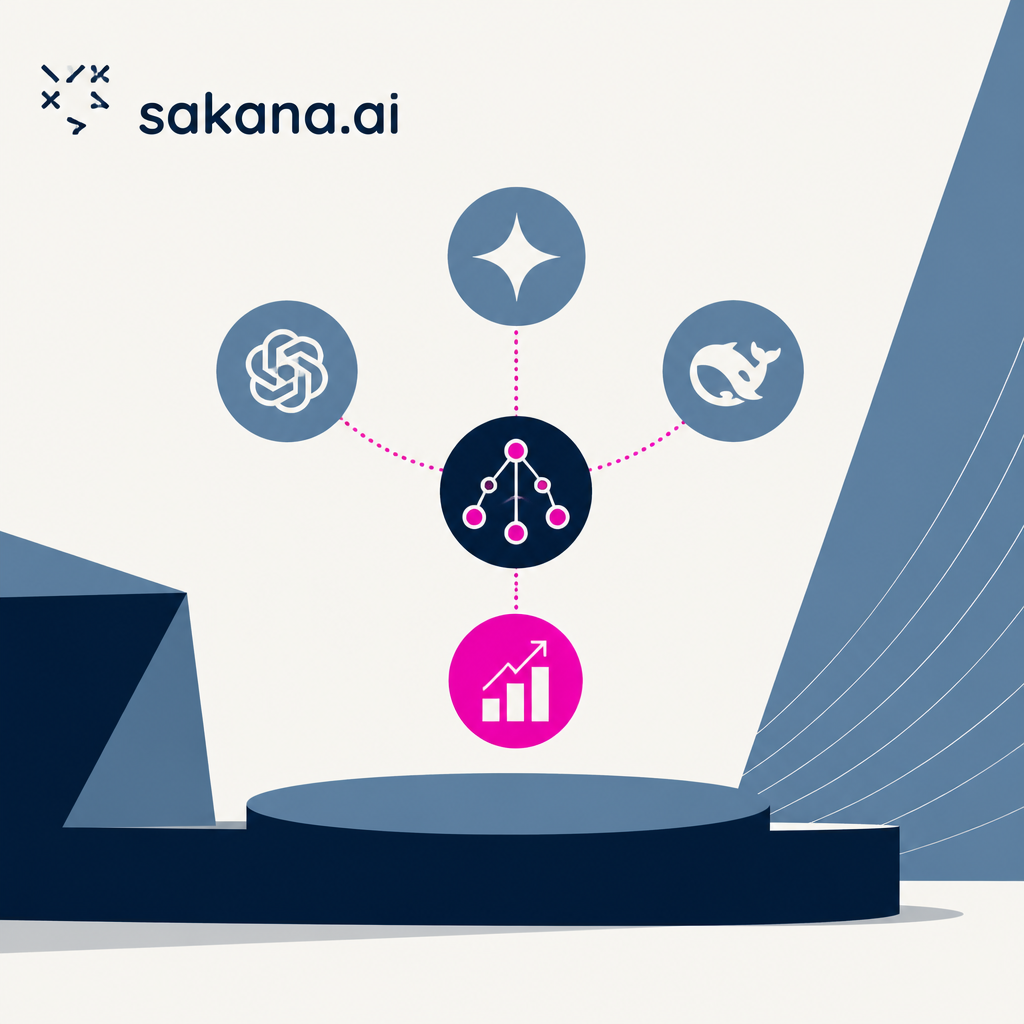
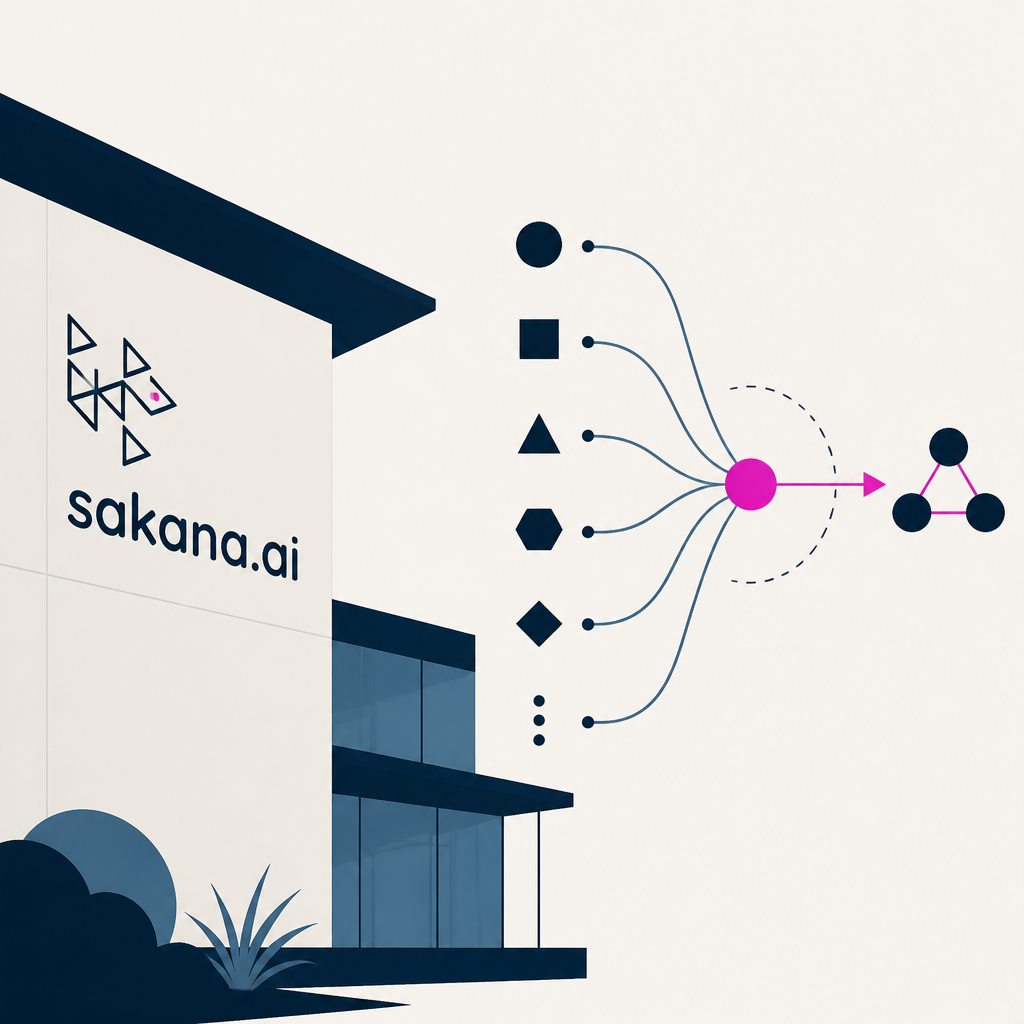
Sakana AI has a new paper out, presented at ICLR2026, that takes a pretty different swing at the AI scaling problem. Instead of piling more parameters onto one enormous model, the team built something called TRINITY: a lightweight coordinator that sits on top of a pool of existing frontier models and decides, turn by turn, which one should do what.
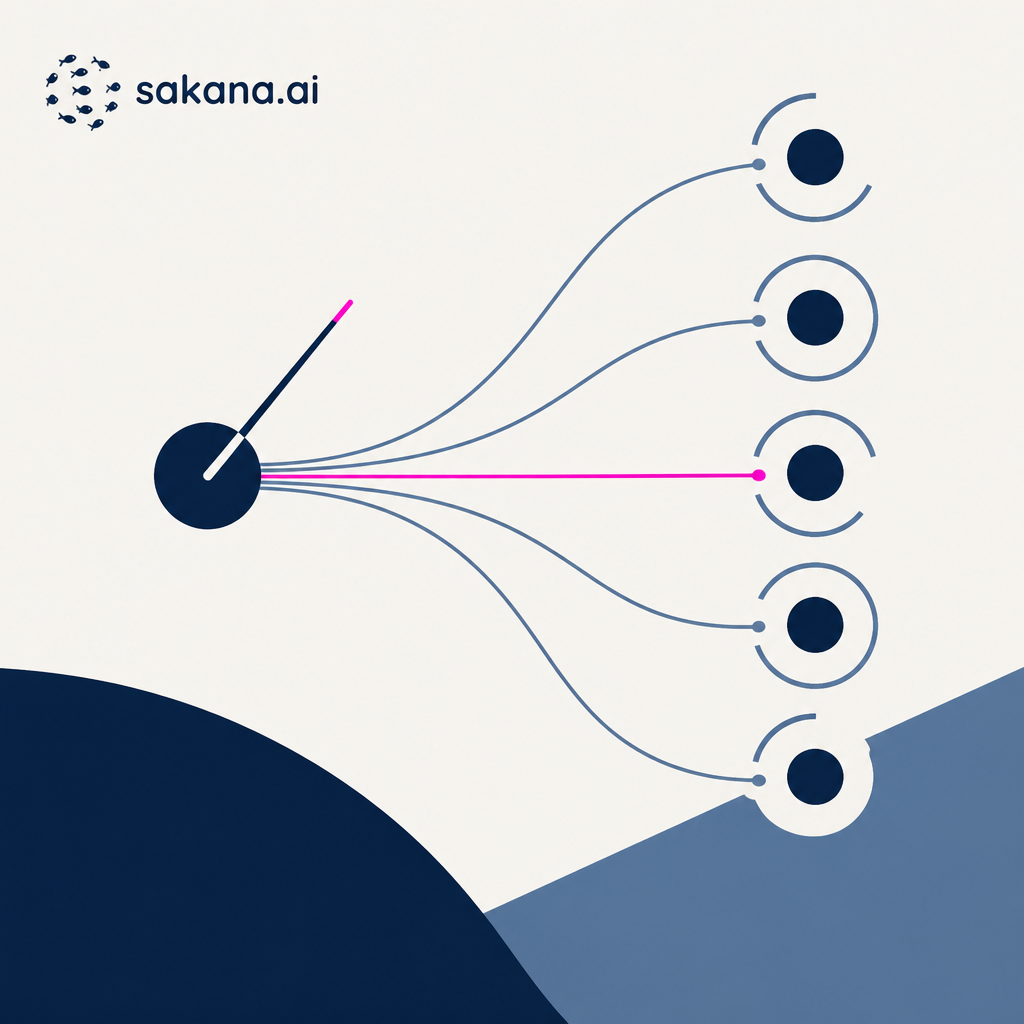
The mechanism is simple in outline but clever in practice. At each step of a multi-turn query, TRINITY assigns one of three roles to a model from its pool, letting it hand off reasoning or skill execution to whichever LLM is best suited for that moment, without touching the weights of any of the underlying models. That last part matters, since the paper notes that model merging usually runs into trouble when architectures don't match or when the top models are closed-source anyway.
What's striking is how small the coordinator itself is. It runs on the hidden states of a compact language model plus a small routing head, adding up to fewer than 20,000 learnable parameters. Training it wasn't straightforward, though. Sakana says standard reinforcement learning (REINFORCE) failed because of noisy gradients from binary rewards and weak coupling between parameters, and supervised fine-tuning was a non-starter since labeling multi-turn examples gets expensive fast. Their fix was to abandon gradient-based training altogether and optimize the coordinator with a derivative-free evolutionary algorithm instead.
The payoff, according to the paper, is real. TRINITY beat existing multi-agent methods and individual models across several benchmarks, and at the time of publication it set a new state-of-the-art on LiveCodeBench with an 86.2% pass@1 score. More telling is what happened when they threw it at four benchmarks it had never seen — AIME, BigCodeBench, MT-Bench, and GPQA — with zero retraining. On average it still outperformed every model in its own pool, including GPT-5, Gemini 2.5-Pro, and Claude-4-Sonnet, which were the top frontier models available when Sakana submitted the paper.
Sakana frames this as evidence for a broader thesis: that the next leap in AI capability might come less from bigger monolithic models and more from orchestrating diverse ones. The research already underpins their multi-agent product, Sakana Fugu.
My take — AI-written commentary, not fact-checked reporting
A 20,000-parameter coordinator outscoring GPT-5, Gemini 2.5-Pro and Claude-4-Sonnet on unseen tasks is the kind of result that should make the scale-at-all-costs crowd a little uneasy, even if it's just one paper on one set of benchmarks. It also quietly reinforces the case for an open, model-agnostic AI ecosystem over closed vertical stacks, since the whole trick depends on being able to route between different labs' models rather than being locked into one. Evolutionary optimization succeeding where REINFORCE and SFT choked is the more understated finding here, and probably the one other labs should be paying closer attention to.”
Read more about this at: Sakana AI