OpenAI's Thibault Sottiaux predicted that Codex will become outdated within 2-3 months as the company moves toward more advanced AI agents requiring persistent cloud infrastructure rather than local machines. OpenAI's planned acquisition of Ona, which provides secure cloud development environments used by 2 million developers, would enable agents to work continuously in customer clouds without depending on a developer's laptop being online. This shift requires new infrastructure management layers including agent identities, access controls, and logging systems to keep pace with autonomously operating coding agents.
Amazon published a tutorial on building an automated web insight extraction system using Bedrock AgentCore Browser, which renders JavaScript-heavy pages reliably and extracts insights with AI models. The system monitors RSS feeds, retrieves full page content using managed browser sessions (taking 10–30 seconds per render), and indexes results in OpenSearch Serverless for semantic search. Teams can now monitor competitors, industry trends, and regulatory changes without manual website checks, with safeguards applied through Bedrock Guardrails to filter harmful content before indexing.
YugabyteDB announced AMP, a serverless PostgreSQL tier designed to manage hundreds or thousands of databases created by AI agents, each with isolated data layers. The platform scales to zero when idle and charges by CPU minute when active, with four built-in AI agents (Architect, Voyager, Perf Advisor, Nexus) handling database creation, migration, performance monitoring, and ecosystem integration. Companies can now experiment cheaply with AI agents on small databases and scale to distributed PostgreSQL without application rewrites as workloads grow.
Cloudflare introduced @cloudflare/computer, an open-source runtime package that gives AI agents their own virtual computer with a shared filesystem and multiple execution environments. The package optimizes agent scalability by running most tasks on Cloudflare's lightweight isolates (based on Workers technology) and spinning up containers on-demand for heavier compute needs, with the goal of keeping container usage below 10% of agent work. This approach addresses the industry's critical shortage of compute capacity for running millions of concurrent agents across all cloud providers.
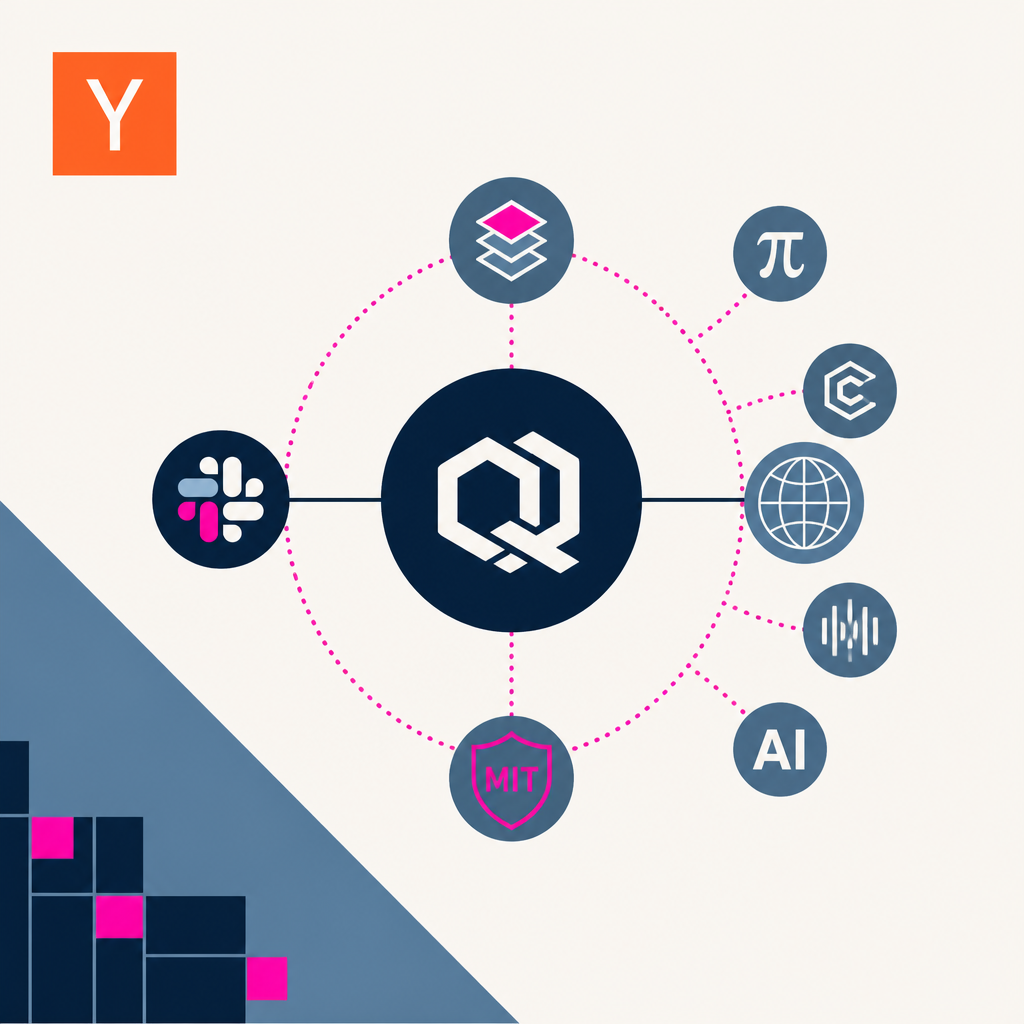
Y Combinator open-sourced QM, a multi-agent harness for workplace collaboration that runs in Slack and the web, under the MIT license. The system is designed for organizations of 10–500 people with at least one platform engineer, supports multiple AI models (Pi, OpenCode, Codex, Claude Code) without vendor lock-in, and isolates each user and room with separate memory, permissions, and sandboxed execution. Deployments can now use QM for internal tasks like inbox triage, document search, code testing, and project tracking without being tied to a single AI vendor.
Every AI story that matters,
in your inbox by 8am.
TLDRocket reads all relevant sources, removes duplicate coverage, and summarises the
day in two minutes. Follow companies and topics for alerts, or get the
briefing in Slack. Free, no spam, unsubscribe anytime.
Reading TLDRocket needs no cookies, and the readership counts we rely on come from
our own cookieless analytics. Google Analytics is the exception: it sets cookies and
reports to Google, so it stays switched off until you allow it. You can change your
mind any time from “Cookie settings” in the footer.
Strictly necessary
Session security and form protection (tldrocket-session,
XSRF-TOKEN, 2 hours). The site cannot work without them,
so they need no consent.
Always on
Google Analytics 4 (_ga,
_ga_<id>, up to 2 years). Measures which
stories and sections readers use. Google acts as a third-party processor and may
store the data outside the EU. No advertising, no profiling, no data sold.