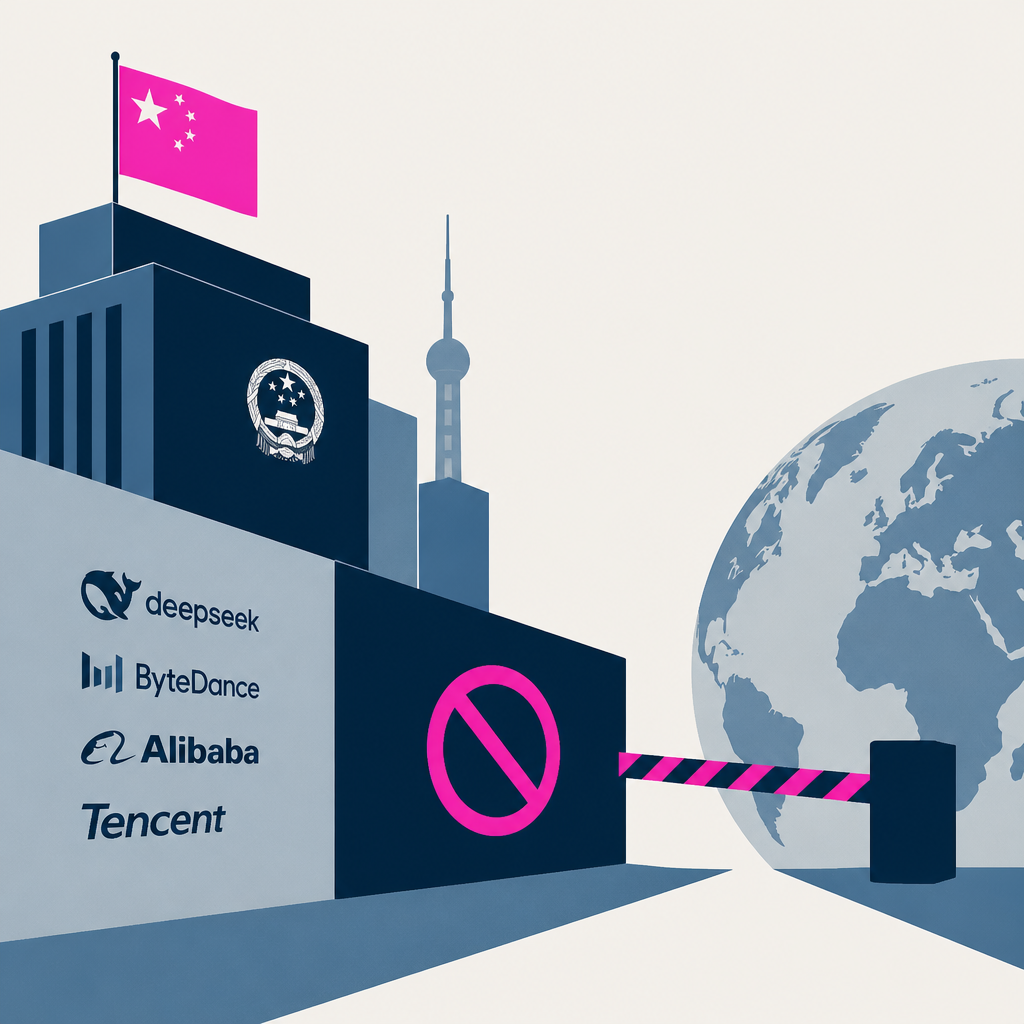
Washington Is Looking to Keep China From Training Its AI on US Models
CSET Georgetown Jason Ly
Washington's worried Chinese AI firms are training their models by copying outputs from US systems, a trick called distillation. Nobody in DC actually knows how big a deal this is yet.
Based on reporting by CSET Georgetown, Jason Ly — read the original for the full story.
Summary, retelling and take written by AI under human oversight; images are AI-generated illustrations. How we work · Report an error
There's a particular flavor of Washington panic that shows up whenever a technique with a boring technical name starts sounding like a national security threat, and distillation has become the latest entrant. The process itself isn't exotic: a smaller model learns by mimicking the outputs of a larger, more capable one, essentially absorbing its behavior without needing the underlying training data or infrastructure. It's been a standard tool in machine learning for years. What's changed is the geopolitical framing, now that US officials suspect Chinese labs are using American frontier models as the teacher and Chinese systems as the student.
Colin Shea-Blymyer, a research fellow at Georgetown's CSET, told Bloomberg the blunt truth that policymakers don't love hearing: nobody has solid numbers on how much this is actually accelerating Chinese AI development. It's not that the concern is baseless. Distillation can let a company skip years of expensive trial and error by piggybacking on someone else's already-tuned intelligence. But turning that into a specific, quantifiable national security risk, the kind that justifies export controls or legal action, requires evidence that mostly doesn't exist in public view.
That gap between suspicion and proof is exactly where this debate is stuck. Companies like OpenAI have accused competitors, including China's DeepSeek, of leaning on distillation from GPT-family models to fast-track their own releases. Whether that's a meaningful competitive threat, a garden-variety IP dispute, or simply how AI development always works now that models are cheap to query and expensive to build is genuinely unresolved. Washington's instinct is to treat any Chinese technical shortcut as a strategic loss, but shortcuts are also just how software has always evolved.
What's likely coming next is some combination of tighter API terms of service, more aggressive enforcement against unauthorized bulk querying, and possibly new export-control language aimed at distillation specifically. None of that will settle the deeper question Shea-Blymyer raised: whether this is a five-alarm fire or a technique getting outsized attention because it fits a preexisting narrative about the US-China AI race. Right now, the policy conversation is running well ahead of the data.
My take — AI-written commentary, not fact-checked reporting
I'll believe distillation is the dagger aimed at America's AI lead when someone shows actual numbers, not vibes from a competitor with a product to protect. This smells like the usual pattern: slap a scary label on a normal engineering technique, then use it to justify more walls around American models, which mostly just slows down researchers everywhere except the state actors those walls were supposedly built to stop.
Read more about this at: CSET Georgetown