OpenAI and Anthropic warn Washington about Chinese distillation of U.S. AI models
New York Post ● Covered by 3 sources
Anthropic and OpenAI just told Congress that Chinese firms are copying their AI models on the cheap through a technique called distillation. They say it's shrinking America's AI lead and could let China clone billion-dollar chatbots for pennies.
Based on reporting by New York Post — read the original for the full story.
Summary, retelling and take written by AI under human oversight; images are AI-generated illustrations. How we work · Report an error
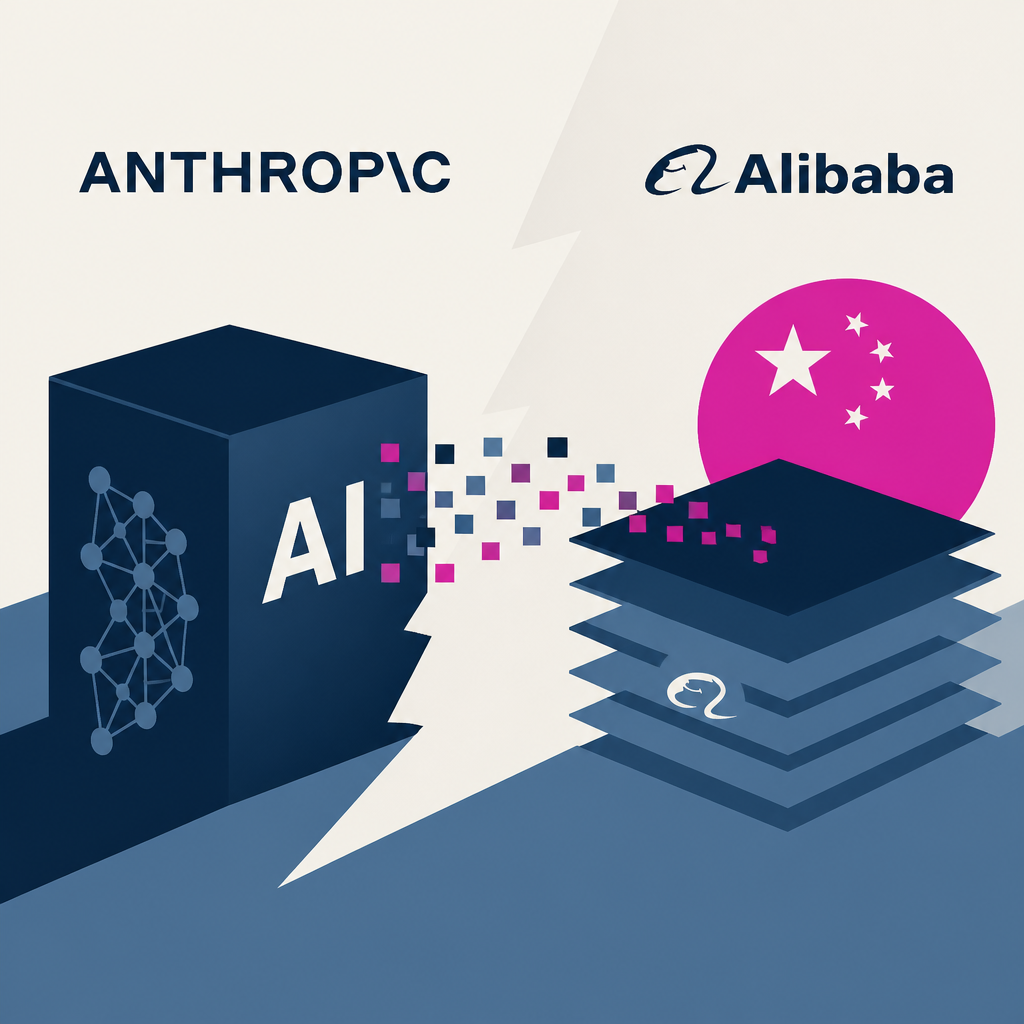
Dario Amodei's Anthropic sent a letter to the Senate Banking Committee on June 24 accusing Alibaba of running nearly 25,000 fake accounts to pull 28.8 million outputs out of Claude between April and June this year. That's the raw material for distillation, a process where you use a stronger AI model's responses to train a weaker one, skipping most of the expensive research and compute that built the original. Alibaba responded by banning its own employees from using Claude, a move Anthropic sources call meaningless since China-based accounts were already barred from the platform.
OpenAI has been making similar noise since February, when it accused DeepSeek of freeriding on its models. The company briefed Congressional staffers this month on how Chinese labs are using distilled AI for influence operations, and it's now pushing the NSA's AI Security Center to become a shared clearinghouse where OpenAI, Anthropic and smaller US labs can pool intelligence on these attacks. Six of the ten most-used AI models today come from Chinese companies — DeepSeek, Z.AI, Minimax among them — and people close to Anthropic estimate that without distillation, China's frontier labs would be running 18-plus months behind the US instead of the current six to nine.
The Trump administration has already flagged this as a national security problem. In April, the White House's science and technology office accused China of running "deliberate, industrial-scale" theft operations, and the House Select Committee on China published its own report the same month documenting chip smuggling and distillation side by side. Committee chairman John Moolenaar didn't mince words, telling reporters that China's AI progress is built on theft rather than innovation and pushing for legislation like the AI Overwatch Act, which would force government sign-off before advanced chips get sold to countries Washington considers risky.
What makes this messy is that distillation isn't inherently illegal — labs use it internally all the time to compress big models into cheaper, faster ones. It only becomes a legal and political problem when a foreign competitor does it to your model without permission, and even then, separating genuine Chinese engineering progress from borrowed shortcuts is nearly impossible from the outside. Jared Dunnmon, who used to run AI programs at the Pentagon, put the real danger in blunt terms: this isn't about China beating the US to the frontier, it's about China getting close enough that its labs can undercut American pricing everywhere else, pulling global developers onto a Chinese AI stack by default.
Anthropic has reportedly briefed White House national security officials on this as recently as this month, and two of its most capable models were pulled offline temporarily over fears they could be weaponized if leaked or copied. Whatever legislation eventually passes, the underlying dynamic isn't going away soon: export controls squeezed China's access to Nvidia chips, and distillation is the workaround, letting Chinese firms rent the intelligence of billion-dollar training runs for the cost of API calls.
My take — AI-written commentary, not fact-checked reporting
This is Silicon Valley discovering that open weights and cheap API access cut both ways — you can't sell the world affordable intelligence and then act shocked when someone reverse-engineers it on a budget. I've got no sympathy for Alibaba running 25,000 fake accounts, that's straightforwardly dishonest, but the bigger story here is that America's AI moat was always thinner than the marketing suggested, and export controls just made distillation the obvious workaround rather than the exception.
Read more about this at: New York Post