
Verizon touts $1B dark fiber deal for Google data centers as first of many
Ars Technica Jeremy Hsu
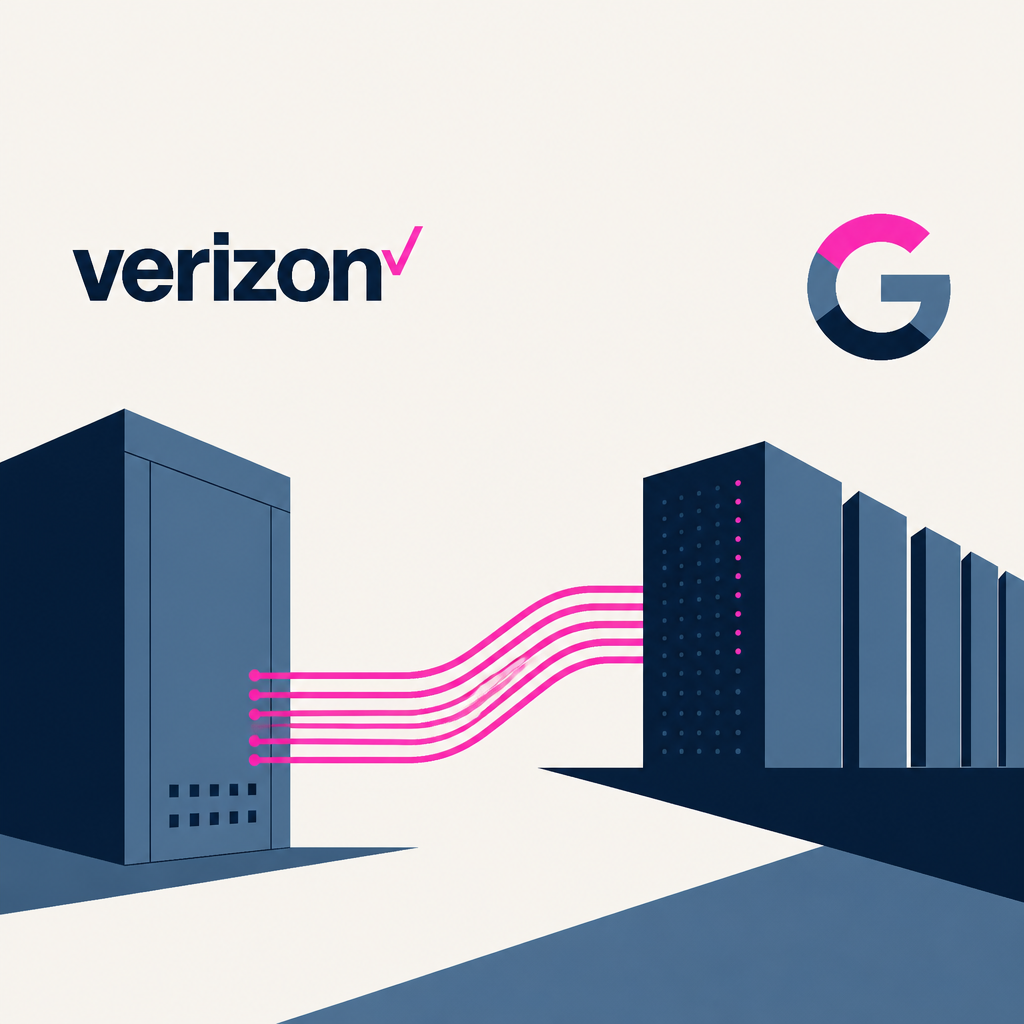
Verizon just struck a $1B+ deal wiring Google's data centers with its dark fiber. It's also gutting old copper phone hubs to turn them into AI edge data centers.
Based on reporting by Ars Technica, Jeremy Hsu — read the original for the full story.
Summary, retelling and take written by AI under human oversight; images are AI-generated illustrations. How we work · Report an error
Verizon wants a piece of the AI infrastructure boom, and it's starting with a deal worth more than $1 billion. The telecom giant announced during its Q2 2026 earnings call that it will use its dark fiber routes to connect Google's data centers, part of a new business push called AI Connect. Dan Schulman, Verizon's CEO, framed it as the natural next step for a company that already owns a lot of unused fiber infrastructure sitting in the ground.
The pitch, according to Schulman, is about connectivity between data centers rather than raw compute itself. He described the problem as figuring out how to link data center to data center so companies can squeeze maximum performance out of an appetite for compute that keeps growing. That's the dark fiber piece. But Verizon isn't stopping there.
The company is also converting some of its central offices, the buildings that have historically housed switching equipment for phone and internet service, into what it calls remote data centers. That means tearing out old copper wiring and repurposing the physical space for small-scale computing hardware suited to AI inference. Schulman pointed to use cases like robotics, autonomous driving, and remote surgery, applications where latency matters enough that pushing compute to the edge, rather than routing everything back to massive centralized data centers, actually makes a difference.
Schulman was blunt about the trajectory: Verizon expects more AI-related deals to land before the end of the year, and he characterized the pipeline as worth multiple billions of dollars in revenue spread over several years. That's a notable claim for a company whose business has traditionally been wireless plans and broadband, not data center infrastructure. The Google deal gives Verizon a marquee name to point to, and the central office conversions suggest the company sees a longer-term role for itself beyond just leasing fiber capacity.
What's interesting here is the two-track strategy. One track is straightforward infrastructure leasing to hyperscalers who need to move data between their own facilities faster. The other is Verizon trying to become a landlord for edge inference, betting that AI applications like robotaxis and robotics will need compute closer to where the action happens rather than in a distant data center. Whether that bet pays off depends on how quickly those edge use cases actually materialize at scale.
My take — AI-written commentary, not fact-checked reporting
Old phone company real estate becoming AI inference hubs is the kind of pivot that sounds clever until someone asks how much actual demand exists for edge compute at robotaxi scale right now versus how much this is Verizon dressing up spare capacity for investors hungry for any AI story. The dark fiber deal with Google is the safer bet here, since hyperscalers clearly need that connectivity today. The central office conversion is the speculative side, and it's worth watching whether those
Read more about this at: Ars Technica