Unitree vs. Shein: How August’s big China IPOs show how AI hype is leaving e-commerce giants behind
Fortune Nicholas Gordon ● Covered by 2 sources
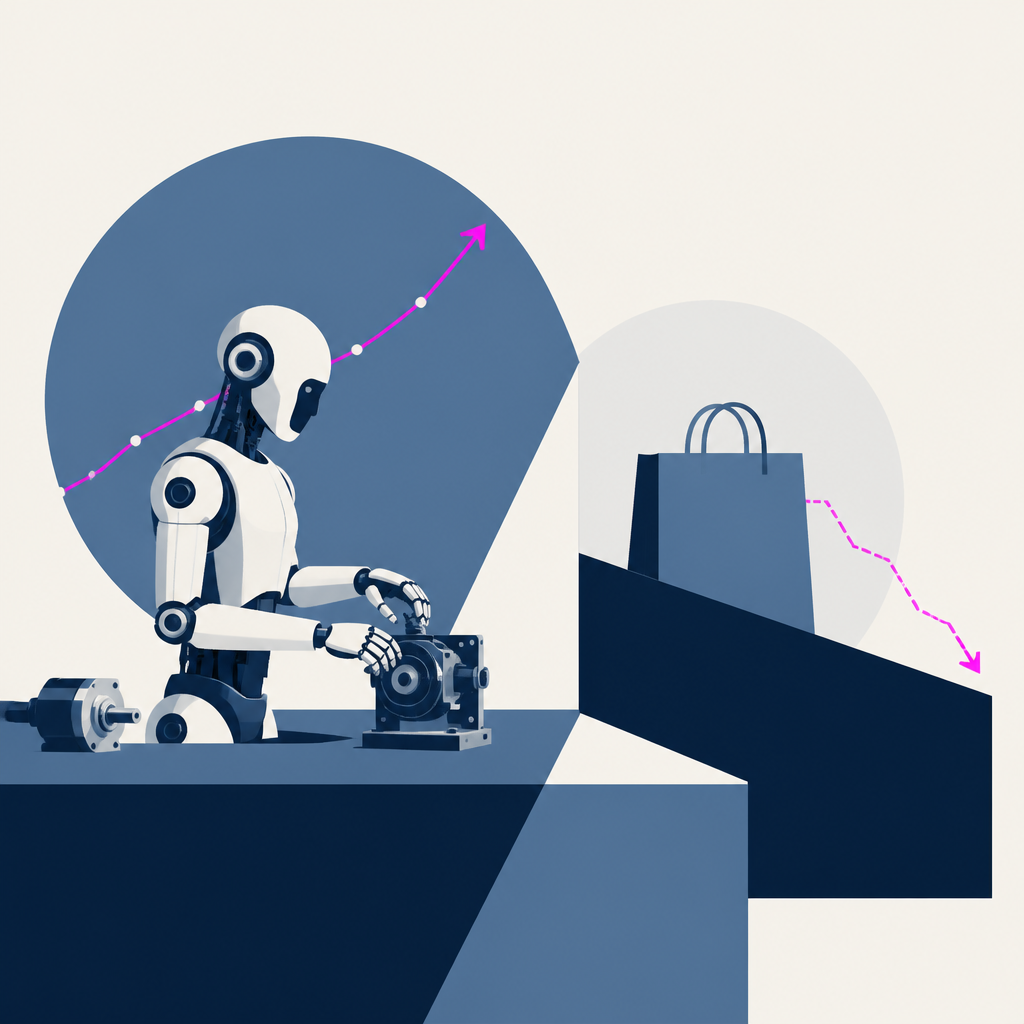
Unitree’s IPO is stealing the spotlight from Shein, even though Shein’s deal is much bigger. Investors are chasing robots and AI hardware now, not old-school e-commerce.
Based on reporting by Fortune, Nicholas Gordon — read the original for the full story.
Summary, retelling and take written by AI under human oversight; images are AI-generated illustrations. How we work · Report an error
Shein is still the larger listing on paper. The fast-fashion giant is said to be aiming to raise as much as $3 billion, about three times Unitree’s target. But the smaller robot maker is the one getting the buzz, with retail investors piling in and secondary markets betting on a sharp jump in value after the debut.
That says a lot about where investor excitement is drifting. Unitree, founded by Wang Xingxing in 2016, has turned into a familiar name in China partly because its robots have danced on the CCTV Spring Festival Gala, the country’s most watched TV broadcast. The company is raising 6.1 billion yuan, or $904 million, at a valuation of about $9 billion. Last week it said the retail slice of the offering was more than 8,000 times oversubscribed.
The numbers help explain the heat. Unitree reported revenue of 1.7 billion yuan, or $252 million, last year, four times what it made in 2024. Almost 45% of that came from overseas. It also says it is profitable, with net income of 600 million yuan, or $89 million, in 2025. More than 70% of its humanoid robots go to academic and research institutions, though some Chinese state-owned enterprises and major manufacturers are starting to test them too.
And the broader robotics scene in China is moving fast. Smart Analytics Global says Chinese firms accounted for 97% of humanoid robot shipments in the first half of the year. Unitree is no longer even the top name in that category; that spot now belongs to Agibot, which is preparing a Hong Kong listing later this year. Washington has noticed as well: in late July, the U.S. Federal Communications Commission banned imports of foreign-made humanoid and quadruped robots, citing supply-chain risks to U.S. economic and national security.
Shein’s path has been much rougher. The company is now reportedly aiming for a $25 billion to $30 billion valuation, far below the $64 billion it had in 2024 and the $100 billion it reached in 2022. Its prospectus says revenue rose to $41.2 billion last year from $38.8 billion in 2024, with about $2 billion in profit. Europe is now its biggest market at 35.4% of revenue, ahead of the U.S. at 24.1%, just as the end of de minimis exemptions in both places makes life harder for global e-commerce sellers.
My take — AI-written commentary, not fact-checked reporting
This is the cleanest sign yet that investors would rather pay for robots than cheap clothes. E-commerce got its pandemic moment; AI hardware is getting the sequel. The irony is brutal: the bigger company has the bigger business, but the smaller one has the story that actually gets people to open their wallets.
Read more about this at: Fortune