
As China advances in AI, Trump faces a new test in the technology race
CSET Georgetown Jason Ly ● Covered by 75 sources

China's AI models are catching up fast to the top U.S. systems. That's putting real pressure on Trump's team to figure out its next move.
Based on reporting by CSET Georgetown, Jason Ly — read the original for the full story.
Summary, retelling and take written by AI under human oversight; images are AI-generated illustrations. How we work · Report an error
The gap between America's best AI models and China's is shrinking faster than most policymakers expected, and that's exactly the problem Sam Bresnick lays out in his Washington Post interview. Bresnick, a research fellow at Georgetown's CSET, doesn't mince words about where the Trump administration stands right now: hairy, uncertain, still finding its feet.
That's a notable admission given how much bravado has surrounded U.S. AI policy over the past year. Washington has leaned hard on chip export controls, aiming to choke off Beijing's access to the high-end silicon that trains frontier models. But Chinese labs keep closing the distance anyway, squeezing more performance out of constrained hardware and smaller budgets. The strategy of slowing China down through hardware chokepoints was never going to be a permanent fix, and Bresnick's comments suggest the administration knows it.
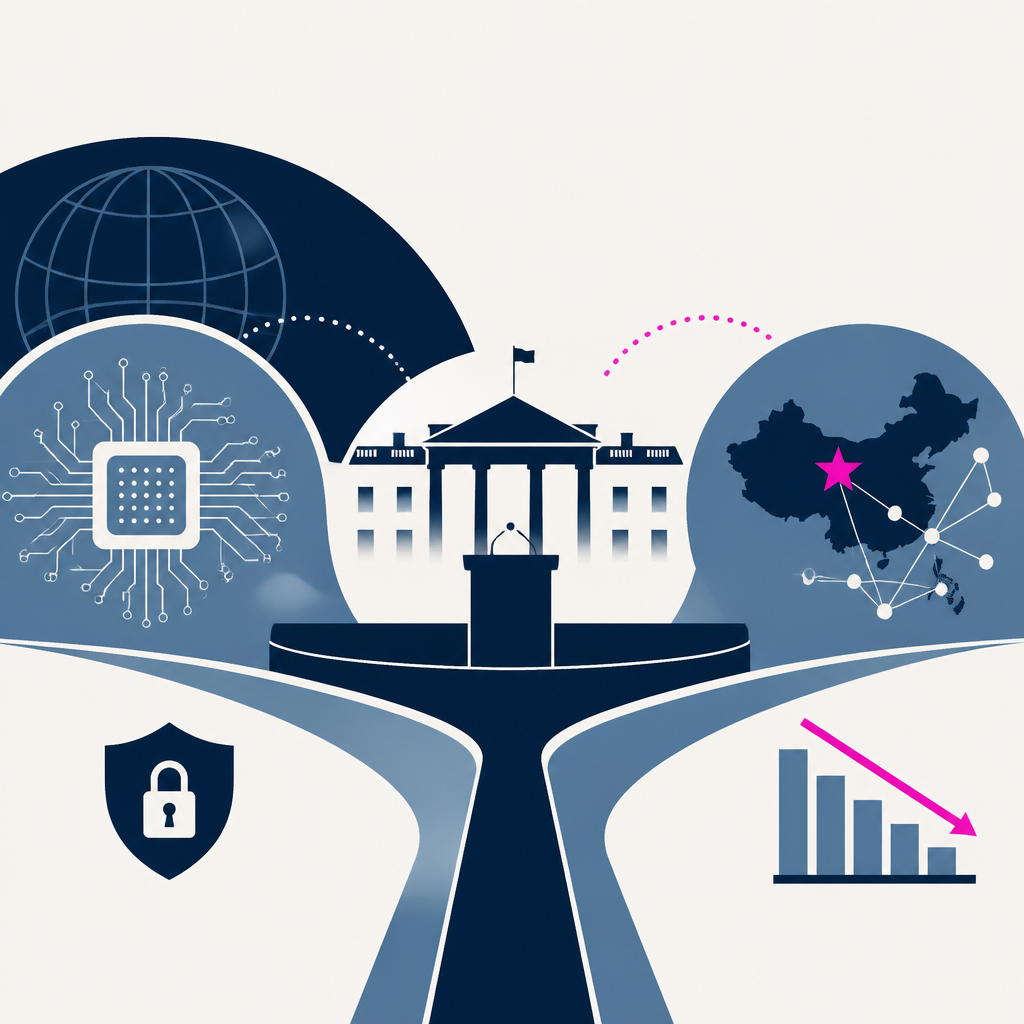
The deeper tension is that Trump's team wants two things that don't always pull in the same direction. On one hand, there's a push for rapid domestic AI growth, light-touch regulation, and keeping American labs unshackled so they can outpace rivals. On the other, there's a national security instinct that wants tighter controls, more scrutiny of who gets access to advanced models and chips, and less risk of U.S. innovation leaking into Chinese hands. Balancing those instincts while an actual competitor is gaining ground in real time is a much harder trick than balancing them in the abstract.
And that's the real story here, beyond the specific export rules or model benchmarks. The U.S. no longer has the luxury of setting AI policy at a leisurely pace, treating China's progress as a distant future problem. Bresnick's framing, that the administration is still figuring out its footing, is a blunt way of saying the old assumptions about a comfortable American lead need updating, and fast.
My take — AI-written commentary, not fact-checked reporting
Nobody serious should be shocked that export controls alone didn't freeze China's AI progress in place; constraints tend to breed workarounds, not surrender. What's actually telling is that a CSET researcher is willing to say out loud that Washington looks flat-footed, because that kind of candor rarely survives contact with an administration's press shop. The bigger pattern worth watching: treating AI leadership as a chip-supply problem instead of a talent, infrastructure, and deployment problem is a strategy built for a world that no longer exists.
Read more about this at: CSET Georgetown
Related stories
 Trump warns against slowing AI for fear China will take the lead
Financial Times · 5 days ago ·
27
Trump warns against slowing AI for fear China will take the lead
Financial Times · 5 days ago ·
27
 Trump meets AI giants, Senate Dems decry ‘unpredictable’ governance—and cheap Chinese AI looms as giant security risk
CSET Georgetown · 1 month ago ·
14
Trump meets AI giants, Senate Dems decry ‘unpredictable’ governance—and cheap Chinese AI looms as giant security risk
CSET Georgetown · 1 month ago ·
14