
The U.S. military and NASA have power problems. Nuclear microreactors might solve both
Fortune Jordan Blum
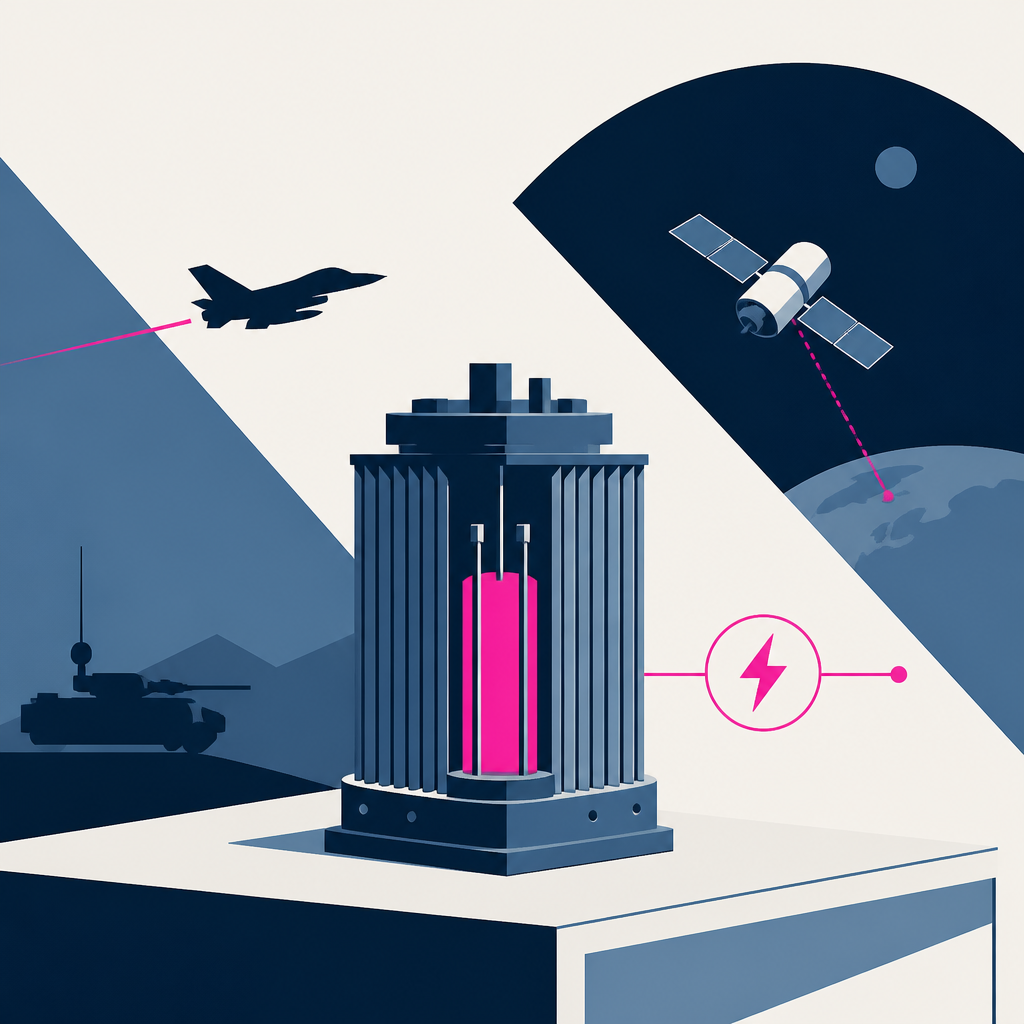
The Pentagon and NASA are betting on tiny nuclear reactors. They want power that doesn’t need fuel convoys, and some of it could reach the moon.
Based on reporting by Fortune, Jordan Blum — read the original for the full story.
Summary, retelling and take written by AI under human oversight; images are AI-generated illustrations. How we work · Report an error
The next nuclear wave is no longer just about giant plants for AI data centers. In this version of the story, the U.S. military and NASA are pushing the smallest reactors yet: microreactors meant for remote bases, harsh terrain, and eventually space. The federal government is backing that push even as the wider nuclear boom cools and some valuations fall back to earth.
Antares got there first, at least in the government’s race. In June, the startup switched on its Mark-0 microreactor, becoming the first to achieve criticality in the Trump administration’s pilot program. The company now wants to put its 1-megawatt R1 reactor at Fort Bragg by September 2028. Founder and CEO Jordan Bramble is thinking bigger still: an R1-S, with the S standing for space, on the moon by 2030. The Department of Defense gave Antares $161 million in September to develop that space-linked version for flight certification.
The Army is not waiting around for one winner. Its Project Janus announced $2.2 billion in awards in August, with plans to fund 20 microreactors for Lower 48 bases through the early 2030s. The point is simple enough: keep critical operations online if the grid goes down, and cut dependence on diesel convoys that are easy to track and attack. Jeff Waksman, the Army’s top energy official, says the service wants power that is portable, long-lasting, and good enough to matter in an increasingly electrical style of warfare.
Radiant is the biggest Janus recipient and is pitching a 1-megawatt transportable reactor called Kaleidos, with early work tied to Fort Benning in Georgia and Buckley Space Force Base in Colorado. The company says the system takes up about the space of three parking spaces and can run for three years without refueling. General Atomics is taking a different route with GA-TES, a reactor that would scale from 5 to 20 megawatts and is first slated for Fort Hood in Texas.
The competition is not just technical; it is philosophical. Radiant argues that mobile reactors matter because troops and bases need power wherever they go, while General Atomics says 1-megawatt systems are too small and in-ground reactors can lock customers into a nuclear site forever. For now, the military is splitting the difference: prove the tech inside the Lower 48, then think about the Arctic, Pacific islands, or maybe farther out. Nobody is rushing to put one into a conflict zone yet, and nobody has shown these reactors running at full power for real-world duty either.
My take — AI-written commentary, not fact-checked reporting
This is the rare defense-tech bet that feels less like hype and more like logistics with a tuxedo on. The Army is basically saying diesel convoys are a vulnerability, and that’s hard to argue with. The funny part is that nuclear’s big comeback may arrive first not through Silicon Valley swagger, but through the Pentagon’s very old obsession with not getting blown up on a supply route.
Read more about this at: Fortune
Related stories
 Offshore nuclear barges could power ports and data centers—starting with California, where nuclear is banned
Fortune ·
2