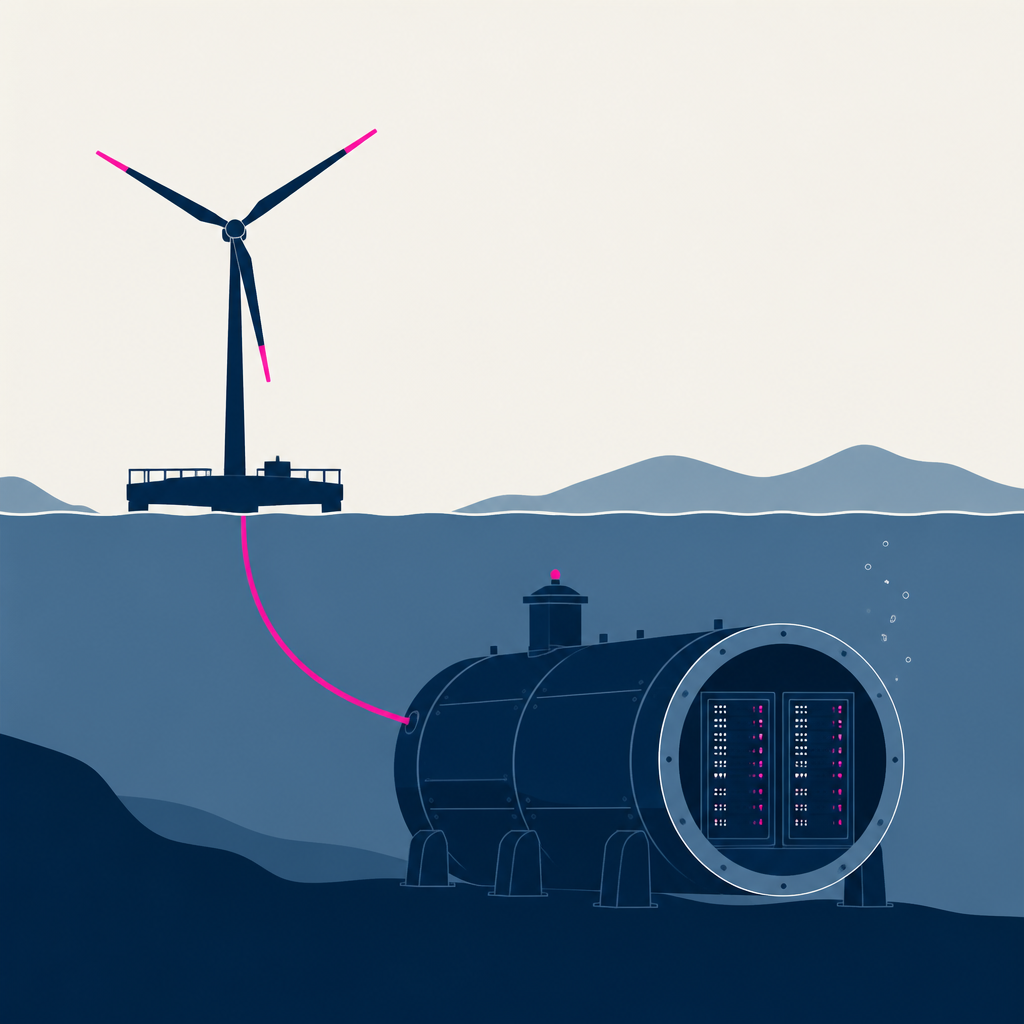
Offshore nuclear barges could power ports and data centers—starting with California, where nuclear is banned
Fortune Jordan Blum
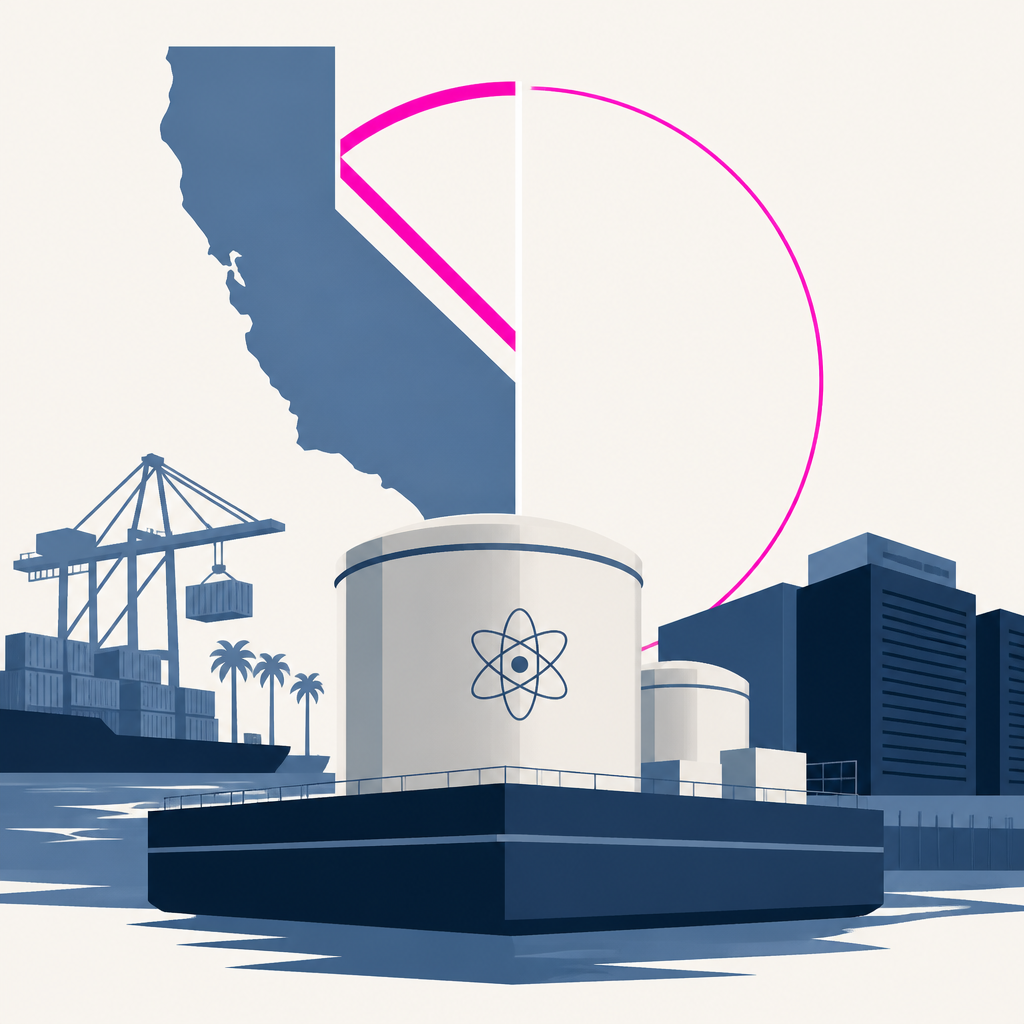
Long Beach wants floating nuclear reactors on barges for the port. It’s a big idea in a state that banned new reactors decades ago.
Based on reporting by Fortune, Jordan Blum — read the original for the full story.
Summary, retelling and take written by AI under human oversight; images are AI-generated illustrations. How we work · Report an error
The Port of Long Beach is working with a startup called Bluecore Energy on a very California fix for a very California problem: where to put enough power for ports and data centers without trying to squeeze a reactor into the neighborhood. The plan is to build small modular reactors on floating barges. It’s still years away, but the fact that the port is even exploring it says a lot about how far the nuclear conversation has moved outside the old power-plant model.
Long Beach and Los Angeles sit next to each other and make up the largest container port complex in the Western Hemisphere. That scale is part of the pitch. Max Hopkins, a nuclear power analyst at CITIC CLSA, said offshore nuclear looks increasingly viable across military use, shipping, and AI data centers, even if commercial deployment is still years off. The missing pieces are not trivial: regulation, supply chains, and manufacturing all need to catch up before barges full of reactors become more than an ambitious drawing.
The push is not just local. Denmark-based Saltfoss Energy is working on similar reactor barges in Europe, while the U.S. government and international agencies are starting to build the policy scaffolding for nuclear at sea. The Maritime Administration has partnered with London-based Core Power on regulatory frameworks and technology for a future fleet of nuclear-powered cargo ships. Then the U.S. and the IAEA launched ATLAS, an effort aimed at advancing SMR and micro-reactor technology for merchant shipping under strict safety, security, and non-proliferation rules.
Bluecore’s founder, Kofi Asante, is betting the same basic logic can work for ports and data centers. He founded the company in January, raised $10 million in pre-seed funding, and became the first nuclear company to partner with MARAD on offshore reactors. His argument is simple: if the power demand is big enough, the answer may be nuclear, and if land is the problem, water can serve as the real estate. The company says each 10-megawatt reactor could power about 10,000 homes, be moved by tugboat, and be stacked for more output.
But California is not exactly waiting with open arms. The state banned new nuclear reactors in 1976, citing environmental and safety concerns, including unresolved waste issues. Port CEO Noel Hacegaba said the idea is still years from reality and cannot move without state and federal approvals. That leaves Bluecore trying to do something unusual: build for a market that may want the power, while the law is still catching up to the concept.
My take — AI-written commentary, not fact-checked reporting
This is the cleanest kind of nuclear pitch: put the reactor where the power need is, float the argument past the zoning fights, and call it logistics. The catch is that California banned this for a reason, and no amount of tugboat swagger changes the fact that nuclear still lives or dies on public trust and boring approvals. A lot of startup energy gets wasted pretending paperwork is a side quest; here, it’s the main event.
Read more about this at: Fortune