The U.S. is building barriers around drones and robots, but China has scale to get around them
TechCrunch Kate Park
Washington is putting up new walls around foreign drones and robots. China’s scale may let its makers route around them and keep winning overseas.
Based on reporting by TechCrunch, Kate Park — read the original for the full story.
Summary, retelling and take written by AI under human oversight; images are AI-generated illustrations. How we work · Report an error
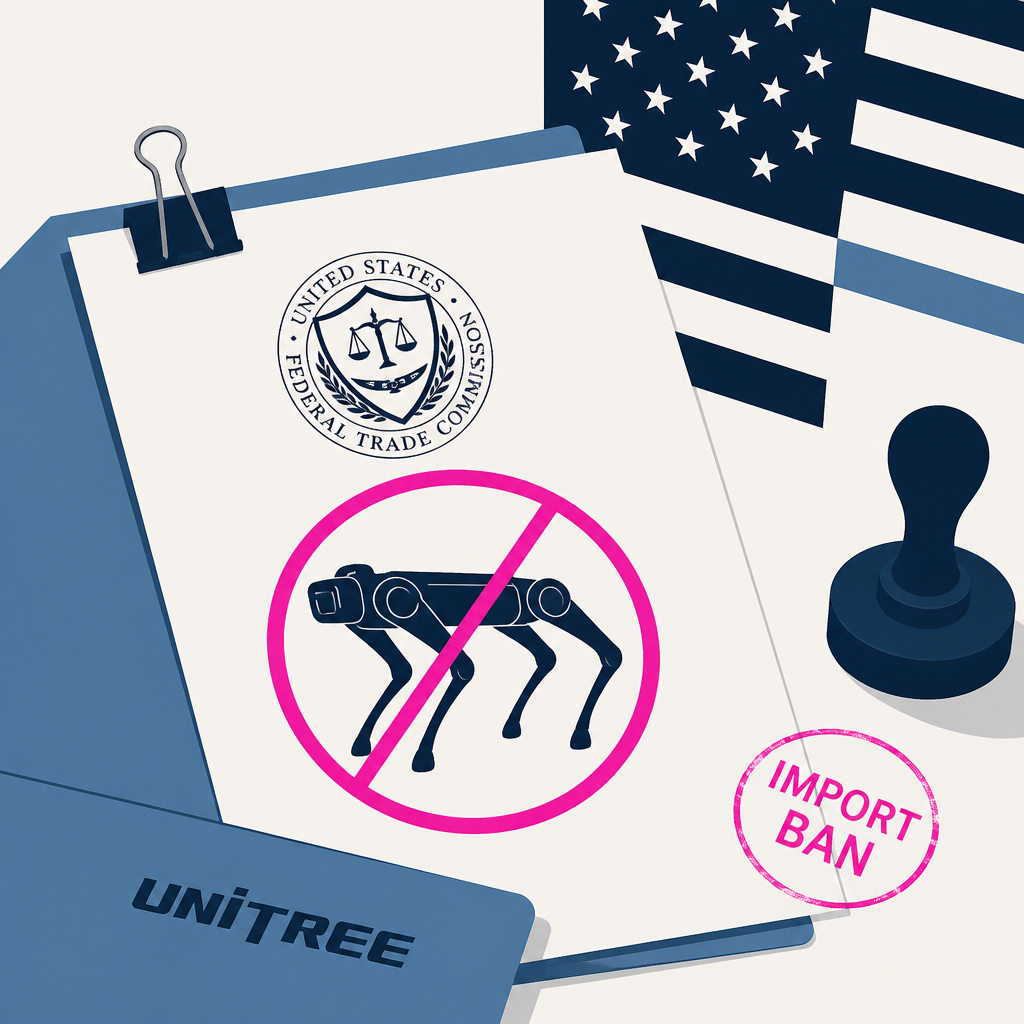
Washington spent July and August tightening the screws on foreign-made advanced robotic systems and on imported drones and their parts. The stated reason was national security. The drone tariffs start in September, and the component tariffs follow in 2027. At the same time, the FCC’s Covered List has kept widening. It began in 2021 with telecom and surveillance gear from companies such as Huawei, ZTE and Hikvision, then moved into foreign-made drones and now advanced robotic devices.
That sounds forceful, and it is. But the source article’s bigger point is that barriers in the U.S. do not magically erase China’s advantages. Chinese manufacturers already hold commanding positions in drones and humanoid robots, and they often do it at prices that U.S. and European rivals struggle to live with. The result may be less of a clean split than a messy re-shuffling of where the competition happens.
Humanoids show the scale problem most clearly. Counterpoint says global shipments reached 22,000 units in the first half of this year, with the vast majority coming from Chinese manufacturers. The five biggest humanoid makers by shipments — AgiBot, Unitree, Galbot, UBTECH and Leju Robotics — were all Chinese and together made up 86% of global shipments in the first half of 2026. That kind of lead feeds on itself: more units in the field mean more real-world data, and more volume pushes costs down again.
Chinese makers are also doing more of the stack themselves. Unitree is bringing more components in-house, and companies such as XPeng can lean on experience from chips and vehicle manufacturing as they move into robotics. Ankur Saxena of TDK Ventures put the contrast bluntly: the U.S. leads in frontier AI, software and semiconductor innovation, while China leads in manufacturing scale, supply-chain depth and cost. He also said you cannot sanction your way around a cost curve.
If the U.S. market gets harder to enter, Chinese companies still have their home market and plenty of room abroad. The source points to Europe, Southeast Asia, Latin America and the Middle East as likely targets, especially where labor shortages are severe and prices matter. That is where the drone market starts to look like the future of robotics more broadly: one ecosystem built around American-made, NDAA-compliant systems, another built around Chinese volume and low cost, and a middle zone where Japan, South Korea and Taiwan try to carve out space.
My take — AI-written commentary, not fact-checked reporting
This is what happens when policy tries to out-muscle manufacturing reality. The U.S. can fence off parts of its market, but China is still the cheaper factory for a lot of the world, which is a nasty little detail for anyone hoping tariffs alone will do the job. The real contest is less East vs West than cost vs security, and right now cost still travels very well.
Read more about this at: TechCrunch