
Ban on Chinese robots leaves U.S. startups stranded
Rest of World Viola Zhou
U.S. regulators just banned new foreign-made robots, including humanoids and vacuums. Startups say the rule comes before an American parts supply chain does.
Based on reporting by Rest of World, Viola Zhou — read the original for the full story.
Summary, retelling and take written by AI under human oversight; images are AI-generated illustrations. How we work · Report an error
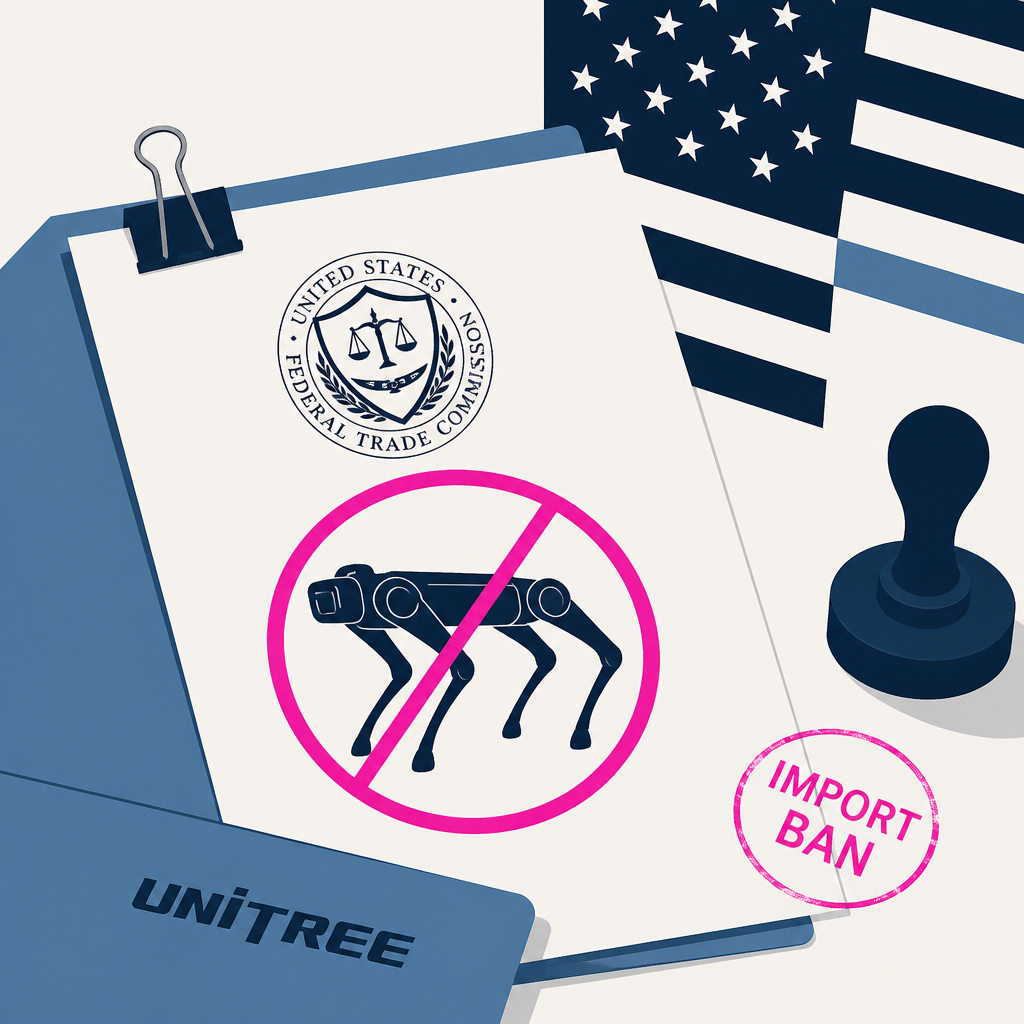
The U.S. is trying to force robot manufacturing home before the country has the factory floor to support it. Last month, the Federal Communications Commission added “advanced robotic devices” to its list of banned gear, meaning new foreign-made humanoids, quadrupeds, robot vacuums and lawn mowers can’t enter the American market.
To get in, a robot has to be assembled in the U.S. and contain at least 65% domestic parts by value. That threshold rises to 75% in 2029. The rule is not aimed at one country by name, but everyone in the industry knows where the real pressure point is: China, which dominates robotics manufacturing.
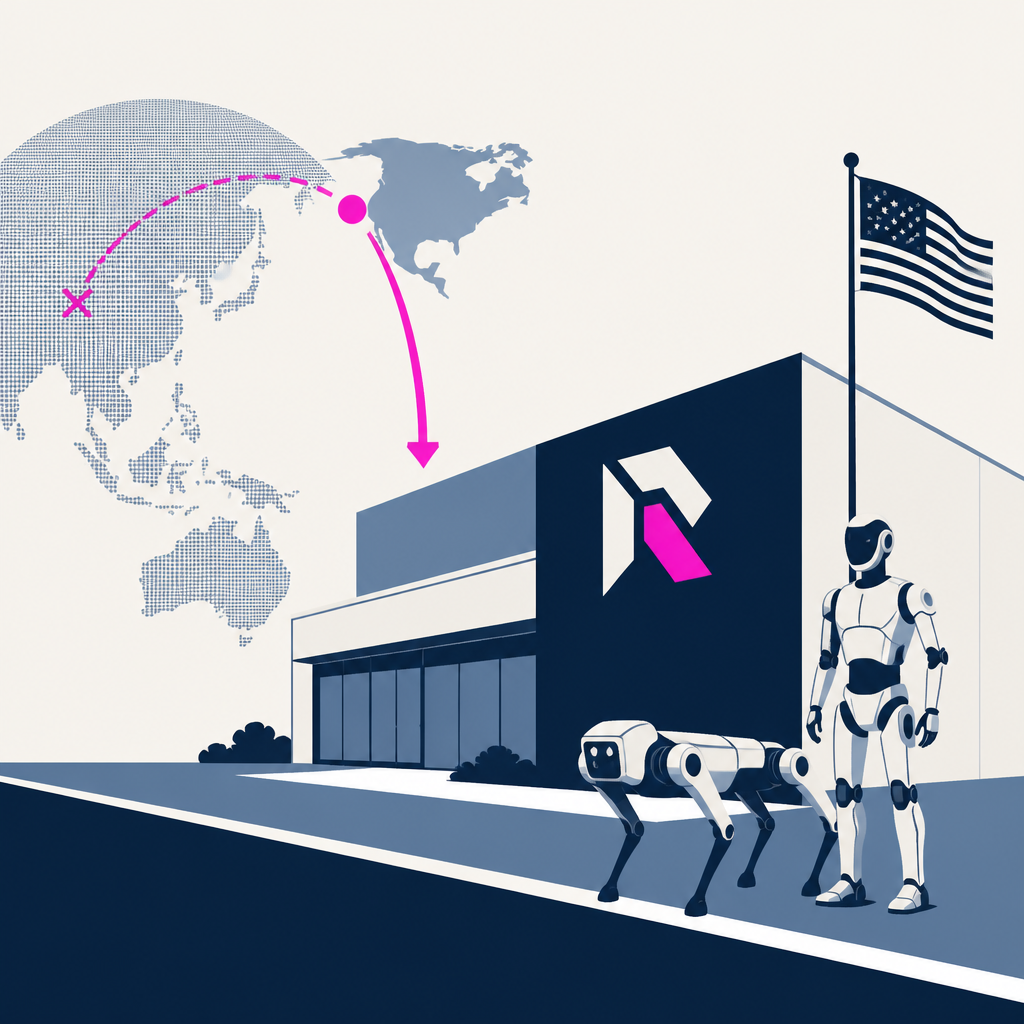
The catch is obvious, and startups keep saying it out loud. They can’t build complex commercial robots without Chinese suppliers because the parts are cheaper, faster to get, and in many cases simply available. Anto Patrex, who runs CosmicBrain AI in San Francisco, said his team had already experimented with Chinese robots and assembled its first products there. Now he’s putting together an extra facility in Canada, but those robots would still miss the new U.S. standard because key components come from China.
Michael Perry of Persona AI, which is building industrial humanoid robots in Houston, said the company has already sourced parts from Taiwan, Japan, South Korea and Italy, but still has to work toward the 65% domestic-content rule. He wants Washington to do more than block imports. “You need to provide the carrot as well as the stick,” he said. “Right now, you’re only providing the stick.”
The FCC and its supporters say the whole point is to stop the U.S. from becoming dependent on Chinese robotics before that dependence hardens. Adam Chan, a senior adviser to FCC chairperson Brendan Carr, argued on the ChinaTalk podcast that now is the easiest time to act. But Kyle Chan of Brookings said a slower ramp, like gradually higher tariffs on Chinese robots and components, would do less damage to startups trying to get off the ground.
My take — AI-written commentary, not fact-checked reporting
This is classic Washington: declare a strategic industry, then act surprised when the supply chain isn’t already patriotic and neatly labeled. The policy may help a few U.S. assemblers, but for everyone else it looks a lot like trying to build a domestic robotics stack with a missing middle. The flags are waving; the parts bin is not.
Read more about this at: Rest of World
Related stories
 Trump’s AI protectionism has come for robotics
MIT Technology Review · 2 months ago ·
45
Trump’s AI protectionism has come for robotics
MIT Technology Review · 2 months ago ·
45
 US distributor of China’s most popular humanoid robots pivots after US ban
Ars Technica · 1 month ago ·
22
US distributor of China’s most popular humanoid robots pivots after US ban
Ars Technica · 1 month ago ·
22