Data Centers Are Easy to Build. Powering Them Is Complicated, Slow, and Expensive
404 Media Matthew Gault
A data center dropping off the PJM grid caused power flickers across 13 states this week. Turns out building AI data centers is fast — powering them safely and cleanly is a whole different, much slower problem.
Based on reporting by 404 Media, Matthew Gault — read the original for the full story.
Summary, retelling and take written by AI under human oversight; images are AI-generated illustrations. How we work · Report an error
Wednesday's flicker wasn't some freak weather event. It was a data center disconnecting from PJM, the grid that serves 67 million customers across 13 states from Virginia to Michigan. Small glitch, big signal: the infrastructure racing to power AI is not built for this load, and it shows.
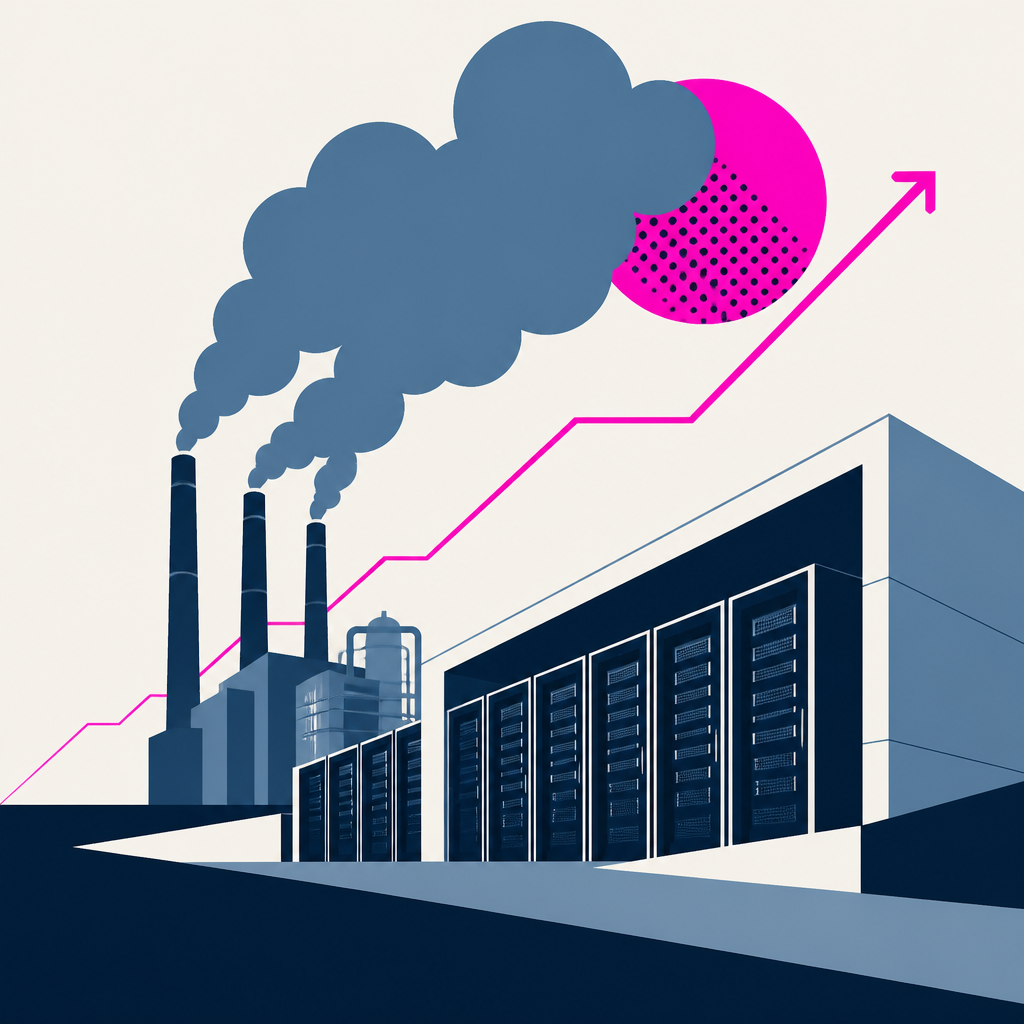
The math is brutally simple. A skilled team can stand up a data center full of GPUs in under a year. Building the power plants and transmission lines to actually run that facility can take a decade. Suzanne Glatz, an energy consultant who co-authored a Johns Hopkins report on data centers and the grid, told 404 Media that a new transmission line typically takes seven to eight years from approval to completion, and sometimes longer. Transformers aren't much better — the industry was already behind before AI showed up, and tariffs have only made large power transformers slower and pricier to source, with lead times stretching one to two years or worse.
So companies are improvising. FTAI is pitching repurposed jet engines as data center power. Kevin O'Leary wants to run a nine-gigawatt facility in Box Canyon, Utah — more than double the state's current power consumption — off gas turbines pulling from the Ruby Pipeline, a plan Utah's own governor says can't stay gas-only forever and could push the state's carbon emissions up 64%. Gas turbines aren't a quick fix either; Glatz says lead times in the PJM region have hit five years. And when the turbines do arrive, things can get messy: xAI's Colossus 2 site in Tennessee runs 59 natural gas turbines, many across the state line in Mississippi, several without public permits, prompting a lawyer at the Southern Environmental Law Center to call it a Clean Air Act violation. It may not matter much longer — the EPA said in late July that plants dedicated solely to powering data centers are now exempt from that law.```
Nuclear looks like the long-term answer everyone's chasing. Meta, Amazon, and Google are all working nuclear angles, and Microsoft wants Three Mile Island back online, though that timeline keeps slipping. Small modular reactors have been
My take — AI-written commentary, not fact-checked reporting
"five years away" for roughly a decade now, and nuclear mistakes carry a cost nobody wants to test. Meanwhile the bill lands on regular people first: Henrico County, Virginia, home to 37 data centers, is warning that electricity costs for government buildings and schools will jump 25%, and it's asking teachers and public workers to help conserve. Glatz warns PJM is already projecting shortfalls, and one proposal on the table is to curtail data centers before residential customers when supply runs thin — meaning those facilities might lean on dirtier backup generators exactly when the grid is under the most stress, which, as extreme weather days keep multiplying, is going to be more often than anyone would like. <<REMOVE>>
Read more about this at: 404 Media