
Taiwan’s six-year hunt for China’s undercover chip labs
Rest of World Kinling Lo
Taiwan says Chinese chip firms hid behind local shells and foreign fronts. That’s led to 166 probes in six years, with raids still happening.
Based on reporting by Rest of World, Kinling Lo — read the original for the full story.
Summary, retelling and take written by AI under human oversight; images are AI-generated illustrations. How we work · Report an error
A Taiwanese engineer took what looked like a dream job in spring 2020: chip designer, based in Hsinchu, and paid $120,000 a year — about double the industry average. The company, Blue Ocean Smart System, was presented as American-backed. But after a few months, the picture stopped making sense. There were no American coworkers. No visible U.S. office. His weekly calls, code reviews, and chip-design work were all with people in Nanjing, China.
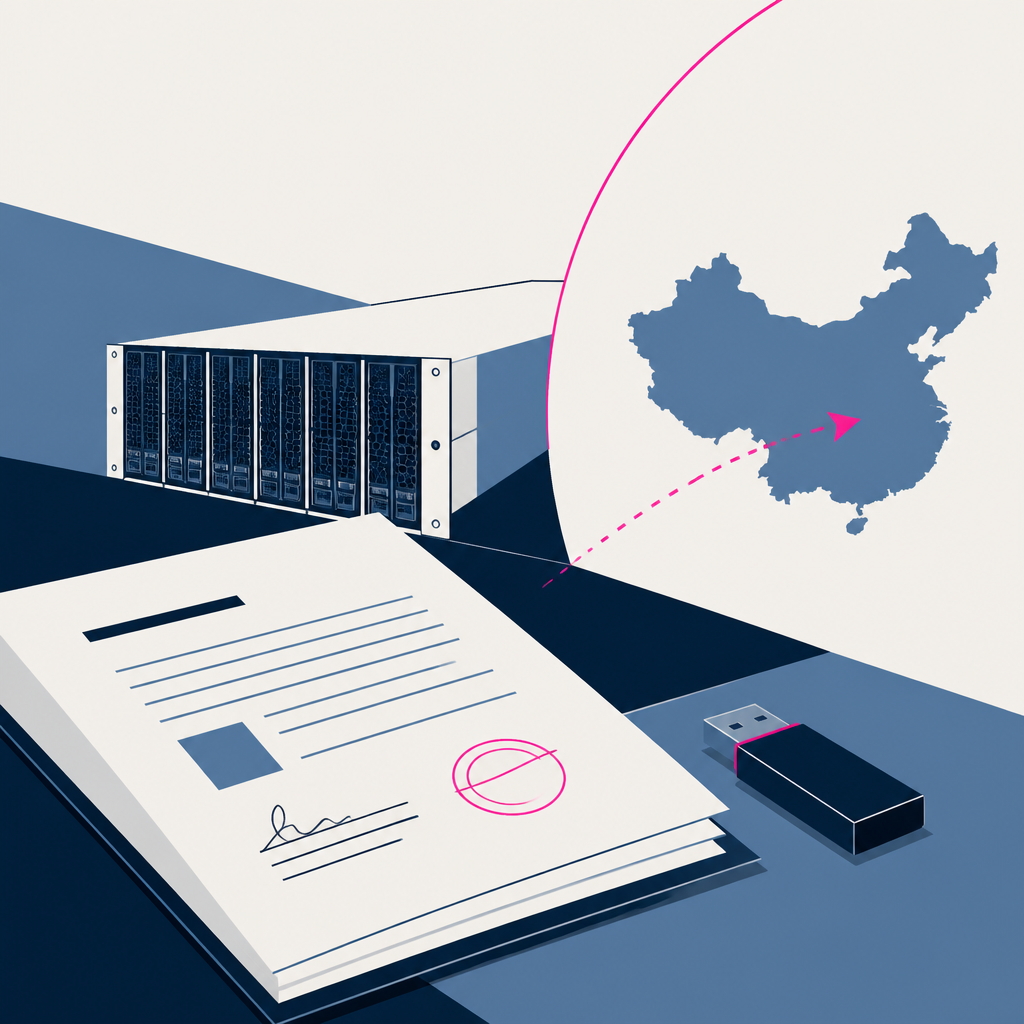
Taiwanese authorities raided the company in August 2021 and later forced the Taiwan operation to shut down, saying it had concealed Chinese ownership behind a locally registered entity. That case is just one piece of a much wider sweep. The Ministry of Justice Investigation Bureau, Taiwan’s FBI equivalent, has investigated 166 technology cases over the past six years for allegedly hiding ties to China, and has completed 67 China-related trade-secret probes in the same period. The bureau said more investigations are still open.
The scale of the problem helps explain why the raids keep coming. Taiwan makes more than 60% of the world’s semiconductors and 90% of the most advanced chips, so it sits at the center of the global chip fight. Chinese companies have tried to get in through shell firms, foreign nominees, and other disguises. One common trick, prosecutors said, is registering as a non-Chinese foreign entity while the money still comes from China. Another is setting up a Taiwan company after official registration is denied.
Taiwan has also made the legal response harsher. In 2022 it tightened the Cross-Strait Act and National Security Act, adding tougher recommended penalties to protect what it calls critical technologies. The Hsinchu District Prosecutors Office has been especially busy, charging around 60 cases involving nearly 190 people over the past five years. Rest of World reviewed 36 public court cases from the MJIB’s investigations, and all 36 ended in convictions for running tech businesses without approval. Thirty-three of those cases involved R&D or chip design.
The cases have cut across the industry. Prosecutors have pursued allegations tied to Gongjin Electronics, Xiaomi, OnePlus, and even SMIC, China’s most advanced chip foundry. Some of the biggest disputes are not just about illegal business activity but about talent poaching and trade secrets, where the bar for proof is much higher. Taiwan calls this national security. China calls it political manipulation. The engineers getting wooed by huge pay offers probably call it just another day in the chip war.
My take — AI-written commentary, not fact-checked reporting
This is what industrial espionage looks like when it drops the trench coat and opens a payroll system. China’s chip push is so aggressive that even Taiwan’s simplest test now seems to be: who actually pays the bills? The bigger joke is that some firms still think a foreign name and a local registration will fool a place that lives and breathes semiconductors.
Read more about this at: Rest of World
Related stories
 Nvidia senior manager linked to Supermicro scheme smuggling AI servers to China
Ars Technica · 1 month ago ·
30
Nvidia senior manager linked to Supermicro scheme smuggling AI servers to China
Ars Technica · 1 month ago ·
30