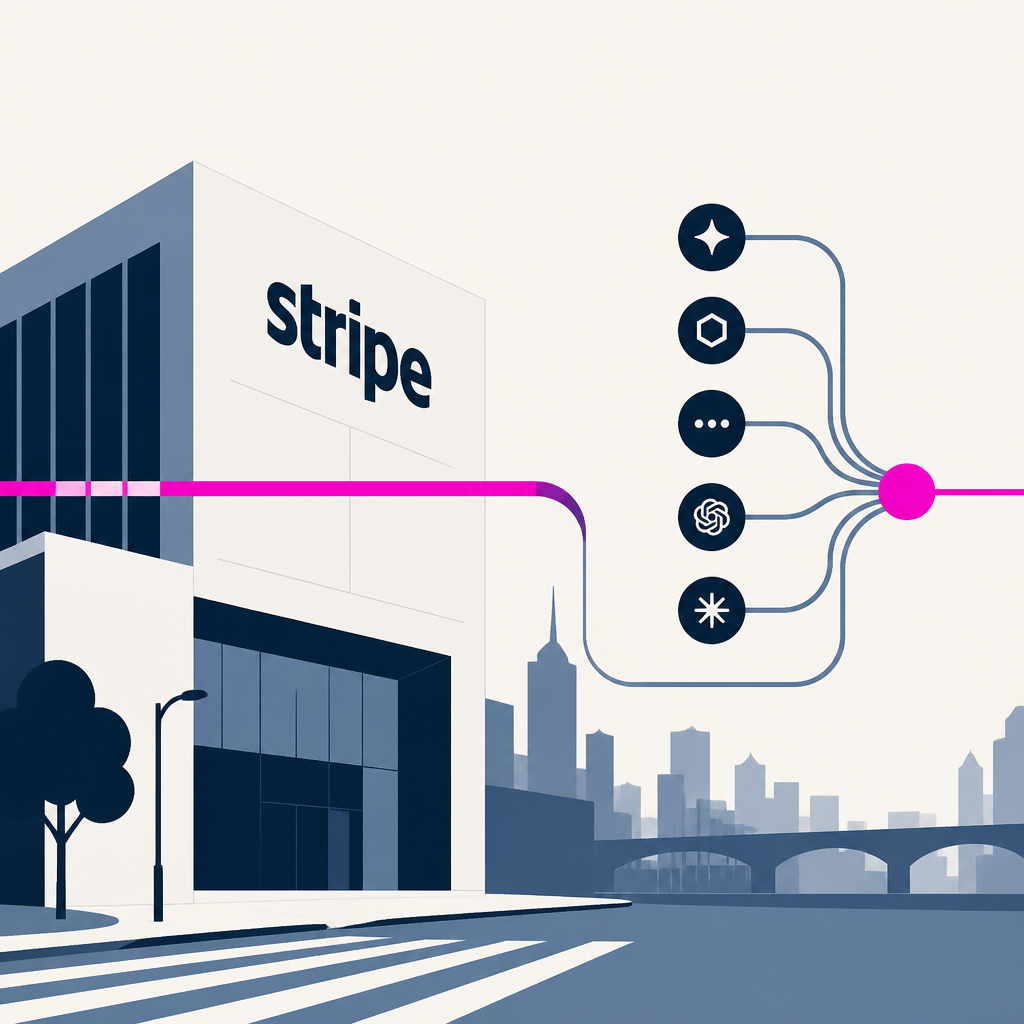
OpenRouter called itself the “Stripe for LLMs” — now Stripe’s swooped in to buy it
The New Stack Paul Sawers ● Covered by 5 sources
Stripe wants to buy OpenRouter, the AI model router that once called itself ‘Stripe for LLMs.’ It’s a bet that AI spending is now as important as AI itself.
Based on reporting by The New Stack, Paul Sawers — read the original for the full story.
Summary, retelling and take written by AI under human oversight; images are AI-generated illustrations. How we work · Report an error
Stripe has confirmed a bid for OpenRouter, the AI model gateway that sits between developers and a growing pile of AI providers. The deal is meant to help businesses route requests and spend tokens more efficiently. Terms weren’t disclosed, though reports have put the price at $8 billion, which would make it Stripe’s biggest known acquisition so far.
The logic is pretty simple: if companies are paying to use AI, someone has to help them avoid wasting money while they do it. Stripe has already been building tooling for AI billing, including plans it previewed for token billing and an LLM proxy in 2025. OpenRouter adds a more advanced routing layer, one that can pick from hundreds of models and providers based on cost, speed and performance.
OpenRouter is not some old guard of the AI industry. It started in early 2023, was co-founded by former OpenSea CTO Alex Atallah, and built a single API that lets developers swap among hundreds of models from dozens of providers without rewriting their apps. Under the hood, it handles routing, fallback when providers fail, and optimization across price, latency and quality. It earns money with a 5.5% fee on credits bought through the platform, while generally passing through provider inference prices without a markup.
That model has clearly found an audience. OpenRouter says it serves more than 10 million developers and companies across more than 400 models, processing over 10 trillion tokens per day. It also just raised $113 million, led by Alphabet’s growth fund and backed by the venture arms of Nvidia, Databricks, Snowflake, MongoDB and ServiceNow. So this is not Stripe buying a toy project. It is buying infrastructure that sits right on top of where AI bills get paid.
OpenRouter’s founders say the product, brand, roadmap and model-neutral approach will stay intact after the deal closes. That matters, because the market is already crowded with companies building their own routing layers. Cursor says its Router cut costs by 30-50% versus sending every request through its most expensive model, Ramp says its internal tuning cut its bill by 30%, and Meta is reportedly working on its own internal router too. The whole industry is chasing the same thing: less spend, less waste, fewer dumb model choices.
And that is the real story here. Stripe has spent years becoming the plumbing for money on the internet, and now it wants to own more of the plumbing for AI spend as well. Token economics may not sound glamorous, but it is where the bills are.
My take — AI-written commentary, not fact-checked reporting
This is Stripe doing the boringly smart thing, which is usually how the big money gets made. Everyone in AI loves talking about models; fewer people want to talk about who pays for them, which is exactly why routing and metering are turning into serious businesses. The rush toward model routers feels less like a trend and more like the industry admitting the party has a utility bill.
Read more about this at: The New Stack