
Launch HN: Prized (YC S26) – Let non-engineer staff build secure internal tools
prized.dev marinoseliades
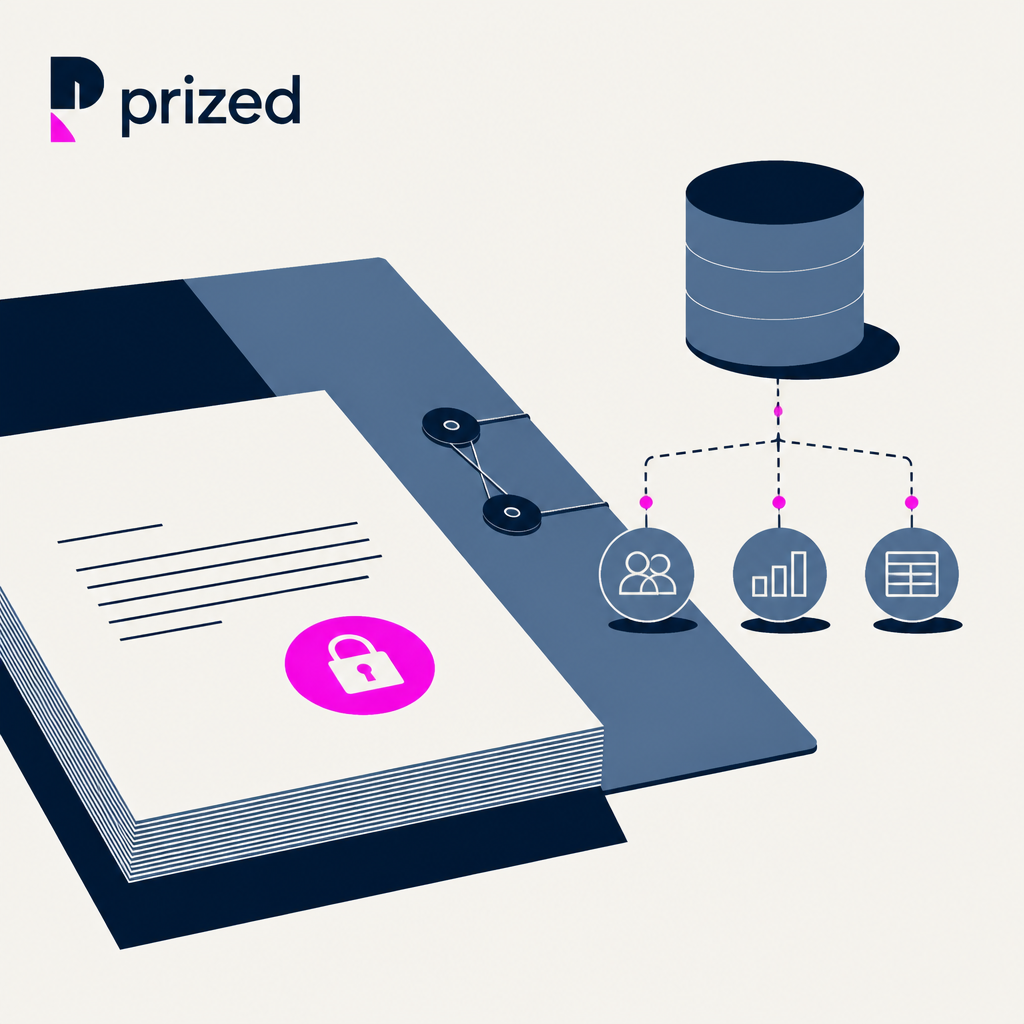
YC startup Prized lets non-engineers describe an internal tool and get a working app hooked into company data. It locks down access with proxies and audit logs instead of handing out API keys.
Based on reporting by prized.dev, marinoseliades — read the original for the full story.
Summary, retelling and take written by AI under human oversight; images are AI-generated illustrations. How we work · Report an error
Marinos and Hudson just launched Prized on Hacker News with a pitch that hits a familiar nerve: every company has a pile of half-built internal tools trapped in notebooks and spreadsheets because engineering never has time to formalize them. Prized wants to be the thing that turns those scripts into real, deployed apps, without an engineer touching the keyboard and without handing sensitive credentials to whoever's typing the prompt.
The security model is the actual product here. The sandbox where the AI agent works never sees real API keys or connector secrets. It only gets scoped session tokens that act as placeholders, and the real credentials get swapped in later at an egress proxy. When a tool is wired to production data, network access defaults to deny, so the proxy is the only door out. Every outbound call to a connector also gets reviewed by an LLM judge before it's allowed through, which is the founders' answer to the obvious question of what stops an agent from doing something dumb or dangerous with company data.
The example they gave is a good illustration of the whole pitch: a data scientist at one customer pasted in a personal fraud-detection notebook, hardcoded thresholds and all, and after a few prompts it became a published risk console with those thresholds turned into adjustable UI controls. The founders say most of that company is now using it, which they learned on a call earlier the same day they posted this launch.
What makes Prized different from just being another AI app builder is the permissions layer sitting underneath. Admins can scope data access to specific users or teams, and every access gets logged. Each tool runs on its own Postgres schema and role, with queries going through an authenticated SQL gateway rather than open database access. Tools also aren't private artifacts — anyone in a workspace can see, fork, and extend what colleagues have built. One example: a marketing lead built a promotional analytics tool, and a data scientist at the same company forked it to add confidence intervals, turning the workspace into something closer to a shared library than a pile of one-off scripts.
The founders position Prized between Lovable, which is great at generating and hosting software but not built around permissioned distribution, and Retool, which generally assumes a technical builder is making something for someone else. Pricing is straightforward for now — a free tier with two tool builds a month, a $100/month Teams tier, and a custom Enterprise tier that includes things like on-prem deployment. The team says they're still figuring out where the line should sit between giving people freedom to build and keeping unaudited access away from company systems, which is honestly the right thing to still be unsure about at this stage.
My take — AI-written commentary, not fact-checked reporting
The credential-isolation approach here is the part that actually matters, not the low-code app generation, which every YC batch seems to reinvent. Letting non-engineers build tools is fine and good, but the real trick is proving to a security team that giving people that freedom doesn't mean giving them the keys to production. If the audit logs and proxy-based access hold up under real enterprise scrutiny, that's the differentiator worth watching — everything else is table stakes.
Read more about this at: prized.dev
Related stories
 Launch HN: Traceforce (YC S26) – Company-wide security monitoring for AI apps
Hacker News · 2 months ago ·
24
Launch HN: Traceforce (YC S26) – Company-wide security monitoring for AI apps
Hacker News · 2 months ago ·
24
 Launch HN: Runtime (YC P26) – Sandboxed coding agents for everyone on a team
runtm.com · 4 months ago ·
47
Launch HN: Runtime (YC P26) – Sandboxed coding agents for everyone on a team
runtm.com · 4 months ago ·
47
 Launch HN: Hyper (YC P26) – Company brain to power agentic development
Hacker News · 3 months ago ·
50
Launch HN: Hyper (YC P26) – Company brain to power agentic development
Hacker News · 3 months ago ·
50