
Launch HN: Runtime (YC P26) – Sandboxed coding agents for everyone on a team
runtm.com gustrigos ● Covered by 2 sources
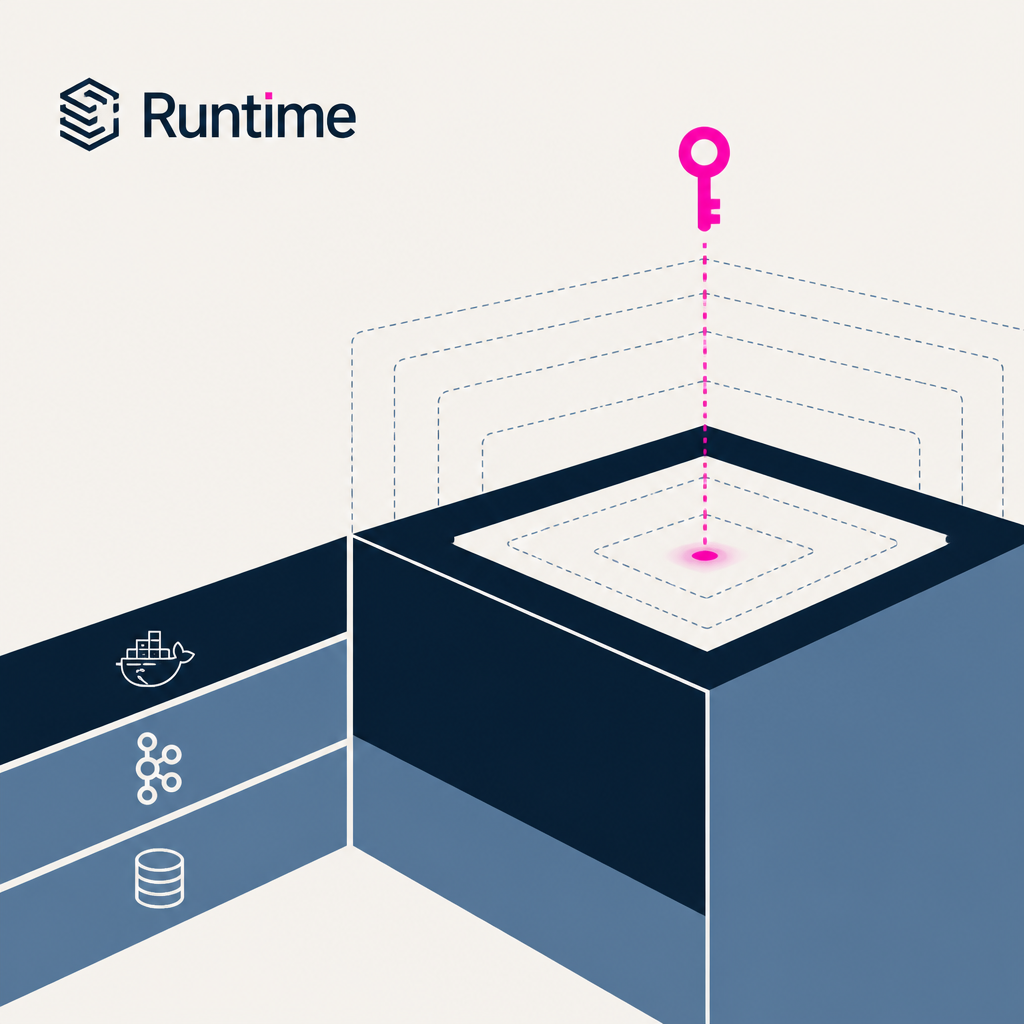
A YC startup called Runtime just launched infra so whole teams, not just engineers, can safely run coding agents like Claude Code and Codex. It matters because letting non-engineers touch real codebases usually means secrets leaks and unmergeable PRs — this tries to fix that with sandboxes and guardrails.
Based on reporting by runtm.com, gustrigos — read the original for the full story.
Summary, retelling and take written by AI under human oversight; images are AI-generated illustrations. How we work · Report an error
Gus and Carlos, the founders behind Runtime, ran into the same wall a lot of technical teams hit once AI coding agents got good enough to actually ship code. After their previous startup Mentum got acquired, Gus used agents to build four full-stack products in three months, solo. Great result. Then he tried to hand that workflow to the rest of the team and it fell apart almost immediately — PRs came back unmergeable, every repo needed an engineer to do bespoke local setup, and the tribal knowledge about how to actually run these agents lived entirely in his head. Carlos saw a similar breakdown at Modern Treasury, where letting the support team loose with Devin created more mess than it solved.
So they built Runtime, which is basically an attempt to turn "one person's ad hoc agent setup" into shared infrastructure the whole company can use. Engineers define the system instructions, skills, and integrations exactly once, installable through CLI, mise, or npm. Runtime then snapshots the entire running environment — multi-service Docker Compose stacks, Kafka, Redis, seeded databases, the works — so a fresh sandbox boots in milliseconds with every service already live. No more re-explaining the stack to a PM who just wants to try something.
Under the hood, Runtime routes sandboxes across providers like E2B, Daytona, EC2, or self-hosted Kubernetes, whatever a team already runs on. Secrets never touch the agent directly; they pass through a managed proxy instead. And the guardrails sit at the infrastructure layer itself — command allow/deny lists, network egress rules, role-based access scoped per human and per agent — rather than relying on the agent to behave itself. Every session gets a shareable preview link too, so a build can go from sandbox to teammate review without anyone needing production access.
The platform is agent-agnostic, working with Claude Code, Codex, Cursor, Copilot, Gemini, and Devin, and can be triggered from Slack, Linear, GitHub, the CLI, or a web app. Real use cases are already showing up: one customer built an on-call bot that watches PagerDuty and Sentry, finds the root cause of an alert, and opens a PR with a test attached before a human even gets paged. Another runs financial reconciliations in a private Slack channel by pulling Stripe, NetSuite, and Snowflake data straight into an agent session.
Runtime's core is open source, the hosted product has a free tier, and pricing is a flat platform fee plus compute — no markup on tokens. A fintech unicorn and a handful of YC scaleups are already running on it, including some teams that built similar internal tooling themselves and just handed the keys over to Runtime instead of maintaining it.
My take — AI-written commentary, not fact-checked reporting
This is the natural next step once coding agents move from novelty to daily workflow — someone has to own the plumbing, and it clearly shouldn't be one overworked engineer's laptop config. The interesting bet here is pricing compute honestly instead of taxing every token, which is the kind of move that ages well once teams start running agents constantly instead of occasionally. Open-sourcing the core is the right call too; infra like this only earns trust if people can see exactly what's touching their secrets and their production repos.
Read more about this at: runtm.com
Related stories
 Launch HN: Hoplite (YC S26) – Effortlessly deploy cloud coding agents
hoplite.sh · 1 month ago ·
57
Launch HN: Hoplite (YC S26) – Effortlessly deploy cloud coding agents
hoplite.sh · 1 month ago ·
57
 Launch HN: HyperProbe (YC S26) – Agents that do read-only debugging in prod
hyperprobe.co · 1 month ago ·
32
Launch HN: HyperProbe (YC S26) – Agents that do read-only debugging in prod
hyperprobe.co · 1 month ago ·
32
 Launch HN: Prized (YC S26) – Let non-engineer staff build secure internal tools
prized.dev · 1 month ago ·
44
Launch HN: Prized (YC S26) – Let non-engineer staff build secure internal tools
prized.dev · 1 month ago ·
44