'Everyone is hedging.' As the U.S. and China divide the world into rival AI blocs, that lends power to 'swing countries' in between
Fortune The Associated Press
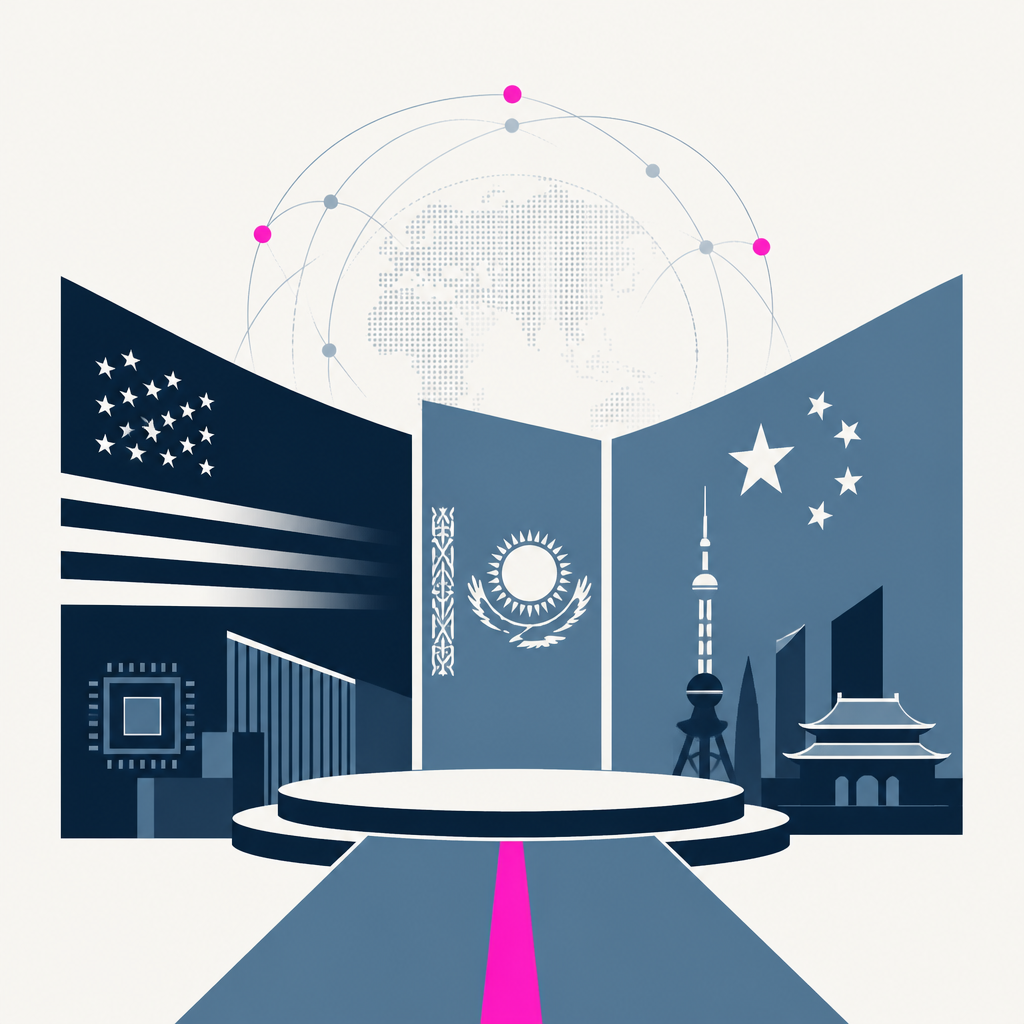
The U.S. and China are splitting AI into rival camps, and a lot of countries are trying to play both sides. Kazakhstan, Indonesia and others want the chips, funding and standards without getting trapped in one bloc.
Based on reporting by Fortune, The Associated Press — read the original for the full story.
Summary, retelling and take written by AI under human oversight; images are AI-generated illustrations. How we work · Report an error
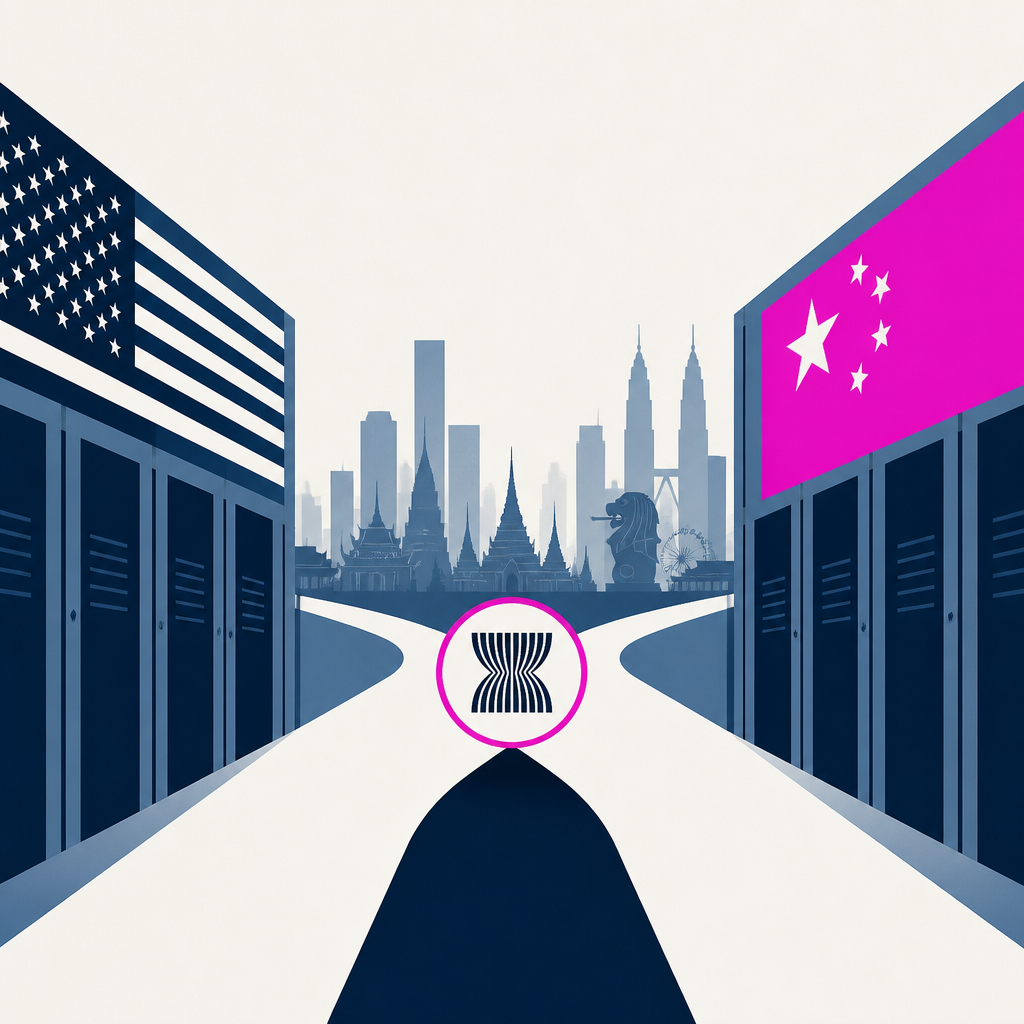
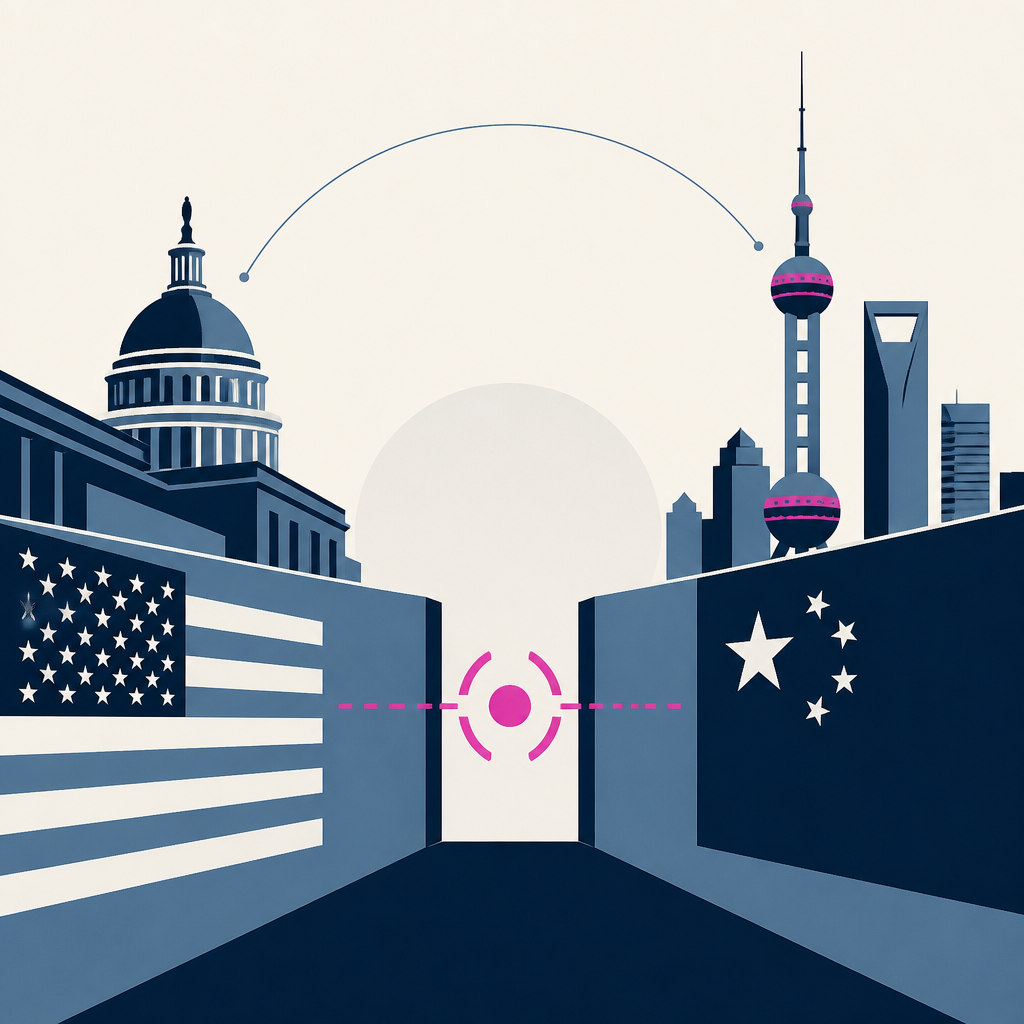
The world’s AI race is starting to look less like a market and more like a geopolitical sorting hat. The United States is building Pax Silica, China is pushing its World AI Cooperation Organization, and countries in the middle are trying to keep one foot in each camp before the choice hardens.
Kazakhstan is the clearest example in the source. In June, its AI minister Zhaslan Madiyev went to Washington to join a U.S. group focused on strengthening AI supply chains. Three weeks later, he was in Shanghai for a signing ceremony making Kazakhstan a founding member of China’s AI initiative. The country wants the jobs and supply-chain access that come with Pax Silica, but also a seat at the table as China and 28 other founding countries shape AI rules.
That hedging is not abstract. Kazakhstan has critical minerals useful for AI development and cheap electricity for data centers. Earlier this year, its government signed an investment deal worth up to $10 billion involving Nvidia to build a “data center valley.” Chinese money is flowing in too, with local officials saying foreign direct investment from China hit a record $2.8 billion in 2025. Xi Jinping also met President Kassym-Jomart Tokayev in July to expand cooperation under Belt and Road.
Indonesia is making a similar calculation. It has nickel and copper, has joined China’s AI organization, and wants to benefit from both systems. Singapore is being courted by U.S. firms, with Anthropic opening its latest Asia office there, while the city-state says it is still considering China’s group. Saudi Arabia is also mixing its bets, using a Chinese open model for one platform while keeping a deal with Nvidia for more advanced chips.
The pressure point is that the two superpowers are selling different things. Washington offers advanced chips and tightly controlled partnerships. Beijing offers cheaper open-source models and access without as much lecturing. For many countries, that makes the present moment unusually useful — and probably temporary. Once the blocs harden, the room to hedge shrinks fast.
My take — AI-written commentary, not fact-checked reporting
This is the part where the AI great-power race stops looking like a clean split and starts looking like an auction. Smaller countries are doing the sensible thing: taking the chips, taking the money, and refusing to salute either flag too early. The annoying truth for Washington and Beijing is that most of the world prefers options to ideology.
Read more about this at: Fortune