
Dutch photonics startup Photon Bridge raises €10M to tackle AI's looming laser bottleneck
Tech.eu Cate Lawrence
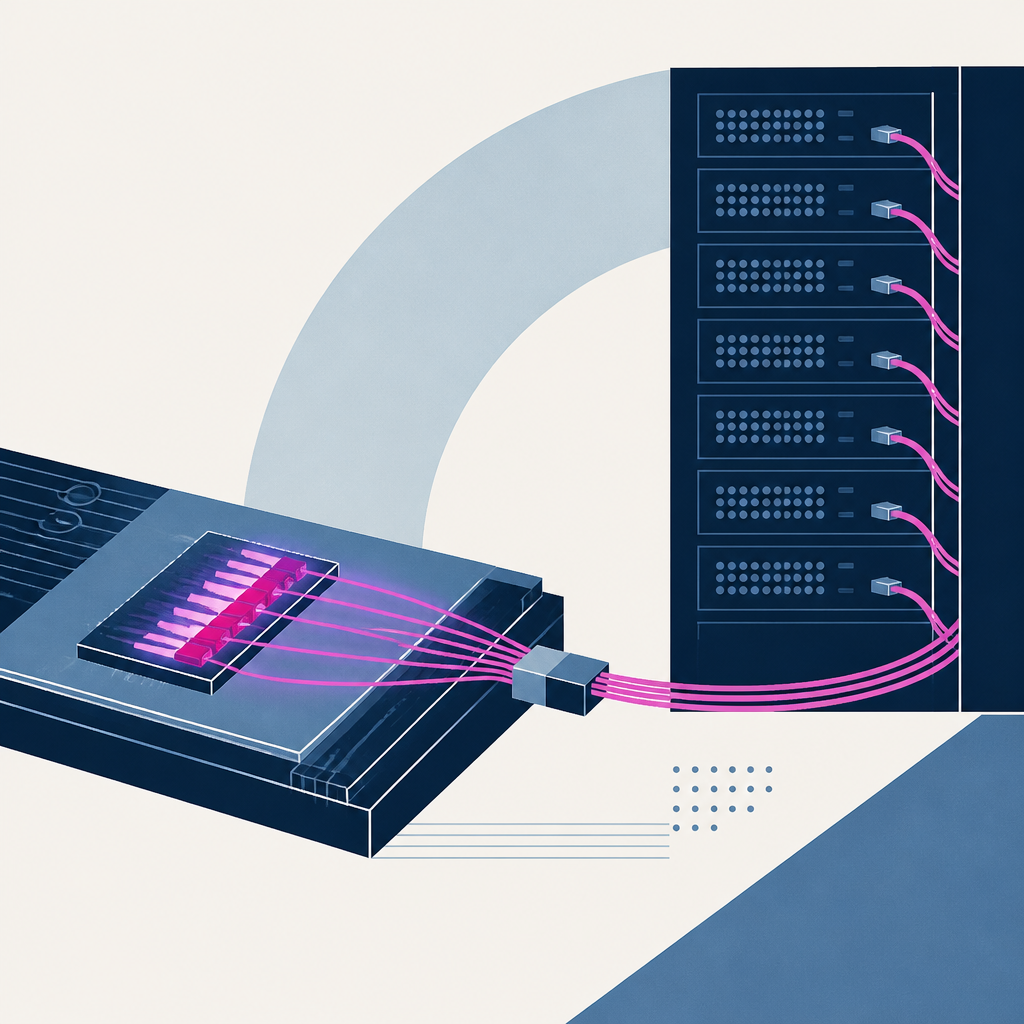
Photon Bridge raised €10M to make the lasers AI chips will need in huge numbers. The twist: it’s betting on easier-to-build laser architecture, not stronger lasers.
Based on reporting by Tech.eu, Cate Lawrence — read the original for the full story.
Summary, retelling and take written by AI under human oversight; images are AI-generated illustrations. How we work · Report an error
Dutch photonics startup Photon Bridge has pulled in €10 million to attack a problem most AI builders haven’t had to think about yet: where all the lasers for future chip clusters are supposed to come from. The money came in a round led by the Amadeus APEX Technology Fund and 360 Capital, with support from existing backers Innovation Industries, Faber, and Brabant Development Agency, or BOM.
The scale of the issue is the reason this round matters. Omdia expects more than 20 million data-centre AI accelerators to ship each year by 2028. As those systems grow from thousands of processors to hundreds of thousands, the bottleneck is no longer just making the chips. It is moving data between them fast enough for the whole thing to work.
That is where optics comes in. Optical links can push far more data than electrical interconnects, and they are getting closer to the processors themselves. Co-packaged optics takes that a step further by placing optical connectivity alongside the chips that handle data movement. But that shift drags the laser supply chain into the AI era, and the existing one was built mainly for telecom and subsea networks, where volumes are much smaller.
Photon Bridge is trying to avoid the usual trap of solving scale by making a single component harder to manufacture. Instead, it combines and multiplexes light from multiple lower-power semiconductor lasers. The company says that lower power density makes each laser less sensitive to defects, which should improve yield and make the system easier to scale across multiple indium phosphide foundries. It is aiming for high wavelength counts, with up to 40 mW of optical power per wavelength per fibre.
The funding will be used to speed up product development and customer qualification, with first samples due in 2027 and volume manufacturing planned from 2028. Photon Bridge also expects to expand its Eindhoven team as it pushes toward commercialisation. And that timeline says a lot: the company is not pitching a lab curiosity, but a manufacturing problem with AI attached to it.
My take — AI-written commentary, not fact-checked reporting
This is the kind of unglamorous hardware bet that usually turns out to matter more than the shiny model demos. Everyone wants to talk about bigger AI clusters; far fewer people want to make the lasers that keep them talking to each other. That’s where the real bottlenecks hide, and where the money eventually goes.
Read more about this at: Tech.eu
Related stories
 Morphotonics closes €40M+ Series B to tackle AI devices’ hidden manufacturing bottleneck
Tech.eu · 4 weeks ago ·
9
 Lightspring raises €3.5M to tackle photonic chip manufacturing bottleneck
Tech.eu · 4 weeks ago ·
37
 Salience Labs secures $125M to scale photonic chips for AI data centres
Tech.eu · 6 days ago ·
1