
Morphotonics closes €40M+ Series B to tackle AI devices’ hidden manufacturing bottleneck
Tech.eu Tamara Djurickovic ● Covered by 2 sources
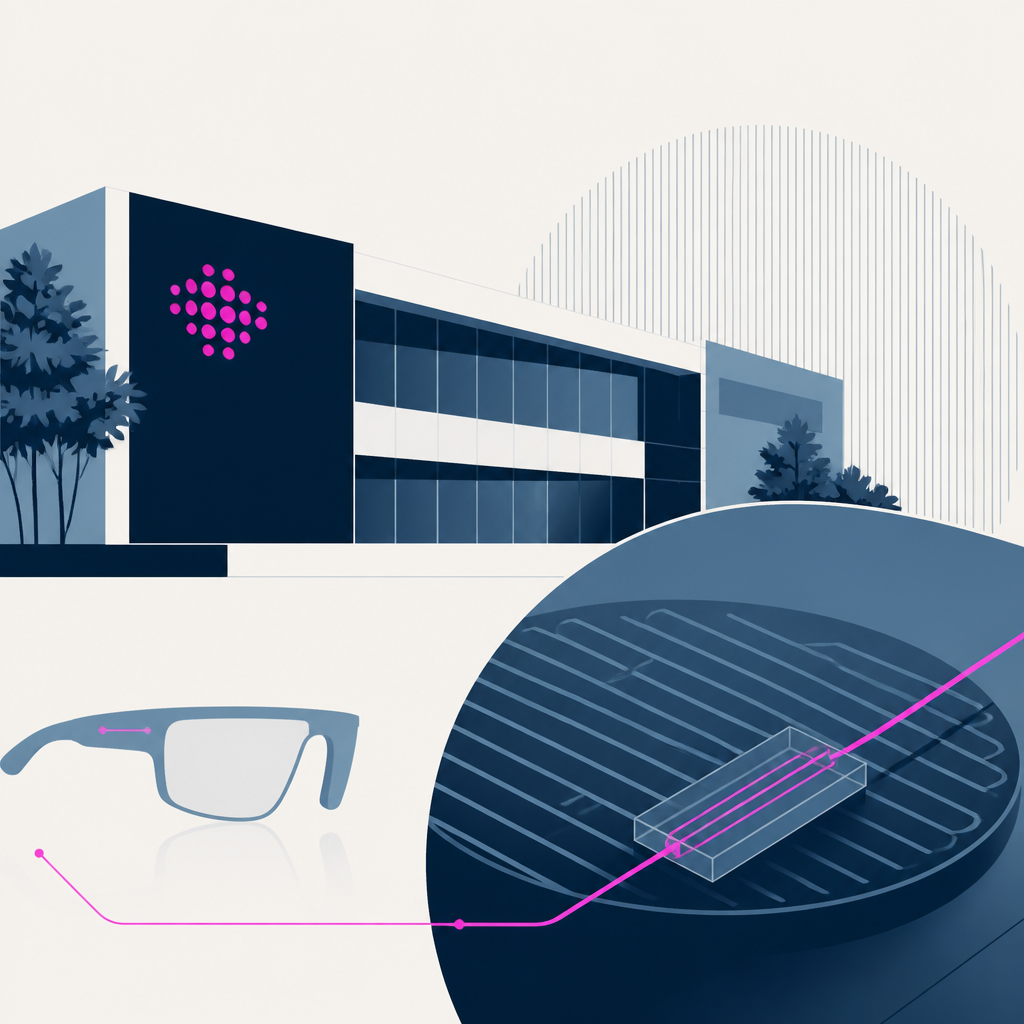
Morphotonics raised over €40M to make tiny optics for AI glasses in bigger volumes. The bottleneck isn’t the AI — it’s manufacturing the waveguides inside the device.
Based on reporting by Tech.eu, Tamara Djurickovic — read the original for the full story.
Summary, retelling and take written by AI under human oversight; images are AI-generated illustrations. How we work · Report an error
Morphotonics just pulled in more than €40 million in Series B funding, and the pitch is straightforward: if AI glasses are going to become more than demos and prototypes, somebody has to solve the unglamorous manufacturing problem hiding inside them.
The Dutch deeptech company, based in Veldhoven, is building large-area nanoimprint lithography systems for optical components. Its biggest focus is waveguides, the transparent parts that send digital images into a wearer’s field of vision. Those show up in AI glasses and other spatial-computing devices, but making them at consumer-electronics scale is still slow, costly and hard to adapt to different designs.
Morphotonics says its process copies micro- and nanoscale structures across large substrates, using a mould to press patterns into liquid resin and then harden them with UV light. The point is not novelty for novelty’s sake. It’s volume, precision and lower cost. Over the past year, the company has kept working on its Cypris platform, which is built specifically for high-volume waveguide manufacturing.
The round brought in continued support from 3M Ventures, Innovation Industries and BOM, with Invest-NL as a new major investor. The EIC Fund, Ernij Next and the European Investment Bank also participated. Morphotonics is already working with device and component makers in China, Taiwan, the US and Europe as they build production processes for AI glasses and other optical systems.
And the company is not limiting itself to glasses. It says the same technology could be useful in displays, sensors and photonic systems, including optical tech aimed at future computing and data-centre infrastructure. The fresh funding will go into more Cypris capacity, product development, engineering, commercial and customer-support hiring, plus supplier, manufacturing and after-sales infrastructure.
My take — AI-written commentary, not fact-checked reporting
This is the sort of funding round that actually matters because it targets the boring part everyone skips. AI glasses won’t become a category until someone makes the optics cheaply and at scale, not just prettily on a demo table. Silicon Valley loves the headset reveal; Europe keeps showing up for the factory problem.
Read more about this at: Tech.eu
Related stories
 Solinide closes €4M to commercialise photonic chips for AI data centres
Tech.eu · 1 month ago ·
31
Mistral AI raises 1.7B€ to accelerate technological progress with AI
Mistral AI · 1 year ago ·
46
Solinide closes €4M to commercialise photonic chips for AI data centres
Tech.eu · 1 month ago ·
31
Mistral AI raises 1.7B€ to accelerate technological progress with AI
Mistral AI · 1 year ago ·
46