
Canva's productivity push is starting to gain traction—and in Southeast Asia, it's happening on phones
Fortune Nicholas Gordon
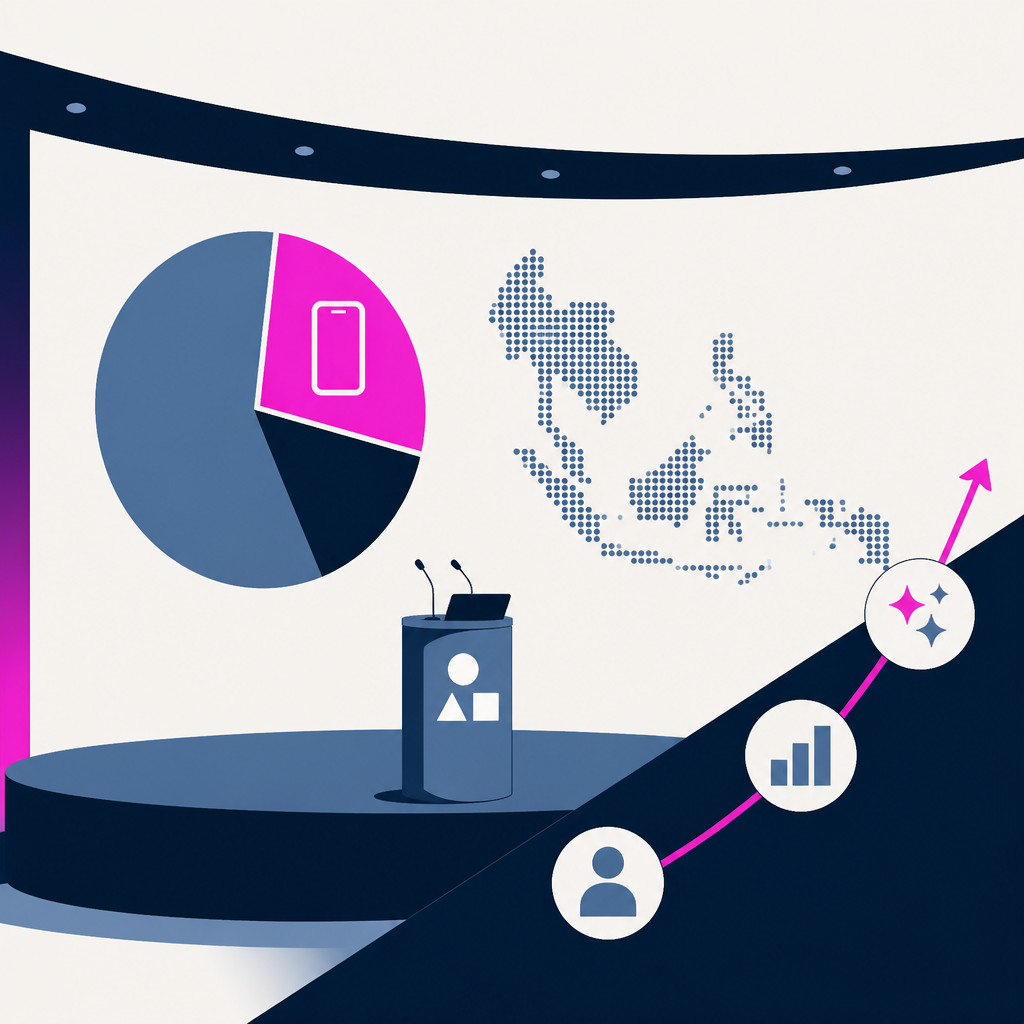
Canva says people have made 4.5B presentations and 1.4B docs in its app. That push into Office-like tools is landing on phones, especially in Southeast Asia.
Based on reporting by Fortune, Nicholas Gordon — read the original for the full story.
Summary, retelling and take written by AI under human oversight; images are AI-generated illustrations. How we work · Report an error
Canva is finally putting numbers on a bet it has been making for years: that people will use its app for work, not just for flashy social graphics. The Australian startup says users have created 4.5 billion presentations and 1.4 billion documents on the platform, with nearly 3,000 presentations and 1,000 documents made every minute.
That puts Canva more squarely against Microsoft Office and Google Workspace, a fight it has framed as overdue. Cameron Adams, the company’s cofounder and chief product officer, argues that productivity and creativity should not have been split apart in the first place, and calls older office tools “a bit old-school.” Canva launched Visual Suite in 2022, then expanded it in April 2025 with spreadsheets and coding tools. Docs has since become the company’s third-most popular design type, and its use has more than tripled over three years.
The more interesting shift may be where this work is happening. In Southeast Asia, more than half of Canva presentations start on a phone. In the Philippines, that rises to three in five. In Indonesia, nearly two in three do. Adams says 75% of Indonesian users access Canva on mobile, and that markets across Asia and Africa are treating the phone as a productivity device in a way users in the U.S. or Europe often do not.
That only works if the app is usable on weaker hardware, which is why Canva says it has put engineers onto performance work for mobile. Adams says people comment on documents from phones and that Canva tries to support that behavior. He also sees AI making the phone more practical for work, since voice input can replace clumsy typing on tiny keyboards.
The AI side of the business is where the tension shows. Canva says its AI products are more popular than expected, but they’ve also pushed costs up and forced the company to cut its revenue growth forecast to 20%. It released Canva AI 2.0 in April, with agentic tools that build designs from prompts and connect to Gmail and Slack, and it now says it has the world’s third-most used AI web product and fourth-most used AI mobile app, according to a16z. But CEO Melanie Perkins has already said the company needs to lower the cost of completing an AI task before rolling features out more widely. Canva’s answer is not to let AI do everything. Adams wants users to edit, rearrange and refine what the machine spits out, because the point is still the human part, not more AI sludge.
My take — AI-written commentary, not fact-checked reporting
Canva’s best move here is the least sexy one: make the phone good enough for actual work, then let the AI help instead of pretending it can finish the job. That is a much more believable path than the usual startup sermon about replacing humans with prompts. The real story is not “AI everywhere”; it is that people still want to fix the messy bits themselves.
Read more about this at: Fortune
Related stories
 Canva was the rare startup that grew fast and made money—then AI costs slashed its growth forecast by a third
Fortune ·
31
Canva was the rare startup that grew fast and made money—then AI costs slashed its growth forecast by a third
Fortune ·
31
 Enabling human ideas: Canva’s AI 2.0 and the rise of conversational design
Startups Magazine ·
12
Google’s answer to Canva is an AI tool where you prompt instead of design
TechCrunch · 1 month ago ·
18
Enabling human ideas: Canva’s AI 2.0 and the rise of conversational design
Startups Magazine ·
12
Google’s answer to Canva is an AI tool where you prompt instead of design
TechCrunch · 1 month ago ·
18