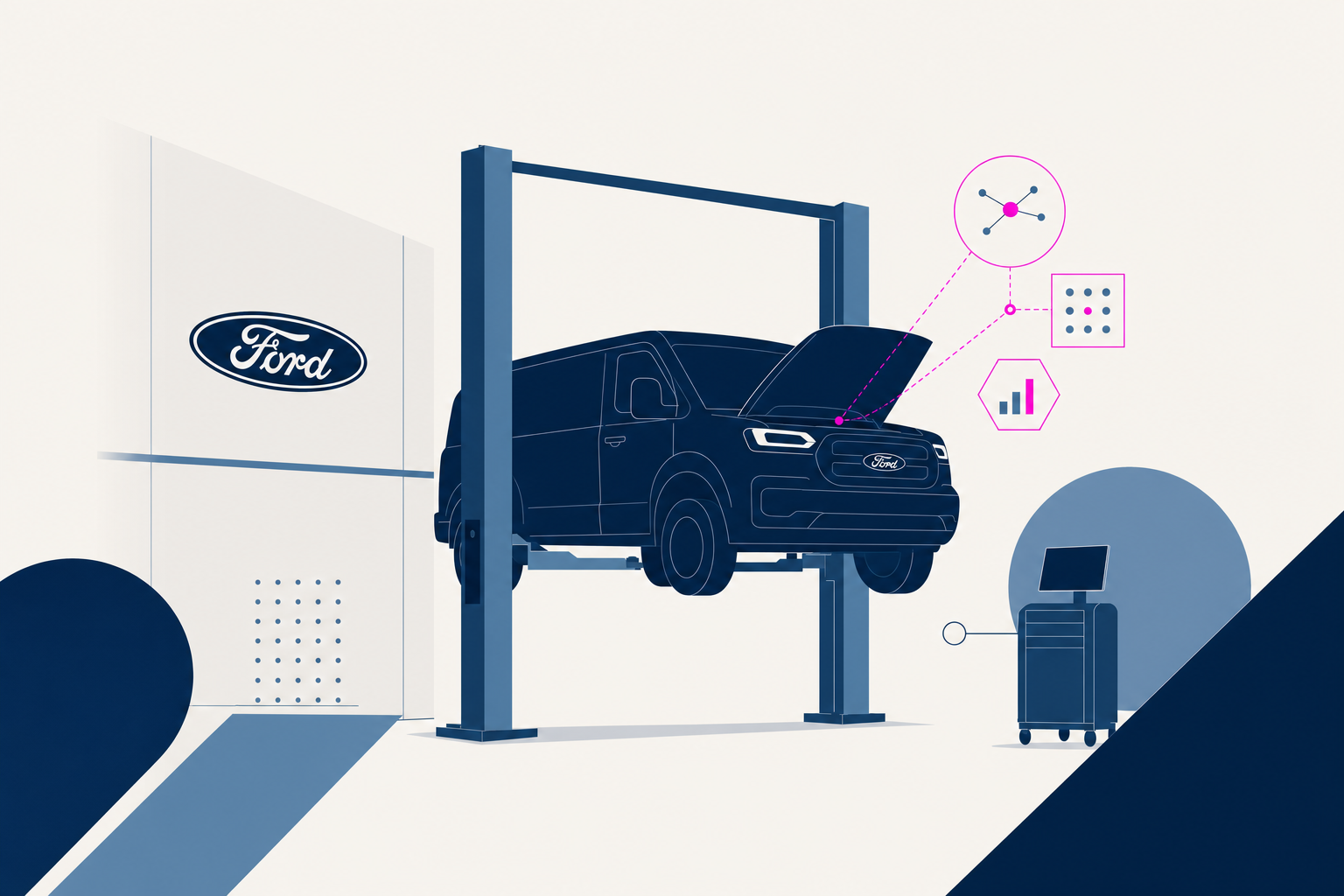
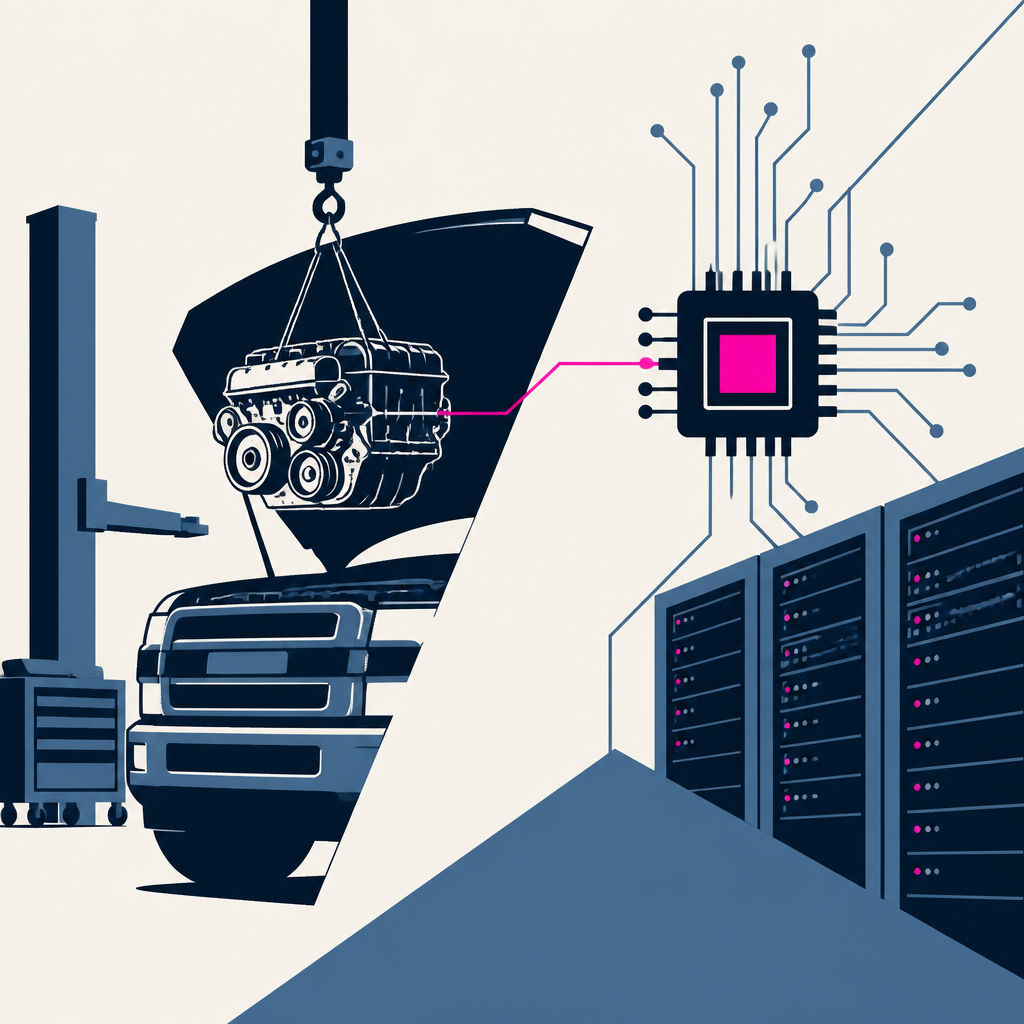
Ford CEO Jim Farley put a blunt bookmark on the AI conversation: the first wave lands on the factory floor, not the spreadsheet. In remarks tied to Ford Pro’s work with dealers, he framed AI as a “companion” that helps skilled workers handle more complex tasks—exactly where a job like removing an engine from a Ford Super Duty can take two days and require extensive disassembly. His point wasn’t just productivity; it was sequencing. AI-enabled troubleshooting and guidance can shorten the time to get the job right, while advanced automated equipment reshapes what “routine” looks like in maintenance and repair. White-collar work, meanwhile, is headed for disruption—especially the kind that depends on repetitive templates and predictable workflows.
Verizon CEO Dan Schulman sharpened the timeline and the organizational response. He predicted AI capability steps up every two months, with AGI potentially arriving in 6 to 18 months, and he paired that with a practical staffing bet: moving from fixed roles to a more fluid workforce and investing $70 million in training, including for American workers. The skilled-trades angle landed with Nate Bargatze’s take on shortages—U.S. demand for 1.7 million openings annually through 2035—where AI can make learning more accessible without removing the need to install, maintain, and repair. Even hiring is starting to feel the shift: Metaview raised $60 million to automate interview workflows, tallying 6 million interviews already, and pushing more work from recruiter “grunt” tasks to AI agents that hand structured notes to humans.