Ford CEO sees blue-collar workers using AI as a ‘companion’ — but other jobs 'are definitely going to be changed and eliminated'
Fortune Nick Lichtenberg
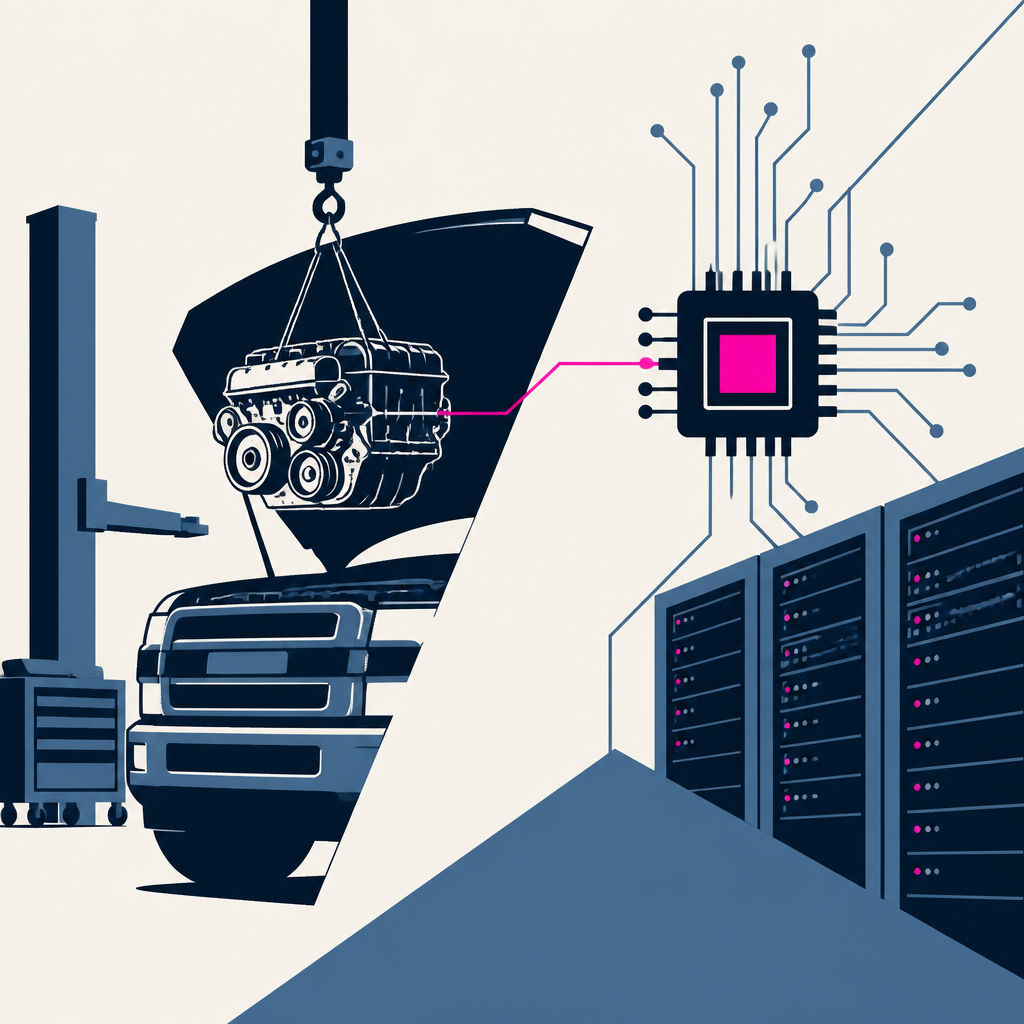
Ford says AI will help mechanics and factory workers, not replace them. But finance, call centers, and entry-level coding jobs are the ones at risk first.
Based on reporting by Fortune, Nick Lichtenberg — read the original for the full story.
Summary, retelling and take written by AI under human oversight; images are AI-generated illustrations. How we work · Report an error
Ford CEO Jim Farley is drawing a sharp line between the kinds of jobs AI will hit first and the kinds it will mostly support. At a backstage roundtable at Ford Pro Accelerate, he said blue-collar work in factories, repair bays, and skilled trades will increasingly use AI as a companion — something that helps people learn faster, handle more complex tasks, and deal with a shortage of technical labor.
His contrast was blunt. Work that lives on screens and follows repeatable rules, he said, is more exposed. Finance jobs built around spreadsheets, call-center work, and entry-level programming are the ones he thinks will be “changed and eliminated” first in this early phase of AI.
Ford, meanwhile, is already watching the shift inside its own plants. Farley said the company has more than 10,000 skilled-trades workers, or about 20% of its 56,000 UAW workers. Their jobs are moving beyond conveyors and routine mechanical upkeep into repairing robots, handling fiber, maintaining automated systems, and working in more digital manufacturing operations. In newer plants, he said, the line between engineering and skilled trades is getting blurry. Some of that work now includes maintaining robotic casting systems, configuring digital manufacturing processes, and troubleshooting battery-production equipment.
Ford is also using AI and augmented reality in the service bay. Farley pointed to a Ford Super Duty engine removal that can take two days and involve major disassembly, and said Ford Pro is using AI to guide dealers through jobs they have not done before. The point, he said, is not that mechanics don’t have skill. It’s that they may not have done that exact repair before.
Stanley Black & Decker CEO Chris Nelson framed the same technology as a labor-force multiplier. He argued that construction and industrial work already faces a backlog because employers do not have enough people to get through the work in front of them. In that setting, AI and robotics are less a threat than a way to finish current jobs, take on new ones, and make repetitive work safer and faster. He described an autonomous drilling robot built with customers for data-center construction that handles the repetitive holes while skilled workers move on.
But the executives also acknowledged the old fear that efficiency tools can feel like surveillance. Farley said trust matters, especially if workers think the data might be used against them. That part never really goes away. New tools arrive with fresh promises, and workers still hear the same thing underneath: this is supposed to make your life easier, not disappear it.
My take — AI-written commentary, not fact-checked reporting
The cleanest read here is that AI is not one problem, but two. In jobs with shortages, it looks like relief; in jobs with interchangeable tasks, it looks like a cull dressed up as progress. The industry loves calling that nuance, but workers usually call it by its real name: who gets the upgrade and who gets the pink slip.
Read more about this at: Fortune